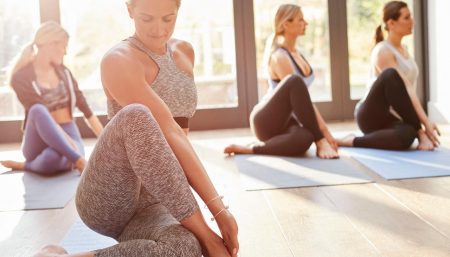
Yoga postures, pranayama, relaxation and meditation are powerful tools for helping to stimulate or calm the immune response depending on the situation.
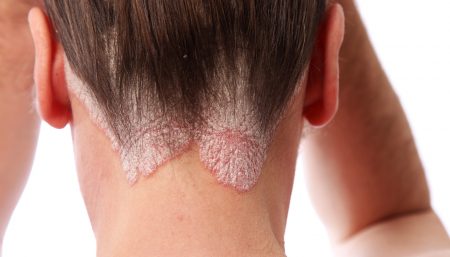
Poor diet, lack of nutrition, stress, anxiety, alcohol, drugs, and toxins in our environment are all factors that can weaken our immunity.
Our immune system consists of cells, tissues, and organs that work together to protect the body and fight off infections and diseases. These defensive cells are located in our white blood cells. They are transferred around the body by the lymphatic system. The lymph nodes move through the body by muscle contractions, unlike blood, which is pumped naturally by the heart.
Allergy like a stuffy nose, ears and sinus, inflamed eyes, headaches, sore throat and difficulty in breathing are all caused by the mucus-producing process of the immune system attacking innocuous invaders. Through relaxation, the nervous system can tell the immune system to settle down and stop attacking the foreign bodies, which are naturally cleared out in a non-allergic person by sneezing once or twice a day. When the immune system backs off, inflammation and mucus decrease and symptoms diminish.
If the immune system is weak, the bacteria can go into the lungs and cause bronchitis or pneumonia. Viruses go deeper into the system, causing chills, fever or pain and aching in the joints.
Here are 6 yoga postures that should be practiced on a regular basis to build a strong immunity.
Adho Mukha Svanasana (Downward facing Dog)
This pose sends out energy throughout the body. It provides a great inversion, by increasing circulation. It’s a great lengthener and strengthener. It stretches the calves, hamstrings, back,shoulders and abdominal muscles.
Instructions:
- Come to your hands and knees with the wrists underneath the shoulders and the knees underneath the hips.
- Curl the toes under and push back raising the hips and straightening the legs.
- Spread the fingers and ground down from the forearms into the fingertips.
- Outwardly rotate the upper arms broadening the collarbones.
- Let the head hang, move the shoulder blades away from the ears towards the hips.
- Engage the quadriceps strongly to take the weight off the arms, making this a resting pose.
- Rotate the thighs inward, keep the tail high and sink your heels towards the floor.
- Check that the distance between your hands and feet is correct by coming forward to a plank position. The distance between the hands and feet should be the same in these two poses. Do not step the feet toward the hands in Down Dog in order the get the heels to the floor. This will happen eventually as the muscles lengthen.
Bala-asana (Child Pose)
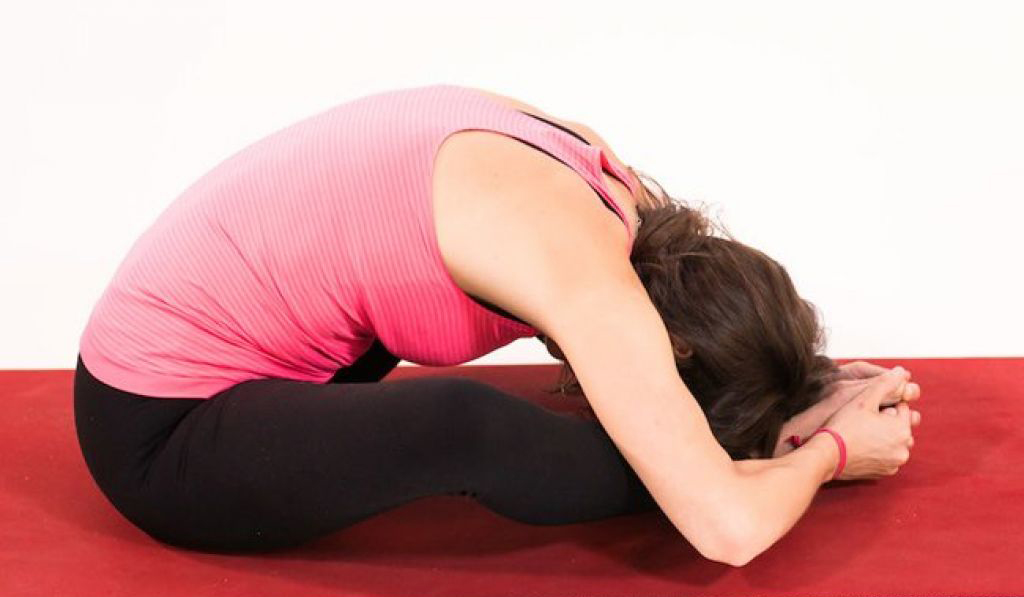
This pose boosts immunity. Your head is lower then you heart, therefore you receive more circulation to the face.
- Sit on your knees with your feet together and buttocks resting on your heels. Separate your knees about the width of your hips. Place your hands on your thighs, palms down. (This is thevajra-asana or Thunderbolt Pose).
- Inhale deeply, then exhale as you bring your chest between your knees while swinging your arms forward.
- Rest your forehead on the floor, if possible, and then bring your arms around to your sides until the hands on resting on either side of your feet, palms up.
- Breath gently through your nostrils as you hold the posture. Hold for about one to two minutes. Then return to asana upright kneeling position with your back straight and your hands on your thighs.
- Repeat the posture at least one more time.
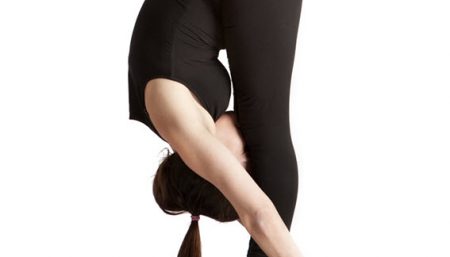
Prasarita Padottanasana (Straddle forward bend)
Forward Bending poses are very soothing. They encourage the face to drop, therefore the head receives more blood, oxygen and vital nutrients.
- Step the feet apart into a wide straddle. The feet should be slightly pigeon-toed so that the outside edges of the feet stay parallel.
- Deepen the hip creases as you come into a forward bend.
- Bring the hands directly underneath your shoulders. Then begin to walk the hands back, bringing your wrists in line with your ankles, if possible.
- Bend the elbows. Try bringing your body weight forward into the balls of your feet to keep thehips in the same plane as the ankles.
- Engage the quadriceps and draw them upwards.
- Stay here for 5 to 10 breaths, lengthening the spine on the inhales and deepening the forward bend on the exhales.
- To come out, bring your hands onto your hips and keep your back flat as you come up to stand.
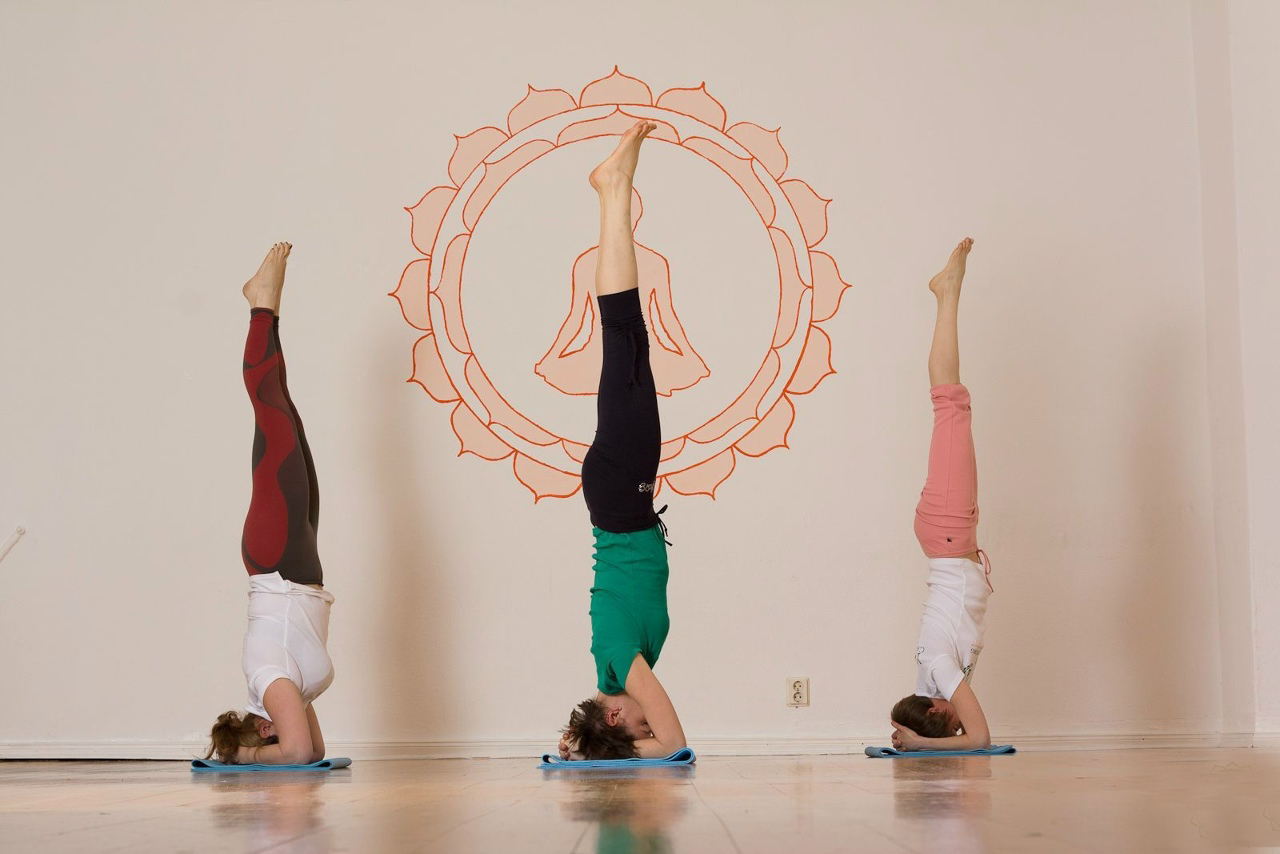
Sirsasana (Head stand)
This pose is an energizing inversion. It stimulates the pituitary gland, which governs blood pressure, regulates water in the body, metabolism, sex organ function andthyroid function.
- Interlace fingers to form a cup with palms. Place forearms and wrists on a folded blanket.
- Place crown of head on floor with slight emphasis of weight towards forehead.
- Walk feet towards head and lift knees gently upward.
- Straight legs extended.
- Lengthen both sides of ribcage.
- Navel-point in.
- Tailbone extends towards heels.
- Shoulder blades wide and floating towards kidneys to decompress neck.
- Follow with Shoulderstand or Child’s pose.
- Always maintain a calm and even breath. (You can do this pose against a wall)
Halasana (plough pose)
This pose stimulates the spinal nerves and and strengthens your spine and back. It increases the blood supply and provides healthy nourishment for your internal organs and improves overall blood circulation within the body.
- Bring the knees into the chest rapidly, raising the pelvis and lower back up. Straighten the legs when the lower back begins to rise.
- Take the legs slowly down behind the head and place the hands into the lower back for support.
- If possible allow the legs to come all the way down to the mat.
- The tops of the feet can be on the mat if you point them but for a deeper back and leg stretch push through the heels and allow the ballpoint of the feet to touch the mat.
- Create space around the neck for the elements to flow.
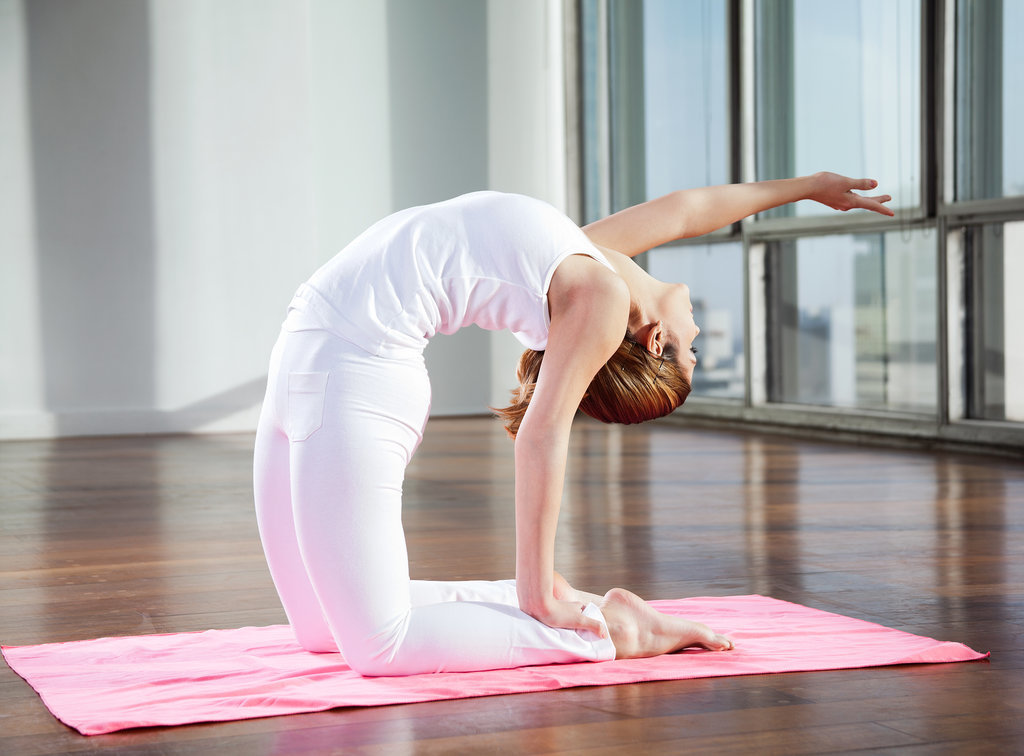
Chakrasana (Wheel Pose)
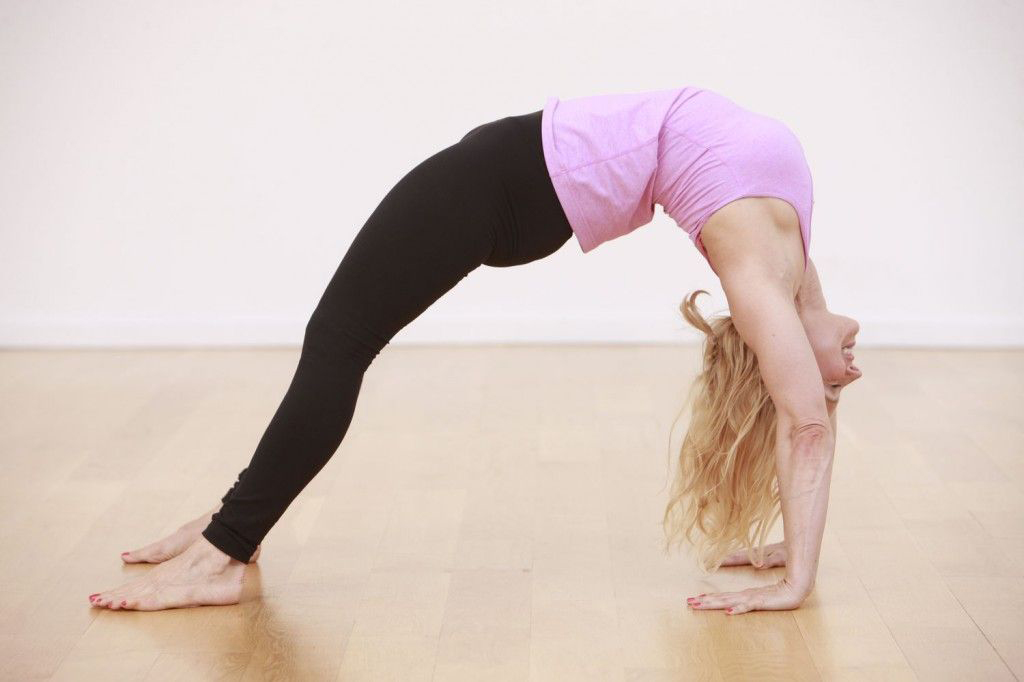
This pose strengthens your abdominal muscles and opens up the hips. It stimulates the thyroid and pituitary glands, therefore improving your overall health.
- Lying on your back, bend both knees and place the feet flat on the floor hip width apart.
- Press the feet into the floor, inhale and lift the hips up, rolling the spine off the floor. Engage the thighs, buttocks and mula bandha.
- Place the palms underneath the shoulders with the fingers pointed towards the head and the elbows shoulder width apart.
- Inhale and press into the palms and straighten the arms to lift the shoulders and head off the floor.
- Keep the legs and arms as straight as possible to lift the hips and chest up.
- Breathe and hold for 2-4 breaths.
- To release: exhale and slowly bend the elbows to lower the head, neck and then shoulders to the floor. Bend the knees to slowly roll the spine and hips back to the floor.
By practicing yoga regularly and building a strong immune system your body can frost the invaders within a few days, preventing more extreme manifestations of the illness and in fact strengthening the immune system.
Another way to build the immune system and improve sinus-related conditions is to focus on the thymus gland. Located in the chest, the thymus gland is the locus of the immune system. Thus both the thymus gland and the immune system are stimulated by any posture in which we open the chest and breathe deeply into it. The most beneficial postures for this purpose are the Cobra, the Pigeon, the Fish, the Boat, the Bow and the Bridge.
Disclaimer
The Content is not intended to be a substitute for professional medical advice, diagnosis, or treatment. Always seek the advice of your physician or other qualified health provider with any questions you may have regarding a medical condition.