Meditation is not for a few but is necessary for all human beings. The inner self of a person touches the Higher Self (the Param-Tattwa) during deep sleep daily. This unknown touch recharges the battery of man.

Meditation involves sitting in a relaxed position and clearing your mind. You may focus on a sound, like ‘ooommm’, or on your own breathing, or on nothing at all. It’s necessary to have 5-20 distraction-free minutes to spend. It’s helpful to have silence and privacy, but more practiced meditators can do it anywhere. Many practitioners of meditation attach a spiritual component to it, but it can also be a secular exercise.
Meditation is to the mind what sleep is for the physical body-it regenerates you.
Different types of meditation:
Meditation has evolved out of many different religions and philosophies, which means there are many different techniques to choose from.
Some examples include:
- Concentrating on the breath – consciously noticing the movement of air in and out of your nostrils, or counting the breath in variety of ways.
- Emptying the mind – allowing the mind to clear and ‘float’, gently pushing aside any stray thoughts, or allowing thoughts to float in and out of awareness.
- Looking at an object – focusing your attention, but not necessarily your thoughts, on the shape, sound and texture of an object, such as a tree or a candle flame.
- Movement – using a physical technique like yoga, Qi Gong or Tai Chi to still the mind by coordinating the breath and the body with gentle movement.
- Using a mantra – repeating a word or phrase over and over, either out loud or silently, to focus the attention, perhaps timed with the breath.
Meditation, if done on a regular basis, can do wonders for you. Here are some basic benefits which you will draw by regular meditation.

- It stabilizes the autonomous nervous system– During meditation, the brain’s activity alters significantly, as mapped by a device called an electroencephalograph (EEG). The most well-known brain waves evident during many kinds of meditation are called alpha waves. These brain waves accompany relaxation of the entire nervous system. Gamma, delta and theta brain waves accompany other types of meditation and are associated with various altered states of consciousness. Scientific studies show that the regular practice of meditation can be a powerful healing tool.
- Meditation increases concentration, self-esteem, spontaneity, creativity, and depth of awareness– Studies also show that mediators have warmer interpersonal relationships, less anxiety, increased self-esteem and self-confidence, increased problem-solving ability and greater creativity. The individual spontaneously radiates a purifying and nourishing influence of positivity and harmony in society as a whole.

- It reduces the heart beat– The following studies show a decrease in heart rate during meditation. Bono (1984) found that the reduction of heart rate during TM was greater than the reduction resulting from sitting quietly with eyes closed. Delmonte (1984f) found that heart rates were slightly lower during meditation than rest for fifty-two subjects. Holmes et al. (1983), however, found that while meditators had lower heart rates while practicing TM, they did not experience lower arousal than control subjects who were simply resting.
- It reduces the speed of breathing-The process of relaxation, stillness and body awareness automatically reduces the speed of your breathing, which, in turn, helps in meditation.
- Blood pressure drops drastically – There is strong evidence that meditation helps lower blood pressure in people who are normal or moderately hypertensive. This finding has been replicated by more than nineteen studies, some of which have shown systolic reductions among their subjects of 25 mmHg or more. In some studies a combination of meditation with biofeedback or other relaxation techniques proved to be more effective than meditation alone for some subjects. Several studies, however, have shown that relief from high blood pressure diminishes or disappears entirely if meditation is discontinued, and few people with acute hypertension have experienced lower blood pressure in experiments of this kind.
- Cardiovascular effectively goes up– Evidence that meditation helps relieve certain forms of cardiovascular disease generally conforms to assertions that yoga, tai chi, and other transformational disciplines promote health.
- The Galvanic Skin Response (GSR) increases– During the practice of meditation, there is a strong increase in the electrical resistance of the skin (this is known as “Galvanic Skin Response”, or GSR), due to decreased perspiration, which in turn results from a lessening of anxiety. The resistance increases in only a few minutes, beginning with a value of less than 100 kOhms and ending with a value in excess of 300 kOhms.
- The skin receives more blood– Decreases in renal (kidney) and hepatic (liver) blood flow during meditation has been hypothesized as being due to increased muscle, skin, or brain blood-flow demands.
- EMG activity increases– Thirty female subjects, ranging in age from twenty-one to fifty-nine, were randomly assigned to a patterned biofeedback group, a clinically standardized meditation group, or a control group, and were seen weekly for seven sessions. The meditation group showed significantly lower EMG levels than the other groups. No group had significant temperature increases. The biofeedback group had difficulty patterning the two feedback signals simultaneously, confirming the difficulty revealed by other studies in training individuals to gain voluntary control over more than one physiological modality with biofeedback.
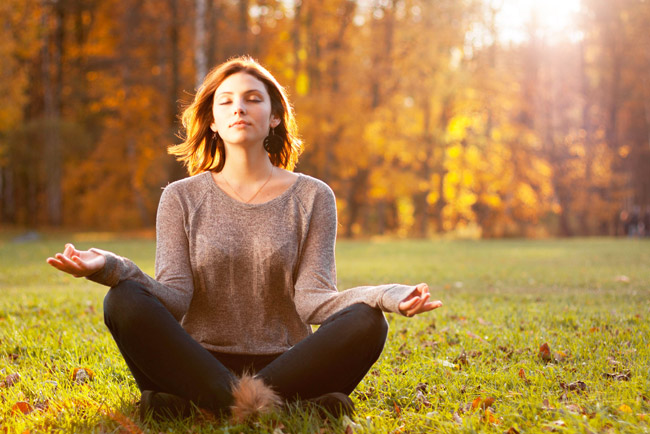
- Stomach function and bowel function improve- Deep breathing and meditation can help relax your abdominal muscles, which may lead to more-normal bowel activity.
- The endocrine function is heightened- A number of endocrine reactions have been identified in the meditative response pattern, including reduced blood levels of lactate, cortisol, and epinephrine (Wallace 1970, Sudsuang et al 1991). The reductions in these blood chemicals denote a state of decreased tension and anxiety. It has been recently demonstrated that meditation reduces sympathetic adrenergic receptor sensitivity, producing a decreased response to stressful situations.
- Muscle flexibility increases– Kundalini Yoga combines posture, movement, stretches, breath, meditation and mantra to carry us to a deeper awareness of the Authentic Inner Self. Through various sets of Yoga postures, the chakras (energy centres) are awakened and balanced. Each Chakra radiates a particular energy important to our health, state of mind, and general well being. Each chakra is associated with particular aspects of our physical, emotional and mental being, including our talents and skills. The spine, ligaments and muscles are strengthened and stretched to develop a strong and flexible body structure.
- Mobility and flexibility increase- The variety of stretching and joint isolation exercises helps to increase joint mobility and flexibility. Since the technique respects each person’s body type and level of flexibility, meditation is ideal for many individuals.
- The hand-eye co-ordination increases– Theta meditation has also been identified as the gateway to learning and memory. Theta meditation increases creativity, enhances learning, reduces stress and awakens intuition and other extrasensory perception skills.
- Body posture is improved– When your body moves properly the muscular tension is eliminated and posture is improved by standing straight without straining. Exercise with meditation incorporates the proper alignment of the head with the hips, ankles and feet which in turn corrects your posture.
- Stamina increases– A recent study (Zamarra et al 1996) reveals that meditators have a general increased exercise tolerance and maximal cardiac workload as compared to non-meditators.
- There is a heightened energy level and vitality– By meditating deeply for even five minutes at the beginning of your day, you can set the tone or direction of the entire day. You are taking control (the first step of managing stress) of your thoughts, your life. You can then become a Master of life, not a Victim of life.
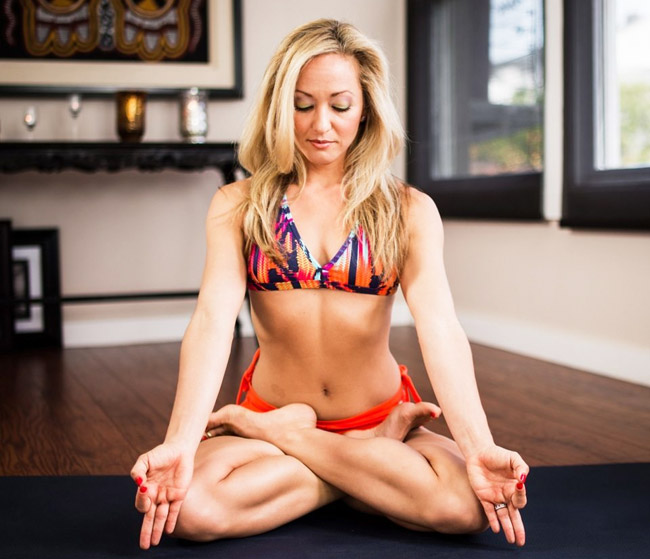
- Stability is improved– A number of studies indicate that meditation can greatly help to reduce stress and stress-related symptoms, develop internal resources and positive health, prevent ill health (including cardiovascular disease and the deleterious effects of aging), improve social and thereby enhance stability in life.
- People’s weight is stabilized at an ordinary level– There are various yoga postures that specifically help in reducing body weight and restoring healthy conditions of the mind and body. These postures stimulate certain important glands, in particular the thyroid gland, and help in hormonal balance. Certain postures such as the fish posture and shoulder stand, specifically influences the thyroid gland, helping in converting fat to energy, resulting in increased muscle tone and better vitality. Also postures such as bending forward, backward twisting, etc., help in toning up the abdomen, hips and waist. When such postures are practiced several times regularly, it naturally leads to weight reduction.
- The ability to sleep increases and the time people need to fall asleep decreases– Certain simple stretches and breathing techniques can help improve the quality of sleep. The yoga postures, specifically meant for insomnia, are divided into three sequences that help in unwinding physically and mentally before falling asleep. First being, the use of breathing techniques that helps in unwinding from regular activities, performing gentle stretches that are comfortable, for ten minutes and practicing Yoga Nidra (Breathing Relaxation).
- Pain is weakened-Meditative techniques are also a key element in the Arthritis self-help Course at Stanford University. More than 100,000 people with arthritis have taken the 12-hour course and learned meditation-style relaxation exercises as part of a comprehensive self-care program. Graduates report a 15 to 20 percent reduction in pain. In one study overseen by Dr. Kabat-Zinn, 72 percent of the patients with chronic pain conditions achieved at least a 33 percent reduction after participating in an eight-week period of mindful meditation, while 61 -percent of the pain patients achieved at least a 50 percent reduction. Additionally, these people perceived their bodies as being 30 percent less problematic, suggesting an overall improvement in self-esteem and positive views regarding their bodies. Meditation may not eliminate pain, but it helps people cope more effectively.
- There is a heightened degree of relaxation– Going deeper into relaxation, you enter the elusive and mysterious Theta state where brain activity slows almost to the point of sleep, but not quite. Theta is the brain state where magic happens in the crucible of your own neurological activity. Theta brings forward heightened receptivity, flashes of dreamlike imagery, inspiration, and your long-forgotten memories. Theta can bring you deep states of meditation. A sensation of “floating.” And, because it is an expansive state, in Theta, you may feel your mind expand beyond the boundaries of your body.
- There is a lessened degree of muscle tension– Instead of feeling like a cork bobbing on the sea, regular practice of the relaxation response leads to a sense that emotions–and the physiological reactions that go with them–can be brought under your control.
- The production of serotenine increases– Meditation has been shown to increase serotonin production. Serotonin is an important neurotransmitter and neuropeptide that influences mood and behavior in many ways. Its importance is demonstrated by the recent explosion in use of fluvoxamine, a ” selective serotonin re-uptake inhibitor” like Prozac, Paxil, and Zoloftsuch, for treating depression-related emotional disorders. Low levels of serotonin have been linked to a variety of disorders. For example, conditions associated with low serotonin levels include: depression, obesity, insomnia, narcolepsy, sleep apnea, migraine headaches,premenstrual syndrome, and fibromyalgia.

Other benefits:
- Menstruation pains are softened.
- The intake of oxygen gets stronger
- Depth perception increases
- Reaction-speed increases.
- Strength and resistance increase
Disclaimer
The Content is not intended to be a substitute for professional medical advice, diagnosis, or treatment. Always seek the advice of your physician or other qualified health provider with any questions you may have regarding a medical condition.