The hip is one of the largest weight-bearing joints in the body. When it’s working properly, it lets you walk, sit, bend, and turn without pain. To keep it moving smoothly, a complex network of bones, cartilage, muscles, ligaments, and tendons must all work in harmony.
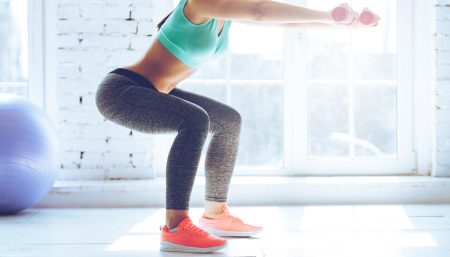
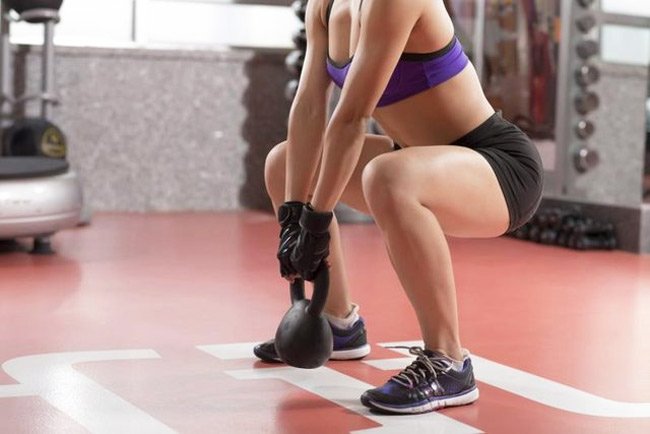
There are several great exercises that you can perform to reshape your hips. Squats are a great exercise for reshaping your hips. Which exercises you perform and the technique you use will depend upon the shape your hips are in. If you have small hips and need to increase their size, you should use heavy weights. Perform 4-5 sets, 6-8 reps per set, twice a week, skipping two days between workouts. When increasing the size of your hips, be sure to keep your heels flat on the floor to ensure that you do not build up your leg muscles excessively as well.
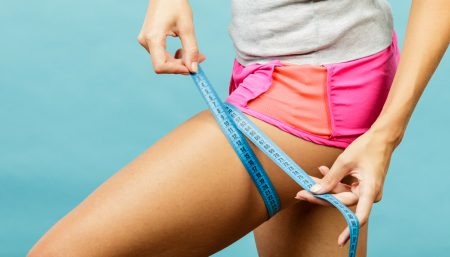
If your hips are too large – which seems to be the more common problem for women – and you want to achieve a reduction in size, perform 5-6 sets of squats, 18-20 reps per set, 5-6 days a week, using little or no weights. Don’t skip any days between training sessions. When decreasing the size of your hips, keep your heels one inch off the floor by placing a block of wood or a book under your heels.
Hip Bend
- Stand with feet apart, toes pointed outwards, and hands on the outside of your thighs.
- Keeping your back straight, at right-angles to the floor, bend knees and allow your hands to slide down your thighs until they reach your knees. (Keep back straight!)
- Hold your knees for a count of 5, then slowly return to start position.
-
Repeat 10-20 times.
Hip Extension
- On a flat or inclined step or platform, lie facedown with hips on the edge of the step, legs straight out behind you with toes resting lightly on the floor.
- Squeeze the glutes and hamstrings and straighten the legs until they are level with the hips.
- Hold for 2-3 seconds, and lower letting toes lightly touch the floor.
Repeat for 2-3 sets of 8-12 repetitions.
Hip Flexion
- Stand with your back to the low pulley machine, with the ankle strap attached to one leg. Lift this leg off the floor, taking up the slack of the cable, and place your balance solidly on the other leg.
- Use a stick to support yourself, and check that your back is straight with your shoulders relaxed. Pull the cable dynamically by kicking the leg forwards.
- Pull the weight, using your hip flexor muscles at the top and front of the thigh, until your leg reaches an angle of about 30 Degree or you start to lean back.
- Smoothly return your leg to the start position, retaining good posture, and continue.
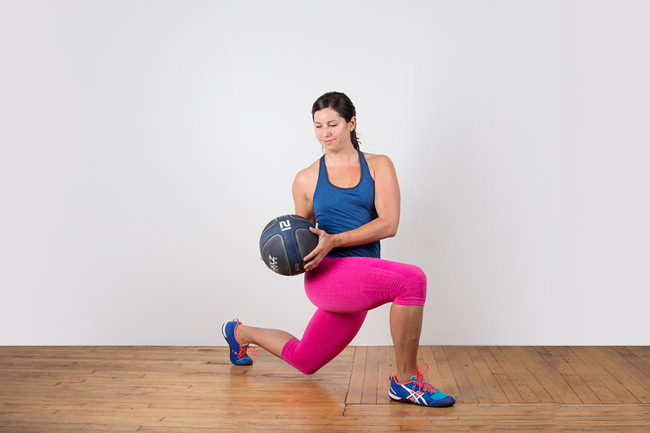
Side Lunge and Rotate
- Stand with feet hip-width apart, toes pointing forward. Then lunge out to one side, flexing the lunge leg and keeping the other leg straight. The aim is to lunge down as far as possible whilst keeping the upper body tall and upright.
- Once you have reached the lowest point, perform a trunk rotation movement from left to right. After the rotation push back using the lunge leg only to the start position.
- Again, lunge as wide and low as you can while maintaining a neutral low back position. The aim of this exercise is to increase the active range of motion in the groin area while maintaining trunk stability and performing trunk rotation.
One-legged Buttock Squeeze
- Lie on your back, tighten your abdominals and do a pelvic tilt. Keep your hands by your sides.
- Bring your right foot over your left knee and place it on your left high. Tighten both your buttock muscles and lift your hips off the floor. Squeeze your left buttock for 2 counts and release for 2 counts. Repeat with the other leg.
- Keep your hips still and your abdominals held in tight; do not over arch your back; do not hold your breath
To lose weight and improve your body for the long haul, you must eat healthy, begin a cardiovascular program, and adopt some form of weight training.
Disclaimer
The Content is not intended to be a substitute for professional medical advice, diagnosis, or treatment. Always seek the advice of your physician or other qualified health provider with any questions you may have regarding a medical condition.