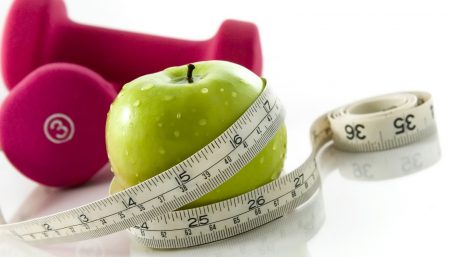
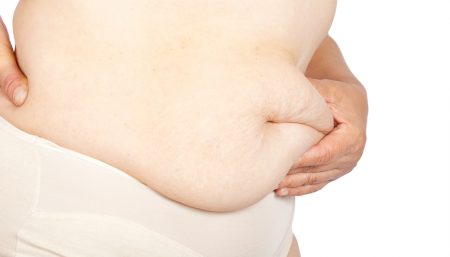
There’s no easy answer to this question. What you weigh — and how easily you lose weight and keep it off — depends on a variety of factors. Some (how much you eat or exercise) are within your control; others (genetics, body type) aren’t. Read on to learn more…
Heredity:
Your genetic makeup (the physical traits that get passed down to you from your parents) plays a big part in determining your size and weight. Fatter people tend to have very efficient metabolism; they require less fuel to run than thin people, and store excess fuel in the form of fat.
As powerful as they are, genes only determine a tendency towards higher or lower metabolic efficiency; they do not by themselves determine what actual body metabolism will be.
Body-Type:
Have you ever heard someone say a person is “big boned”? It’s a way of saying the person has a large frame, or skeleton. Big bones usually weigh more than small bones. That’s why it’s possible for two person with the same height, but different weights, to both be the right weight.
Each type has its own advantages and characteristics.
- Ectomorphs are typically tall and thin, and don’t gain fat or muscle as easily as others. They make good distance runners and ballet dancers.
- Mesomorphs are generally shorter and stockier and gain muscle mass (and weight) more easily. They are good at power sports like soccer, softball and sprinting.
- Endomorphs carry more body fat — their metabolisms actually slow down when they try to lose weight. They excel at distance swimming, field events and weight lifting.
Set-point theory:
According to this theory, each person has a predetermined level of body fat. How the body controls its fat stores is unknown, but the regulatory mechanism, sometimes called the adipostat, is probably located in the hypothalamus.
The adipostat monitors body fat stores, possibly through the actions of leptin on its hypothalamic receptor, and works to maintain the prescribed level of fat, or set point, by adjusting appetite, physical activity, and RMR to conserve or expend energy. Thus, actions perceived to be voluntary, such as eating and physical activity, may be subtly controlled by the set-point mechanism.
B.M.R:
For every ten years beyond our early to mid-twenties our metabolism slows about 10%. While a reduction in metabolism is observable as we age, such a reduction may be more due to a sedentary lifestyle than to mere aging.
Muscle tissue is metabolically active compared to fat, and thus our metabolic level at any moment is in large part due to the state of our muscle mass. Inactivity accelerates loss of muscle tissue over time which decreases metabolism, making it all but certain that weight will be gained.
Activity, on the other hand, reduces muscle loss, or even increases muscle mass, with the effect of increasing metabolism and making it easier to lose weight.
Diet:
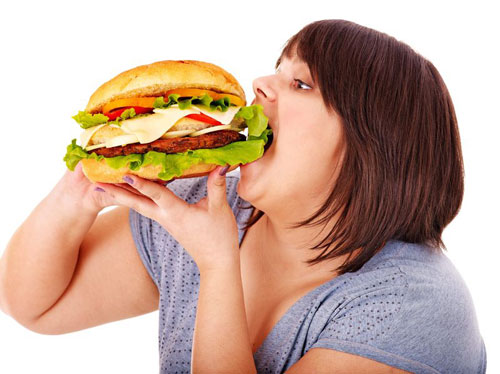
A person’s food related habits and cultural expectations are also important determinants of their weight, influencing the types and amounts of foods consumed. families who push members to eat, or who keep high fat snacks and deserts handy are at greater risk for weight problems than are families that promote sensible portion sizes and save treats for special occasions. The speed at which people learn to eat and the consciousness with which they do so are important too.
People who eat quickly tend to eat more than people who eat slowly as it takes a few minutes for your stomach to tell your brain it is full. Fast eaters sometimes finish their plates before getting the stomach’s fullness message.
In theory, if you cut 500 calories a day from your diet, you’ll lose a pound in a week. In real life, it’s not that simple. For example, a woman weighing 125 pounds at age 20, and starts the pattern of overeating by just 25 calories a day will consume 9,125 excess calories over the course of a year and so will gain 2 1/2 pounds (a pound of body fat is equivalent to 3,500 calories) and weigh 175 pounds by the time she is 40.
Activity Level:
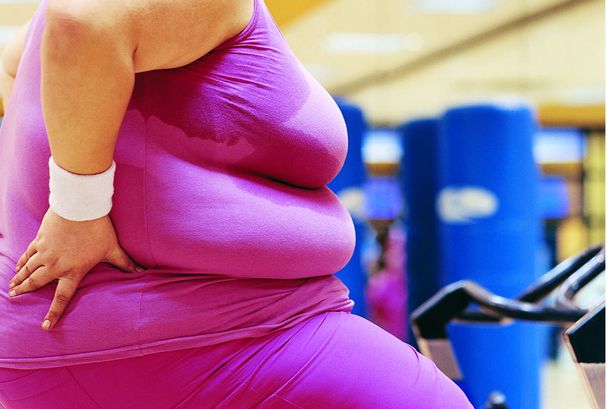
Where a person’s genetics are more or less set at conception, the amount of energy a person expends in physical activity is under voluntary control. People can choose to be more active, and becoming more active will help people to lose weight. Exercise builds lean muscle mass and burns up fat reserves. Muscles are very metabolically active. Adding muscle mass through strength training raises metabolism (the rate at which the body burns calories) which makes it easier to lose weight.
A significant loss of muscle mass, on the other hand, which is what happens when people are sedentary, reduces resting metabolic rate and makes it harder to lose weight. Adding muscle mass helps people to look firmer and slimmer because muscle takes up less space than fat. Careful strength training reduces the risk of accidental injury, improves bone density, helps with digestion and assists in lowering blood pressure, cholesterol and triglyceride levels (all predictors of disease when elevated).
Behavioral and Psychological Issues:
Several psychological factors affect weight. The message to eat often comes from external cues rather than hunger–noon means it’s time for lunch, for example. Food and emotions are closely linked; many people use food for comfort or to release tension. The amount of exercise a person engages in is also shaped by habit and attitudes toward physical activity.
Some studies suggest that lean people may expend more energy than obese people in ordinary activities, as well as during formal exercise. For example, lean people may walk around (rather than sit) while on the phone, or they may take the stairs rather than an elevator or escalator.
Hormonal (endocrine) Abnormalities:
An under active thyroid (hypothyroidism) is often a layperson’s explanation for obesity, but even when present, hypothyroidism is rarely a primary cause. Other conditions that may affect weight include polycystic ovary disease, tumors of the pituitary or adrenal glands, an insufficient production of sex hormones, and insulin-producing tumors of the pancreas.
Although they are uncommon, these disorders need to be ruled out by a thorough medical evaluation before determining the best course of action to achieve weight loss.
Medications:
About 50 common medications can cause weight gain, but they don’t all have the same effect on all people. Some of the most common types of drugs that can add unwanted pounds include steroids, hormones, and certain drugs used to treat diabetes, seizures, high blood pressure, depression, heartburn and psychological disorders. But it isn’t always the drug’s fault. For instance, if a drug eases your depression or relieves your heartburn, you may feel better and eat more.
Check with your doctor or pharmacist to see if any of the drugs you take might be affecting your weight. Whatever you do, never stop taking a prescribed medication without your doctor’s approval.
Remember, how much you weigh is a balance between the calories you eat and the calories you use. If you eat more calories than your body needs to use, you will gain too much weight. If you spend your free time watching TV, your body won’t use as many calories as it would if you played basketball, skated, or went for a walk.
If you are in balance, your weight will stay right for you as you grow. But if you eat more and exercise less, you may become overweight. On the other hand, if you eat less and exercise more, you may lose weight.
There is no perfect weight for anyone, but there is a healthy range of weights for everyone. Being at a healthy weight really pays off. It will decrease your risk for high blood pressure, raised blood cholesterol levels and diabetes, all risk factors for developing heart disease or stroke.
Disclaimer
The Content is not intended to be a substitute for professional medical advice, diagnosis, or treatment. Always seek the advice of your physician or other qualified health provider with any questions you may have regarding a medical condition.