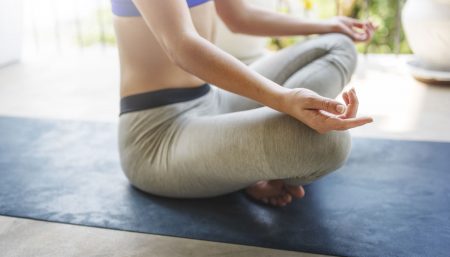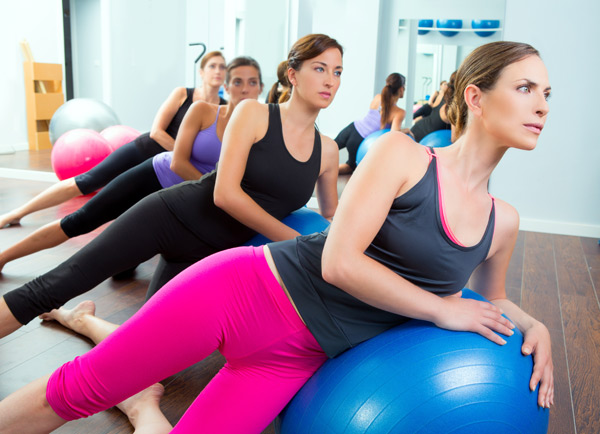
Pilates is one of the most popular forms of exercise around, mainly because it produces real fitness results without much of the ‘strain and burn’ involved in more typical workouts. Pilates is one of the few forms of ‘real’ exercise that can be performed by those with prior back, muscle, and joint injuries (as long as it done under the supervision of an expert instructor).
Pilates exercise relies on a variety of special body movements which stretch, strengthen, and tone the various muscle groups of the body. The well-defined, controlled movements are combined with a yoga-like mental focus that many people find extremely refreshing. Pilates exercises are gentle, progressive, and performed slowly with good postural alignment at all times.
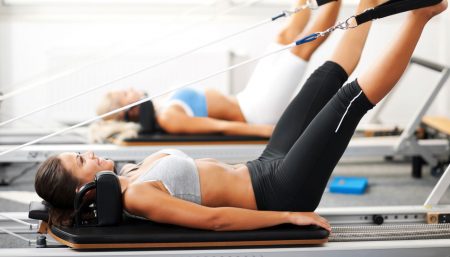
Pilates can be performed both, with and without equipment designed for this type of exercise. Spring tension, straps to hold feet or hands, supports for back (Cadillac, Wunda Chair), neck and shoulder are some important equipments.
Important Benefits:
- The regular use of Pilates has been found to be successful in preventing recurrent back pain episodes. Recent research from the Physiotherapy Department at Queensland University by Richardson and Jull, has demonstrated that by increasing the co-ordination and strength in the deep abdominal muscles, i.e. transverse abdominals, that the lumbar spine is stabilised and protected.
- Help in achieving flatter abs and more slender thighs
- Provide faster injury rehabilitation
- Lead to a clearer, more refreshed mind
- One who practices pilates regularly experiences increased overall body strength and flexibility
- The highest benefit is improved posture, balance, and coordination
- Increased lung capacity and circulation through deep, healthy breathing is a primary focus.
- Bone density and joint health improve, and many experience positive body awareness for the first time.
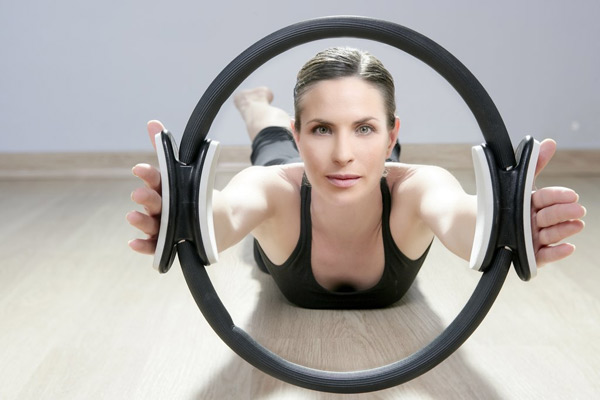
The principles
These are the essential principles to bear in mind whenever you perform pilates exercises:
1. Concentration: Concentration is fundamental to this way of exercising. This is not only because it is important that every part of your body is moving or positioned correctly – a part of a synchronised whole. It is also because when you concentrate on your body in this way, it actually leads your mind away from any immediate concerns or anxieties, and is profoundly relaxing. Constant focus on every movement is required.
2. The breath: The way you breathe is vitally important within the Pilates method. In Pilates exercises, you breathe out with the effort. This helps you to relax into a movement. If you breathe in for the effort of an exercise, you will automatically tense up. In order for the body to receive enough oxygen to perform the exercise, we must breathe efficiently. In order to keep the lower abdominals close to the spine; the breathing needs to be directed laterally, into the lower ribcage. Moving on the exhalation will enable greater core stability at the hardest part of the exercise, and prevents breath holding (Valsalva).
3. The ‘girdle of strength’: This incorporates three main areas – the back, the abdomen and the buttocks. The upper back can be a major seat of tension but when you learn to move the arms correctly (from the middle of the back rather than the shoulders), this tension will disappear. Nearly every Pilates exercise begins by drawing the navel gently towards the spine. This both strengthens the traverse abdominal muscles so that you will – eventually! – regain a flat stomach, and protects the back against undue strain during the exercise. The third element in this girdle of strength is the buttock muscles. By engaging and squeezing these during the exercises, you not only tone the muscles themselves, you also bring the body into perfect alignment, improving the posture and protecting the back from strain or injury.
4. Flowing movements: Pilates is not based on sudden, jerky movements. Instead, one position flows as slowly and naturally as possible into the next. You move rhythmically, your pace set by your own breathing and this warms the muscles and makes them lengthen out rather than bunch and bulk up. Moving slowly also gives you time to become aware of each part of your body so that you perform all the exercises with precision.
5. Relaxation: This is an important element of the method at any time but none more so than during pregnancy. The warm-up exercises that you should do before all of your exercise sessions – both during and after pregnancy – help to reduce and remove the most common areas of tension in the body, slow down the breathing and focus the mind. The relaxation exercises at the end of the session are also important. During pregnancy, you are often overwhelmed with feelings of tiredness. This final relaxation will help to restore flagging energy levels and, just as crucially, to induce a more tranquil state of mind.
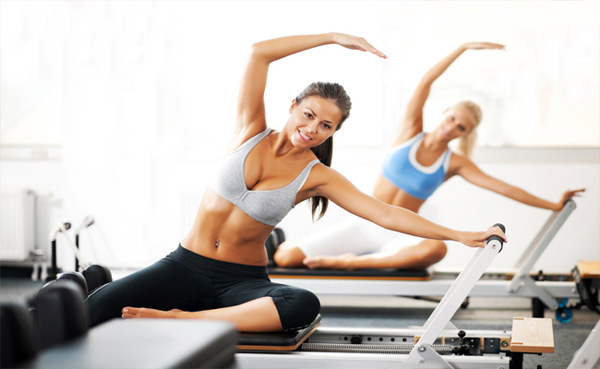
Some of the pilates mat exercises are:
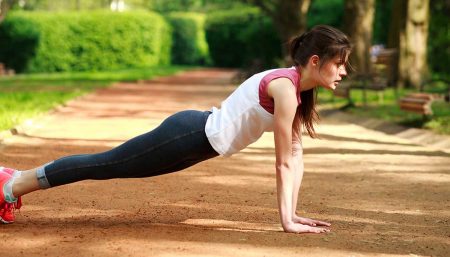
Usually taught as part of a group class, mat exercises primarily focus on strengthening the muscles of the trunk and hip and increasing the flexibility of both the spine and hips. The Roll-Up, Leg Pull Prone, Hundred, leg circle.
Pilates method exercise can seem a little difficult at first. But usually, after a few sessions, most people begin to feel a real difference in their muscle tone, strength, and flexibility as well as significantly improved posture. Also, once you become comfortable with the unique movements and positions of Pilates, you’ll probably enjoy it enough to make it a regular part of your fitness routine!
Finally, it may take awhile for the full benefits of a Pilates exercise program to be realized.
Related Links
- Top 10 To THIGH TRIMMERS
- Pilates For Cyclist
- Tune In To Isometrics
- Resistance Band Workout for Travelers
- Improving Memory and Concentration with Yoga
Disclaimer
The Content is not intended to be a substitute for professional medical advice, diagnosis, or treatment. Always seek the advice of your physician or other qualified health provider with any questions you may have regarding a medical condition.