Memory is critical to our daily lives. Memory is the capacity to retain information about past events, and helps us plan future events. We should be aware of how our memories work, what changes occur in memory over time, and how we can improve our memories as we get older. Fortunately, most changes in memory are normal changes of the aging process, or may be caused by temporary or treatable problems.
It is important to understand that there are memory problems in all age groups. Children and teenagers seem to forget everything they’ve just been told. Many adults are so busy and have so many distractions, they just don’t have time to remember everything. Seniors are more likely to have difficulty remembering names, items on a list, or where they put things. In general, no one has a “perfect” memory. Most of what happens around us is forgotten because there’s no need to remember everything. We are bombarded with information all the time and the memory processes only the information that we need to remember.
There are many yogic techniques that stimulate the brain and nervous system to improve memory and concentration.
- Dharana- or the practice of Concentration. Dharana affects and reduces the occupied mind. The mind is kept firm at one place instead of letting it wander here and there. This reduces strain on the mind. The mental strength increases. With such habitual concentration, the work is done effectively and efficiently. The daily practice of dharana reduces the wavering attitude of mind and a different kind of peace can be observed throughout the day. The sixth limb of yoga, is a state of focused attention used during asana.
- Pranayama and
- Meditation. Dharana trains the mind to become clear, focused and one-pointed.
In asana, using a drishti (gazing point), especially during balancing postures, improves mental concentration. Spine lengthening postures, the forward and back bending poses, activate the spinal column and stimulate the nervous system.
Inverted postures nourish the brain by increasing circulation of blood and oxygen.
YOGA CAN PREVENT MEMORY lapses by calming you and enhancing your concentration. It can also improve your powers of recall by increasing circulation to your brain. |
In pranayama, the mind is focused on the breath as it flows in and out of the body. Oxygen and prana (energy) are also increased in the body and brain by the regulation of breath. Thus, pranayama increases concentration as well as nourishes the brain.
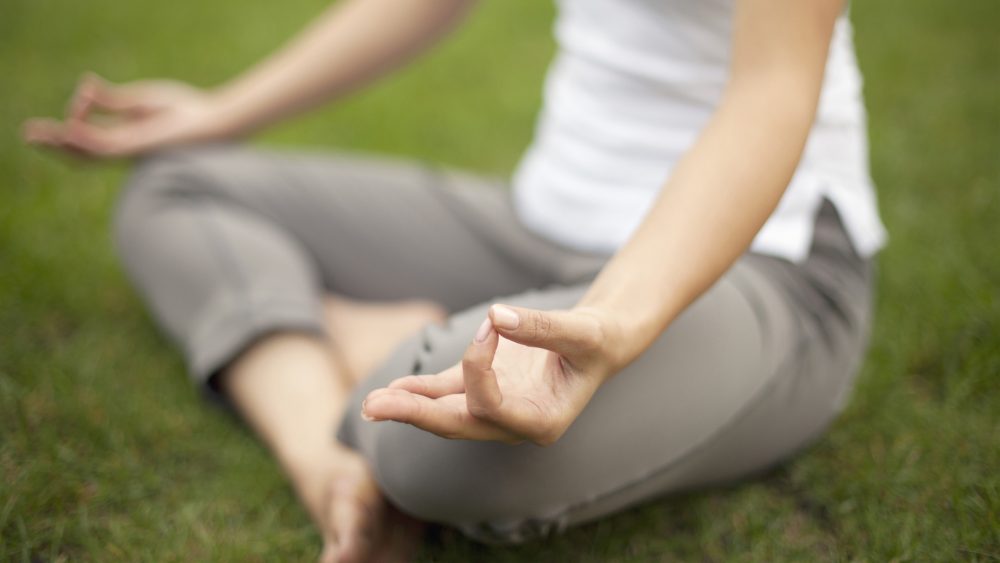
Meditation is a step beyond Dharna, requiring even more mental focus and concentration. The practice of meditation either by itself or in conjunction with asana and pranayama un-clutters the mind by reducing excessive thinking. Excessive thinking consumes mental energy and fogs the mind from seeing and thinking clearly. Meditation on the sixth chakra or third eye will activate the brain as well as focus the mind.
Daily meditation helps with memory. Sit quietly in a comfortable position and start silently counting backward from 50. As your concentration improves, you can move the starting count higher, to 100, 200 or even 500. This exercise will improve your concentration and help you remember things better. |
While you practice these poses, focus on your physical sensations and breathing. When your mind wanders, gently remind yourself to notice what’s happening in your body.
Open-Legged Forward Bend
-
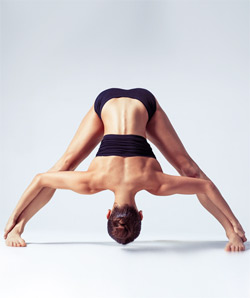 Stand tall with your feet about 3 feet apart. Pivot on the balls of your feet to turn your heels out slightly. Imagine you are squeezing a beach ball between your thighs throughout this pose; this will help you keep your balance. Lift your chest toward the ceiling and inhale.
 -
Exhale as you slowly bend forward from your hips with a flat back until you can touch the floor with the palms of your hands, keeping them shoulder-width apart.
You may need to stack books on the floor in front of you and rest your hands on them. Inhale and lengthen your spine. -
Exhale and lower your torso toward your knees. Look at the wall behind you. Bend your elbows to point toward that wall. If you’re very flexible, you may be able to move your hands in line with your toes, and your head may touch the floor, as pictured. Otherwise, let your torso and head hang loosely. Press your shoulders away from your ears. Hold for 3 to 10 deep breaths.
-
To release, put your hands on your hips, press down into your feet, and maintain a flat back as you return to the standing position. Step your feet together and pause for several breaths
Sirshasana
The headstand is one of the most powerfully beneficial postures for both the body and mind. It rest the heart and aids in circulation. Improves memory and concentration.
Abundant blood is supplied to the brain when practice sirshasana, thus improving memory and increasing intellectual powers. |
After an initial child’s pose there are eight steps to carefully follow in order to practice the headstand properly:
-
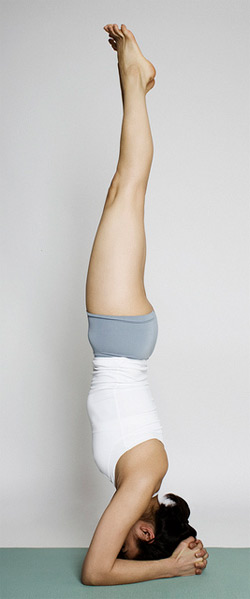 Kneel down and grab your elbows with your hands
 -
Keep the elbows where they are and interlock the fingers in front of you. Elbows and hands now form an equilateral triangle.
-
Place the very top of your head on the floor with the back of your head resting against the fingers
-
Straighten the knees, raise your hips, your body now resembling an inverted V. The weight should be about equally distributed between your head/arms and the feet
-
Keeping your knees straight as much as possible, walk with little steps, bringing your feet as close as possible to your head. This will shift the weight from the feet onto the head/arms. Keep your back as straight as possible to prevent your neck from arching
-
Bend the knees keeping them close to the chest and your feet close to your buttocks. Shift the hips to keep your balance
-
Keep your knees bent and point them to sky
-
Now and only now straighten your legs. Keep your feet relaxed. Make sure that the head is supporting no more than 10% of your body weight, the rest being applied on the elbows. At first hold it for 5 seconds. Increase gradually to 10 to 15 minutes.
Exercise boosts circulation, including blood flow to the brain, which uses a full 25 percent of the oxygen that enters our lungs. It also bolsters brain-nurturing chemicals and reduces stress, which has been shown to damage the brain. Physical activity can also ease depression, which slows thinking and may precede the onset of Alzheimer’s.
Disclaimer
The Content is not intended to be a substitute for professional medical advice, diagnosis, or treatment. Always seek the advice of your physician or other qualified health provider with any questions you may have regarding a medical condition.