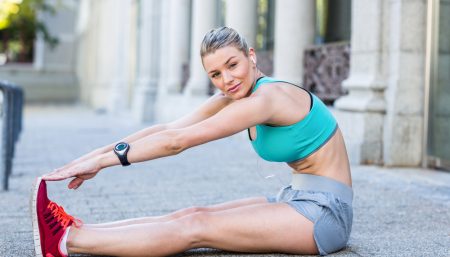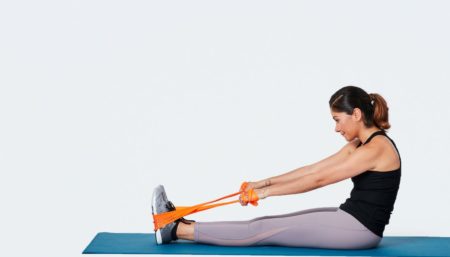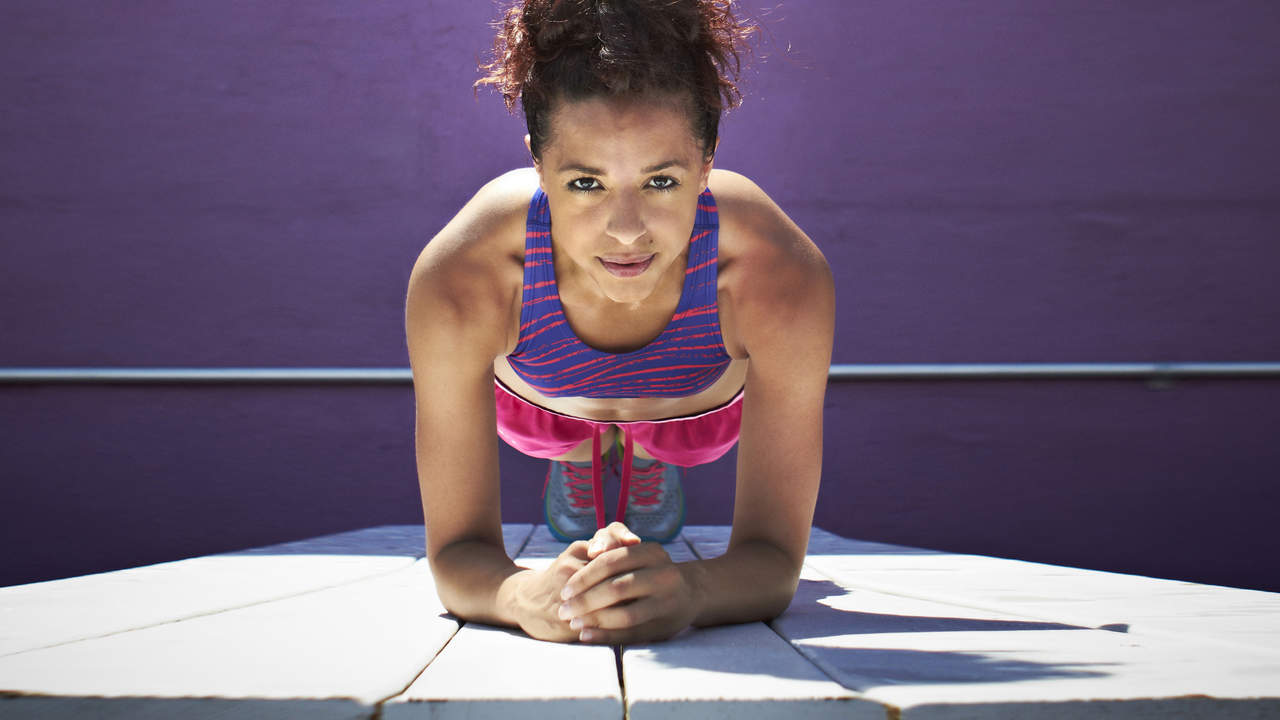
Isometrics is an exercise that involves muscle contraction through pushing, pressing and pulling against an immovable object. This form of exercise uses minimal movement to build muscles. Instead, the force of muscle contraction, muscle – against muscle resistance builds strength. Hold your left and right palm down. Press your hands together as hard as you can. You can feel your pectoral, shoulder, and arm muscles working. This is an example of isometric exercise.
When you suck in your gut, you’re doing an isometric contraction. Another example is the kegel exercise, a contraction of the vaginal muscle, which women are counseled to do during pregnancy to counteract the pressure of the fetus on the bladder and afterward to tone the muscles stretch by childbirth.
Not only does it burn calories, but it also strengthens, relaxes and tones muscles.
Below are some isometrics that you can do virtually anywhere, anytime. Begin by holding each contraction for five seconds. Two sets of 10 repetitions is a good start. You can work up to 10 and then 15 seconds per contraction and then three or more sets. Read on and discover how you can tune into Isometrics.
- Stand in a doorway, hold your hands at thigh level, and then press the backs of your hands outward against the door jambs. Hold sub-maximal force for 8 seconds and repeat. This works the deltoids and suprapinatus.
- Stand in a doorway, raise your right arm above your head, and push your arm against the door frame. Change sides. This works the pectorals, obliques, and arms.
- Stand in a doorway, bend your elbows, and press the palms of your hands-at chest level – outward against the door jambs. This works the pectorals and biceps.
- Stand facing a wall about two feet away from it. Raise your hands to shoulder level and place your palms against the wall. Contract your abdominal muscles, straighten your elbows, learn your body weight toward the wall, and push against it. This works your arms and shoulders.
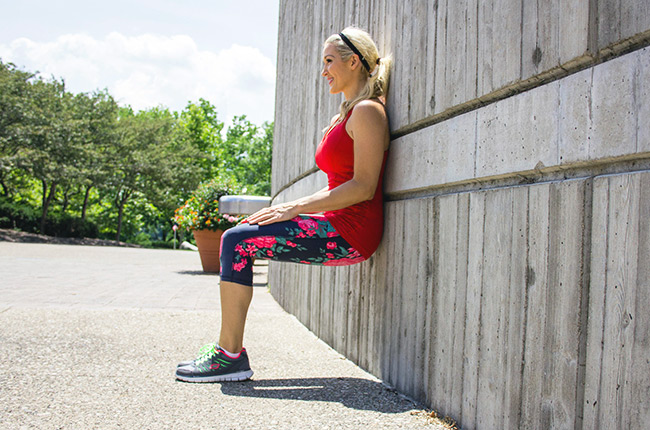
- Stand with your back against a wall. Tighten your butt so your back is firmly against as wall. Walk your feet forward, a few inches at a time, until your thighs are at least at a 45- degree angle but no more than a 90-degree angle from the floor. (At 90 degrees, your thighs are parallel to the floor, at a right angle to both your upper body and your shins.) Hold this position as long as you can and then walk your feet back to stand up and relax. Repeat. This exercise also is known as the “wall-sit.”
- Sitting in a firm chair, place your hands on your thighs and press down heard, leaning forward slightly. This works your abdominals.
- Still sitting, place your hands palms down on the front of the chair seat and press down. This works your biceps and shoulders.
- While sitting, press your tightly together or place a rubber ball between your knees and squeeze. This works your inner thighs.
- While sitting or standing, place hands in front of you at chest level with your palms together, as if praying. Press your hands toward each other. This works the pectorals.
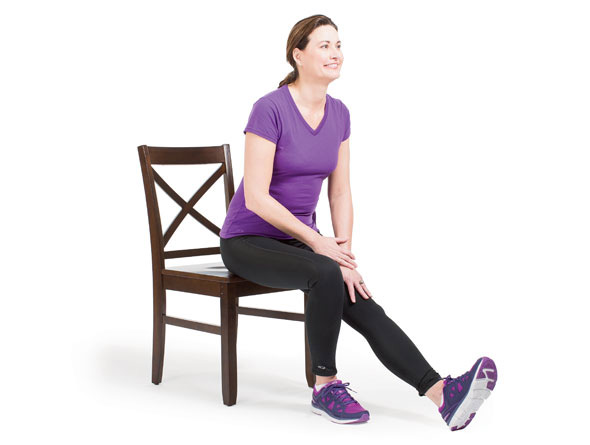
- Sitting in a chair, hook your feet under the edge of a desk (pad the tops of your feet with a folded towel or something else soft), the front of a sofa, or another large piece of furniture. Press your feet upward. This works the quadriceps. A variation for the quads that does not require booking your feet under a piece of furniture is to raise one leg at a time and hold it parallel to the floor with the toes flexed.
- Standing beside a wall, door frame, or piece of heavy furniture, push your right ankle against the stationary object. Switch sides. This works the outer thigh of your right leg and inner thigh of your left leg.
- While seated in a straight chair, hold on to the front of the seat and pull your shoulders up and back, squeezing shoulder blades together. This works the rhomboids and trapezius.
- While seated at a table, press your palms against the undersides of the table with your elbows bent at a 90- degree angle. This works the forearms./li>
Remember, as long as you’re flexing or applying force against something, you’re engaged in an isometric exercise.
Disclaimer
The Content is not intended to be a substitute for professional medical advice, diagnosis, or treatment. Always seek the advice of your physician or other qualified health provider with any questions you may have regarding a medical condition.