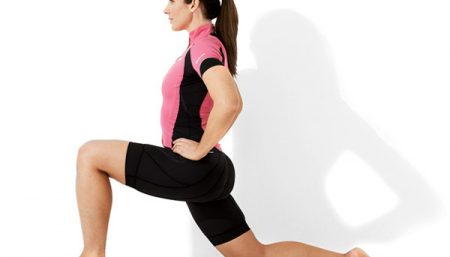
Lunges are a great strength builder for everyone from the beginning runner, to the 5K racer, to a seasoned marathoner, to the biathlete, to the serious bike racer. They are one of the most important exercises for the thigh and buttocks.
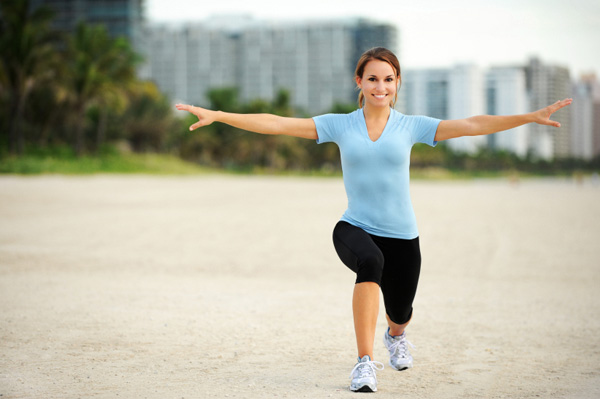
While performing a lunge always strive to keep your torso as upright as possible to minimize the stress on the back.
Lunge as deep as you want; the deeper you go, the more challenging it is to get back to home base. |
What’s nice about the Lunge is that there are many varieties you can perform- an advantage that increases the variety of your training and makes workouts more enjoyable.
Forward Lunge
Step forward as far as you can with your right foot, bend your right knee then push yourself back to your starting point.
Muscles Worked: This one is great for the front and back of the thigh and especially the buttock
Note: Make it harder by stepping out farther or bending the knee more to lunge deeper, or by trying to accomplish more repetitions per minute without sacrificing distance.
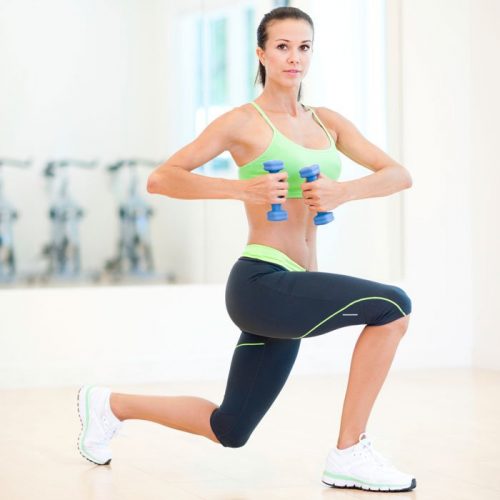
Lateral Lunge
Step to the right with your right foot, bend your right knee then push yourself back to the starting point. Try to keep your feet parallel to each other.
Muscles Worked: Like the forward lunge, this one works the front and back of the thigh and buttock, but it puts an extra emphasis on the inner thigh.
Rotation Lunge
Step to the right with your left foot and turn the foot and hips to the left to face the direction you’re lunging. Keep the right foot facing straight and the left foot facing the direction you’re lunging. This will look a bit like a fencing move.
Muscles Worked: Like the other lunges, this one works the front and back of the thigh and the buttock but it puts a little extra emphasis on the deeper hip rotator muscles.
Note: Try rotating around past 90 degrees. In other words, if you’re facing “North” go past “west” all the way around to “Southwest” or diagonally back to the left.
Reverse Lunge
The most effective and safest variation of lunging is the Reverse Lunge. Unlike a forward Lunge, taking a step backwards rather then forward completes a reverse Lunge. The effects on the muscle are the same, but the reverse Lunge places less stress on the knees because the knees cannot extend beyond the toes. Begin with your feet shoulder width apart, torso erect. Take a slow, controlled step backwards. When the ball of your foot touches the floor, continue the movement by lowering your hips so that your forward thigh becomes parallel to the floor. At this point your forward knee should be positioned directly over your ankle or foot slightly behind. Your front foot should be pointing straight ahead, and your trailing knee should be extended to stretch your hip flexor muscles. After reaching the most comfortable bottom position, shift your balance forward and then push off with your rear foot while straitening your forward leg. When you have returned to the starting position, repeat the movement with the other leg. During the reverse Lunge your weight is primarily centered upon your forward leg, which remains stationary, making it easier to maintain your balance.
Walking Lunges
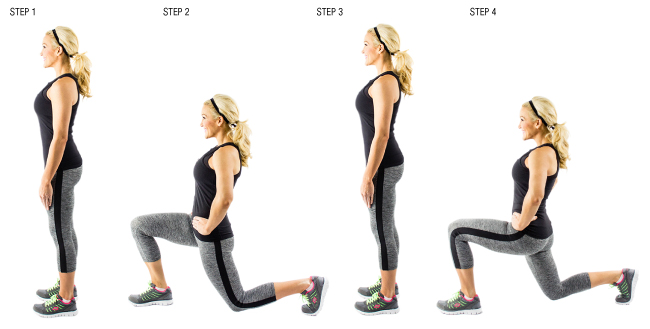
Start by standing upright with your feet together. For beginners place your hand on your hips (and have smiles on your lips). For more advanced exercisers hold a dumbbell in each hand or a barbell on your shoulders. Take a long step and bend both knees and lunge towards the floor. Keep you feet pointed straight. The back leg is the one doing most of the work. Bring your feet together after the first lunge and then lunge forward with the opposite leg. Alternate your legs as you go across the floor and bring your feet together between each step. Note: It is important to keep the front knee over the heel and not over the toes. If you lunge too far forward you will put great pressure on your front knee and increase the risk of injury.
Muscles Worked: quads, hamstrings, glutes, and some calves
These exercises burn maximum calories, shape and define a greater percentage of your total mass and provide phenomenal cardiovascular benefits. If you participate in cross training sports, the flexibility gained from performing the Lunge will improve your performance. The increased flexibility enables you to develop a more efficient running motion because you can increase the time your feet spend on the ground, allowing you to achieve more power from the push off. In addition to running, the lunge will help you with any activity that requires lunging movements, such as tennis and dance.
Disclaimer
The Content is not intended to be a substitute for professional medical advice, diagnosis, or treatment. Always seek the advice of your physician or other qualified health provider with any questions you may have regarding a medical condition.