Insomnia is a huge problem in this fast-paced, sugar and caffeine addicted country. But if we can first identify the habits we have that contribute to our sleeplessness and slowly change them, and at the same time add more relaxation and deep breathing to our pre-sleep routine, we will sleep better.
Insomnia is one of the most common health complaints, afflicting people of all ages and backgrounds. Difficulty in falling or staying asleep can hinder all aspects of an individual’s life. People with sleep problems often experience irritability, tension, helplessness, anddepression as well. Unchecked, insomnia can become a debilitating and self-perpetuating cycle. While there are many causes of sleeplessness, anxiety, over work or personal problems is often a strong factor.
If you suffer from insomnia, whether often or occasionally, Yoga can help. Through relaxing physical exercise, breathing techniques and complete relaxation, you can promote more regular and restful sleeping patterns without resorting to sleep-inducing drugs. Such drugs interfere with your body’s natural sleep cycle and can create psychological dependence and undesirable side effects
Before going to bed, you can do a few gentle stretches to relieve tension and help you relax. Happy baby (Ananda Balasana) is a good choice because it releases the lower back and hips, leaving you feeling looser and more relaxed. Goddess pose (Supta Baddha Konasana), which opens the groins, is another option. You can do both these poses while lying in bed.
Check out the following poses, you can try to facilitate the sleep process.
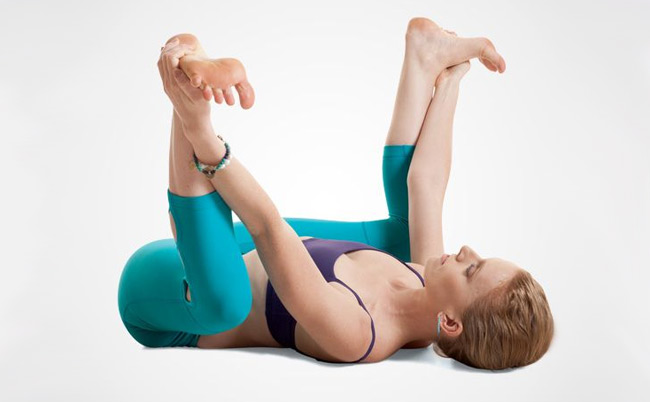
Ananda Balasana (Happy Baby Pose)
Type of pose: Supine
Benefits: Releases the low back, stretches the hamstrings
Instructions:
- Come to lie on the back.
- Bend the knees into the chest.
- Open the knees, bringing them towards the armpits.
- Stack each ankle directly over the knee, so that the shins are perpendicular to the floor.
- Flex the feet.
- Hold the outer edges of the feet at you draw the knees towards the floor.
This pose is appropriate for both beginners and advanced students.
Supta Baddha Konasana (Goddess Pose)
Type of Pose: Supine, Restorative
Benefits: Opens the groin
Instructions:
- From Cobbler’s Pose – Baddha Konasana, lean backward, bringing your elbows to the floor.
- Lower the back all the way to the floor.
- Stay here several minutes. To come out, roll over to your side and sit up, using your hands to support you.
Beginners: If you are not comfortable reclining on the floor, you may use a bolster or several folded blankets to support the spine. You may also want to place a block under each knee for support.
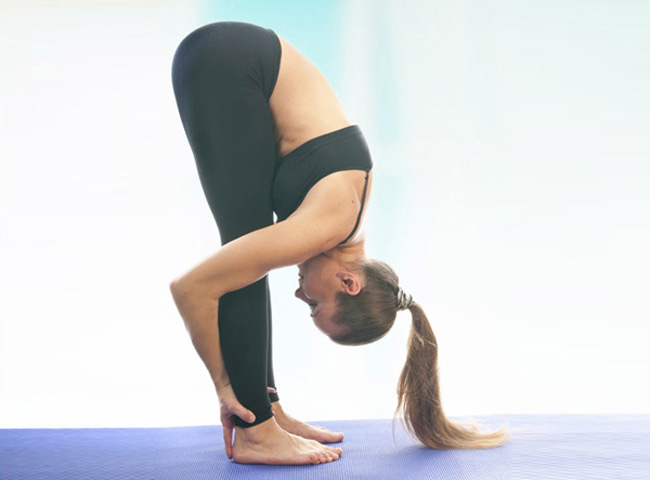
Supported Forward Bend – Uttanasana
To do this yoga posture, stand directly in front of your bed. If you’re very stiff, place some pillows on the bed. Inhale. Exhale, then lean forward from the hip. Don’t over arch your back.
Gently and gradually move forward until your head is resting either on the stack of pillows, or the bed itself. This may take some time, so don’t get frustrated. If your head won’t reach the bed or the pillows, then rest your arms on the bed. Breathe.
Lift your kneecaps up. This will help to release the hamstring muscle. Stay here for as long as you can, to allow your hamstring muscles and lower back to release.
Shoulderstand – Sarvangasana
If you’re not familiar with Sarvangasana, or it makes you uncomfortable, you should skip this yoga posture. Or you can use the wall as a support. However, if you feel that you can balance, lie down on the floor.
Inhale. With a moderately sudden movement, push your body up in the air, so that your shoulders are resting on the floor, but your legs are in the air. Support your hips with your hands. At first, do only a half shoulderstand. To do this, create a “jack-knife” with your body. Place your body at a 45 degree angle, and your legs at the opposite 45 degree angle. Keep your back and legs as straight as possible. Breathe.
Feel your shoulders and back unwind. Stay here as long as possible. Pay close attention to the breath. Watch your belly move up and down as you breathe. This is a more difficult pose than it seems, so stay focused.
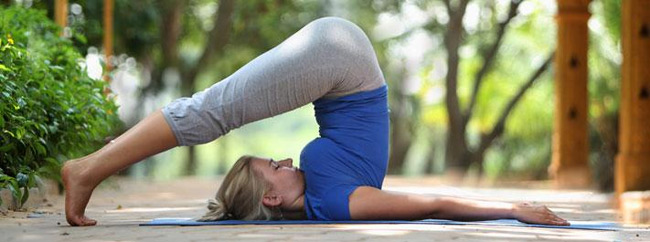
Plow – Halasana
You can move directly into Halasana from Sarvangasana. Coordinate your movement with the breath. Once you feel that the tightness in your muscles has unwound sufficiently, allow your legs to go over your head and to the floor behind you. Don’t be concerned about “perfection” in this yoga posture, but do try to get the form correct. Don’t push yourself too far. Keep your back as straight as possible. Breathe.
Stay here as long as you can. If you like, you can come down, rest for a minute, then repeat the shoulderstand and plow sequence again.
Reclining Side Twist – Supta Matsyendrasana
Lying on the floor, inhale. Then pull your right knee into your chest. Leave the other leg straight. Take the knee in the opposite hand. As you exhale, turn your entire body to the left. Stretch your right arm out to the right and if possible, look to the right. Breathe.
Repeat the yoga posture on the other side of the body.
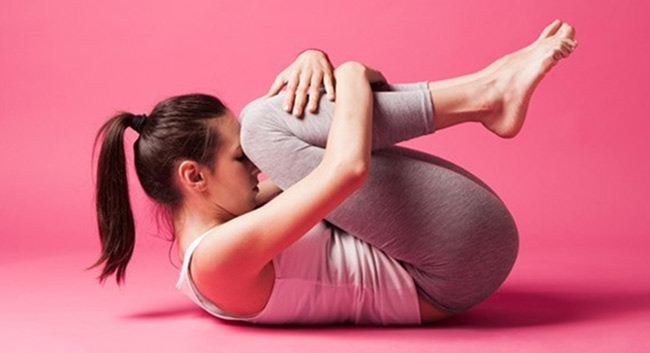
Double Wind Releasing Pose – Pavana Muktasana
This yoga posture is called the wind releasing pose because it helps to release gas. However, in this case we’re trying to release the lower back and shoulders. Inhale, and draw your knees to your chest. Then as you exhale, lift your body up toward your knees. Draw your shoulders down toward your feet. Breathe. Stay here as long as you feel comfortable.
Seated Forward Bend – Sukhasana Variation
Sit in Sukhasana, or easy pose. To do this yoga posture, assume a cross-legged position on the floor, with both feet into the groin. Slowly, gradually move forward, using your hands to walk you forward across the floor. If you’re limber enough, you’ll be able to rest your body across your crossed legs. If not, use your hands to support your body. Breathe. Stay here for at least thirty seconds.
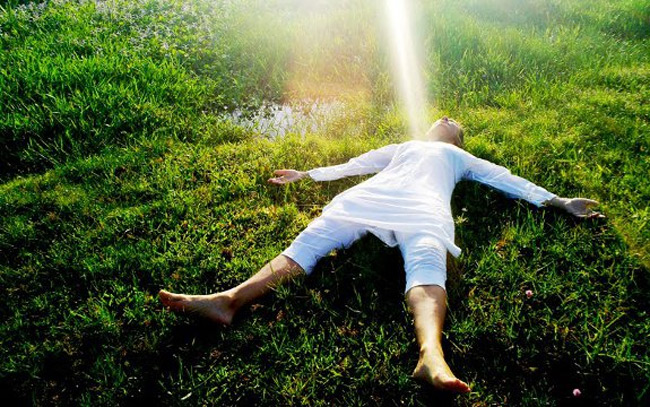
Corpse Pose – Savasana
Savasana seems very simple on the outside. But this yoga posture can be very difficult when the mind is racing. To do Savasana, lie down on your bed on your back. Allow your arms and legs to splay outward. Turn your palms up. Relax your body. Relax your mind. Breathe. Don’t try to control your thoughts. Simply let them flow, and observe them quietly.
Do these yoga postures whenever you feel you can’t sleep. You can do them before you go to bed every night.
Practicing Yoga-Nidra
Yoga-nidra is an efficient method of inducing complete physical, mental and emotional relaxation while maintaining consciousness. In fact Yoga Nidra not only brings physical and mental relaxation but also prepares the mind for spiritual evolution. It is mainly associates with pratyahara (withdrawing senses from sense-objects) and dharana (concentration).
In normal sleep consciousness is absent and the unconscious is in charge. In Yoga Nidra the consciousness directs the unconscious to relax. Yoga Nidra is a ‘sleep’ where all the burdens, stress, strain, anxiety are thrown off to attain more blissful state of awareness, a relaxation much more intense than ordinary sleep. Yoga Nidra is said to be the doorway to samadhi!’
Generally Yoga-nidra is practiced in Shavasana or sitting position. It may last for 25 to 45 min. It is important to remain awake and aware during the practice. Yoga nidra is of great help to insomniacs it relaxes the tensions that accumulate in the muscles, the emotions and the mind, allowing the practitioner to rest deeply. Daily practice leads to a deeper and more restful night’s sleep.
There is no doubt that, yoga has beneficial effects on nervous system, and the brain. Certain yoga asanas increases the blood supply to the sleep center in the brain, it normalizes the sleep cycle. Yoga will make you fall asleep sooner and improve the quality of your sleep so that you need less. You will have a more restful sleep because of the relaxing aspect of yoga and the subsequent relieving of stress, tension and fatigue. The practice of breathing allows for more oxygen in the body providing clarity in the mind.
Disclaimer
The Content is not intended to be a substitute for professional medical advice, diagnosis, or treatment. Always seek the advice of your physician or other qualified health provider with any questions you may have regarding a medical condition.