The chest is made up of the pectoral muscles – major and minor. The pectoralis major is the bigger of the two covering most of the clavier and sternum and attach to the upper arm. They help in performing various functions at the shoulder like flexion, rotation and adduction towards the body. The pectoralis minor lies beneath the major and is responsible for similar functions.
The following is a list of 10 effective chest (Pectoral)-developing exercises. Try and incorporate them in your upper-body workout routine:
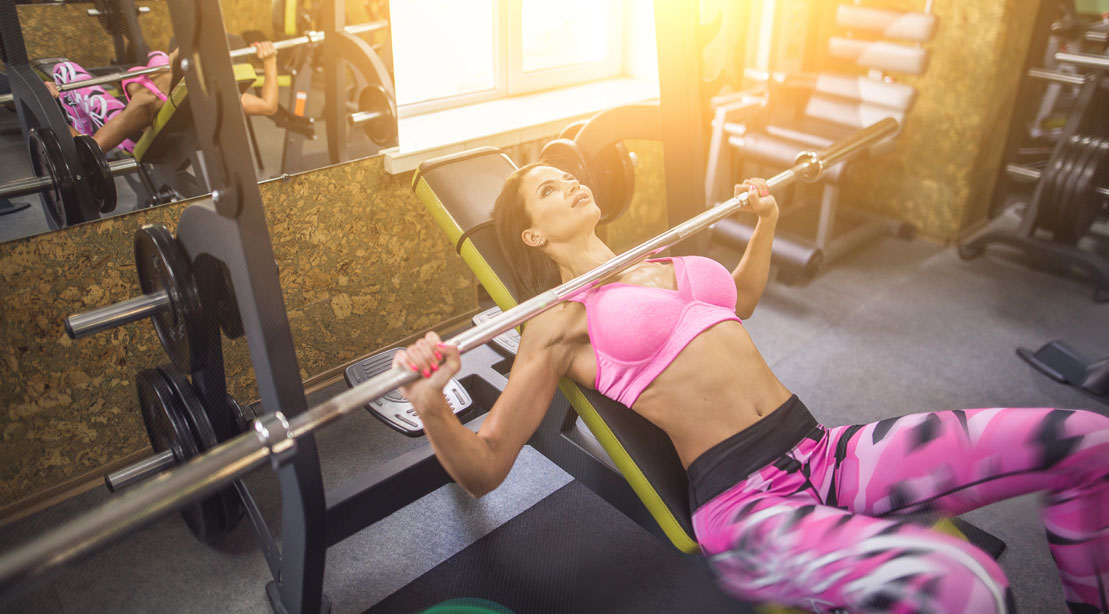
 Incline Bench Press
Muscles worked: Upper Pectoral muscles
Instructions:
- Lie on an incline bench with the back rest tilted at an angle of 300 to 450.Support your legs either on the ground or on the platform provided for this purpose at the lower end of the bench.
- Take hold of the barbell with your hands grasping the bar far enough apart so that the forearm forms a right angle to the upper arm when the upper arm is parallel to the floor.
- Keep your eyes more or less under the bar of the barbell. Tense the stomach and the lower back muscles.
- Now lift the barbell from the support rack and lock it vertically with slightly bent arms above the upper part of your pectorals.
- Lower the barbell slowly until it touches your pectorals lightly, then raise it again by extending your arms.
Note: Do not bounce the bar off your chest. Keep your buttocks firmly against the bench throughout the entire movement. Lifting your buttocks or arching your back during any part of this movement is cheating and can cause serious injury.

Decline Bench Press
Muscles worked: Lower pectoral muscles.
Instructions:
- Lie on a decline bench with the back rest bent down at an angle of 300 to 450.
- Carefully lift the bar off the rack and steady the weight over your lower chest.
- Slowly lower the bar until it touches your lower chest, pause for a split second and return the bar to the original starting position. Repeat.
Note: Do not bounce the bar off your chest.
 Pec-deck flys
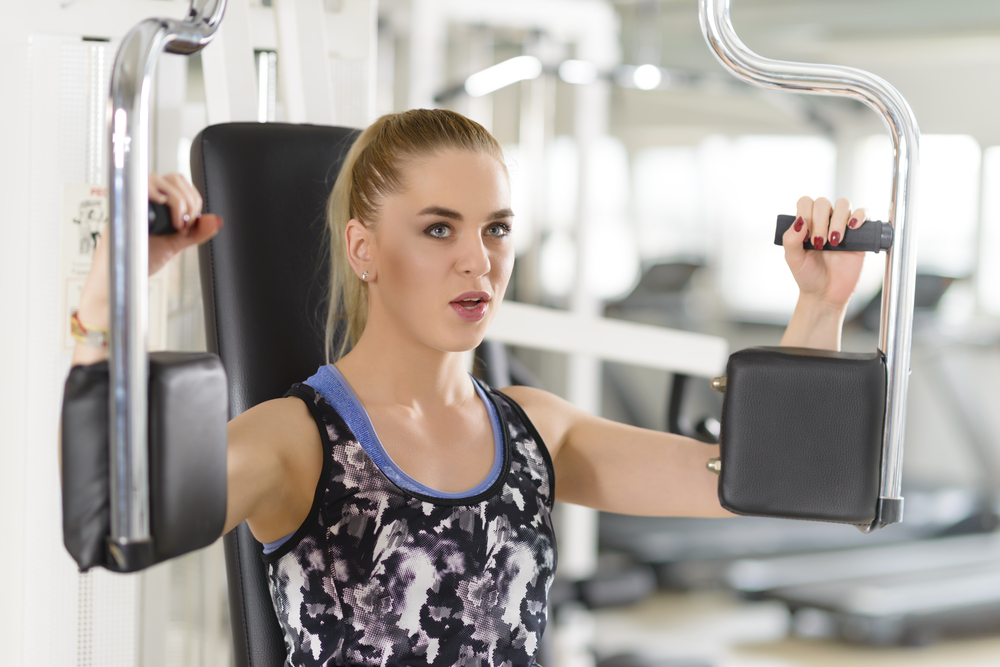
Muscles worked: Greater and lesser pectoral muscles
Instructions:
- Sit with the whole upper part of your body supported by the back rest. Place your feet on the floor. Place your forearms behind the pads or grasp the handles in such a way that your forearms are vertical and your upper arms parallel to the floor. Now pull the grips together in front of the body until they touch.
- Open your arms slowly and simultaneously. In the end position the arms are at the sides of the body.
- From here bring the grips smoothly and without stopping back to the starting position, where they should touch briefly exactly in the middle in front of your body.
Note: Different machines require different arm and hand positioning. The photo demonstration above is an example of one type.

Flat-bench dumbbell flys
Muscles worked: Outer Pectorals.
Instructions:
- Lie on your back on a flat exercise bench. Bend your legs and place your feet on the end of the bench. Hold a dumbbell in each hand vertically above your shoulders, keeping your rams slightly bent.
- Lower each dumbbell out to the side in a semicircular movement. During the downward movement the arms should be bent more. The dumbbells should not reach behind the axis of your shoulders.
- Depending on your flexibility, you can lower the dumbbells to shoulder level or a few inches below. From the lowest point, lift the weights without jerking in an even movement back to the starting position.
Note: Contraction of the chest muscles at the top of this movement is critical. The movement is similar to a bird flapping it’s wings while in an inverted position.
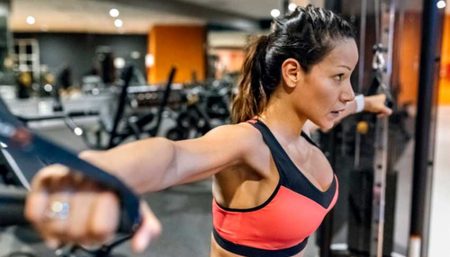
 Standing Cable Cross-overs.
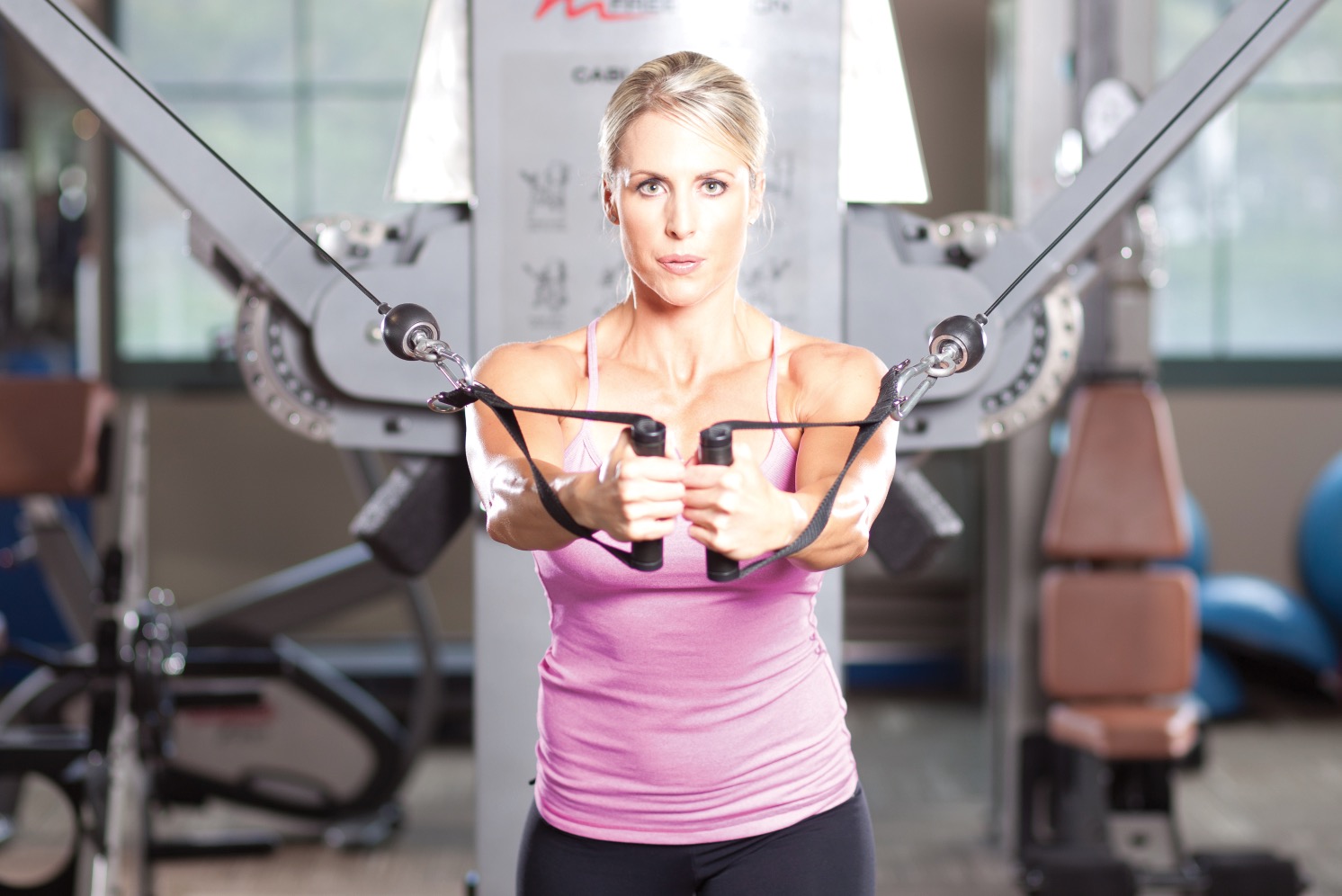
Muscles worked: Inner Pectoral.
Instructions:
- Stand between two overhead cable handles. Grasp the handles with palms facing the floor.
- While keeping your arms in a semi-locked position, lower the handles towards each other until one crosses over the other).
- Contract the chest for a split second at the bottom of the movement and return the handles to the original starting position.
Note: You should alternate the cross-over. (For example; on the first repetition the right handle will cross over the left handle. On the second repetition the left handle will cross over the right handle).

Bench presses on step with tube
Muscles worked: Greater and lesser pectoral muscles.
Instructions:
- Lie on your back on the step. Your legs should be bent and your feet flat on the floor at the bottom end of the step. Place the tube under the step near the breast-bone. Then hold the tube slightly more than shoulder-width apart with your palms pointing towards your feet.
- Now move your hands upwards in a semicircle. In the end position the hands should be shoulder-width apart and the arms slightly bent.
Note: Avoid a hollow back and do not straighten your arms completely.

Push-up
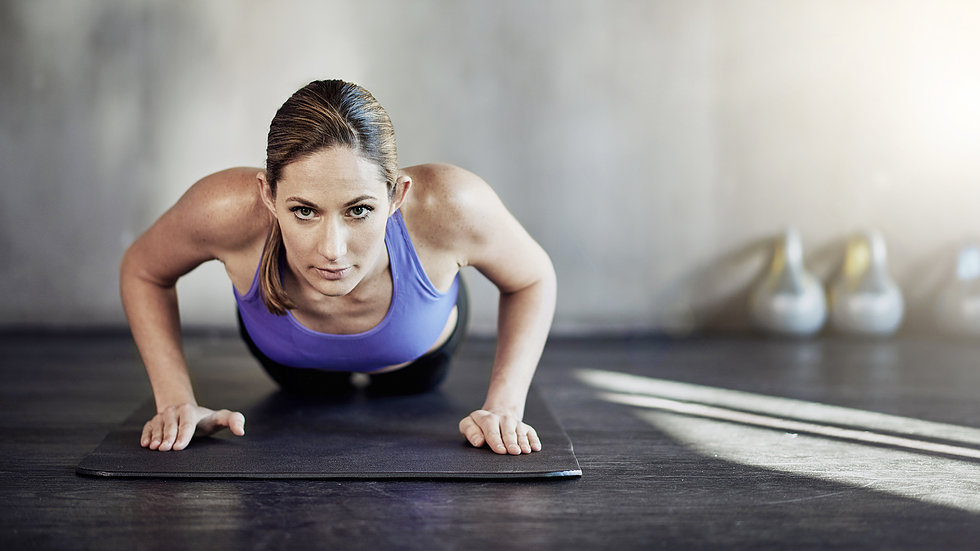
Muscles worked: Greater and lesser pectoral muscles.
Instructions:
- Your whole body should be completely straight and stretched. Only the tips of your toes and the palms should be resting on the ground. The hands are just under the shoulder axis, flat on the ground. Bend your arms slightly.
- Lower your body evenly. In the end position the arms are bent at about a right angle. The tips of your feet provides the pivot of the movement. The body remains stretched and tense.
Note: Do not sag your body.

Machine Dips
Muscles worked: The lower pectoral
Instructions:
- Grasp a parallel dipping bar with your palms facing one another.
- Raise your body until your arms are fully extended. Allow your body to hang naturally with a slight lean forward. Lower your body as far as possible. Return to the original starting position and repeat.
Note: Do not arch your back all through the motion.

Machine Pullover
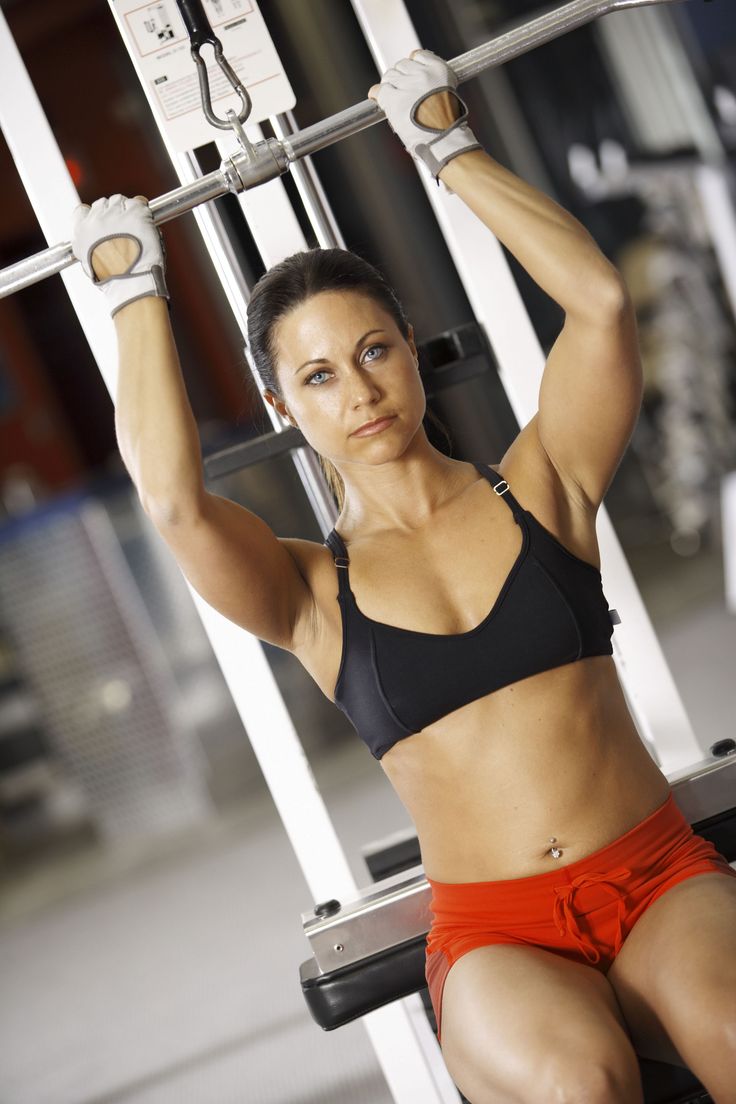
Muscles worked: The greater pectoral muscles.
Instructions:
- When you train with a pullover machine, make sure that the height of the seat is adjustable. Position the seat so that your shoulders are in line with the machine’s axis of rotation. If possible, fasten your pelvis with a belt. Rest your head on the head rest. In the starting position, the upper arms from a vertical extension of the upper part of the body.
- Now pull your arms down in a semicircular motion in front of your body, keeping them slightly bent.
- At the finish, your upper arms should be somewhat behind your body. From here bring your arms slowly and evenly back to the starting position.
Note: If you want to involve the triceps more, you can bend your arms sharply while lowering them.
 Bench Press (Db)
Muscles worked: General Pectorals
Instructions:
- While lying on a bench with your legs slightly parted and your feet firmly on the floor, hold two dumbbells with arms extended, palms facing away from your face.
- The dumbbells should nearly touching each other above your chest.
- Your back should be straight and firm against the bench and your elbows should be unlocked.
- Slowly lower the dumbbells straight down to the sides of your chest with palms still facing away from your face. Your elbows should be pointing to the ground.
- Raise (push) the weights to the starting position while flexing your chest.
Note: Don’t arch your back or bang the weights together. Don’t just let the weights drop to the sides of your chest. Resist the weights downward force by lowering the dumbbells slowly.
(Beginner Level 7 to 9 sets, Intermediate Level 9 to 11 sets, Advanced Level 12 to 14 sets )
SMART TIP: Train with Passion.
Disclaimer
The Content is not intended to be a substitute for professional medical advice, diagnosis, or treatment. Always seek the advice of your physician or other qualified health provider with any questions you may have regarding a medical condition.