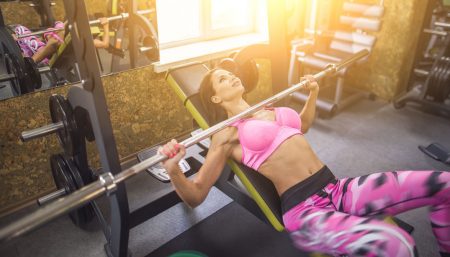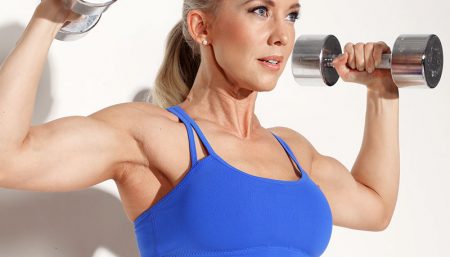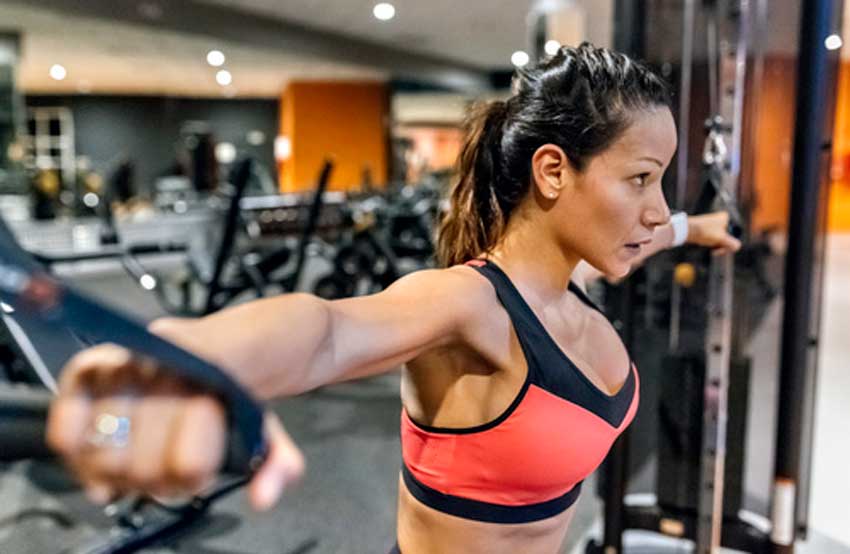
More and more women in body building and fitness are discovering the benefit of a healthy, chiseled Chest. Improving the muscle tone in the area of the chest behind the breasts is a great way to improve the look of the bust. It is essentially a “lift” without resorting to using a scalpel.
The postural alignment is basically the same for all the chest exercises. Remember to always consciously focus and contract the muscles of the chest while maintaining the postural alignment and form during all the chest exercises.
There are four areas of the chest that women should emphasize:
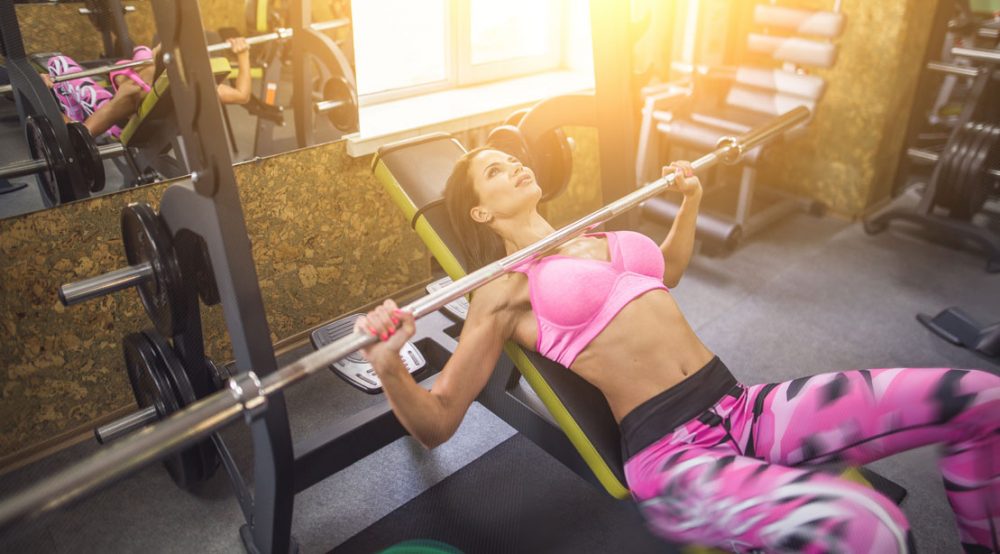
- Upper Chest Area with exercises such as the Incline Bench Press (Db).
- Overall Pec Area that attaches to the breasts, giving them support, with exercises such as Bench press(Db), chest dips and push-ups.
- Outer Chest Upper Area with exercises such as the Incline Flys (Db).
- Inner Upper Chest Area with exercises such as the Incline Cable Crossovers.
Dumbbells: the best choice
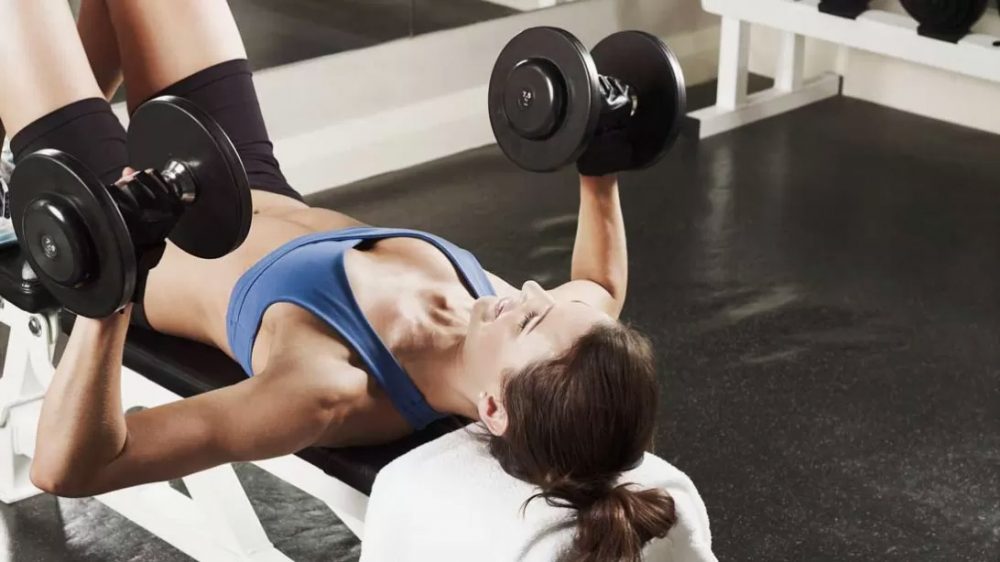
Dumbbells are recommended for performance of chest exercises as they allow for a greater range of motion and a deeper stretch at the bottom of the movement. Besides they provide for a better isolation and muscle contraction at the top of the movement, helping to recruit more muscle fibres within the chest and surrounding musculature.
Also, as they are harder to control and hold than Barbell, they help to strengthen and develop the important antagonistic and synergistic muscles of the chest and Shoulder.
Lifting the right way
The following sequence of movements will ensure that you learn how to properly lift a dumbbell off the ground and into position to start many of the exercises, all the way till you have completed it.
- When picking up dumbbells make sure to bend at the knees, while you lift the weight with your legs.
- Lift with your legs, not with your backs! You can easily injure your lower back by bending over to pick up the weight.
- While standing, place the bottom plate of the dumbbells against your thighs and keep them there as you sit on the bench seat. You will find that by keeping the dumbbells against your thighs as you sit, it will allow you to easily manipulate them to the top of your thighs.
- Begin positioning your body into the correct postural alignment, starting from the bottom of your body and moving to the top.
- Space your feet about shoulder width apart.
- Make sure your knees are pointing straight ahead throughout the movement.
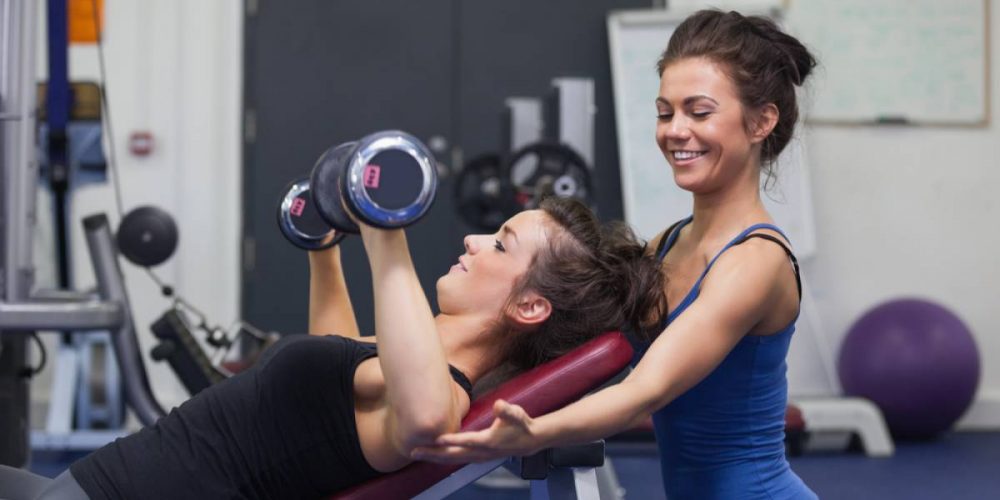
- As you raise the dumbbells to the starting position on top of your thighs, do not try to muscle them up with your arm muscles. This will only drain your strength and can easily cause an injury. You need 100 percent of your strength for the exercise itself and cannot afford to waste it on something that you can easily avoid. To properly raise the dumbbells from your thighs into exercise position, follow these guidelines; you will be using your leg muscles and momentum to help place you and the dumbbells into position. While sitting in an upright position, with the dumbbells on your thighs, thrust one leg up, leveraging one dumbbell up to around your chest level.
- Immediately thrust the second dumbbell upward, while simultaneously allowing momentum and the dumbbells to guide you back into the lying position while your abdominal muscles help safely ease you into the position. The reason for lying back immediately when the second dumbbell is thrust upward is so you do not injure your shoulder joints or lower back from having to hold the dumbbells in that otherwise awkward position. Lying back immediately following the dumbbell’s momentum while allowing the abdominal muscles to ease you into position will help ensure your safety and keep your strength at its peak for the exercise. This may should difficult, but it’s not. It is the safety and easiest way of getting the dumbbells into position (especially if you’re using heavy dumbbells ).
- Once you’ve gotten the dumbbells up, lay back, until your back touches the bench.
- The dumbbells should now be in position at the sides of your chest.
- Again, make sure your feet are shoulder width apart, and that they are flat on the ground at all times.
- Make sure your knees are straight.
- Your lower back should be flat against the bench at all times, with no excessive arch in the lower lumbar region (small of the back).
- Make sure your back is flat against the bench, with the arms and elbows out to the sides and the forearms perpendicular to the floor. When you’re correctly positioned, retract or squeeze the shoulder blades together. At first it may seem uncomfortable or odd, but do not underestimate the significance of this technique. You must learn to hold this position throughout the movement, and consistent practice will ensure this. By squeezing the shoulder blades together and keeping your entire back in constant contact with the bench, you will actually be taking the anterior shoulder out of the exercise. The chest muscles lifting the weight.
- Relax your head throughout the movement, and make sure you do not twist it or lift it from the bench while engaged in the exercise.
Disclaimer
The Content is not intended to be a substitute for professional medical advice, diagnosis, or treatment. Always seek the advice of your physician or other qualified health provider with any questions you may have regarding a medical condition.