The normal human body oral temperature averages at about 98.6°F (37°c) but varies during the day, especially in response to exercise. A woman’s body temperature not only fluctuates throughout the day, it also responds to hormonal changes throughout the month, thereby giving a valuable information about individual fertility cycle.
What is BBT?
Basal body temperature (or BBT) is the temperature of the body at rest. The BBT method requires charting your basal – think ‘base’ – body temperature when you’re completely at rest. For most women, 96 to 98 degrees is considered normal prior to ovulation and 97 to 99 degrees after ovulation. By charting the differences – in one-tenth degree increments – you can determine when ovulation has taken place.
Changes in BBT
In an average 28-day menstrual cycle, with ovulation typically occurring around day 14, the BBT shows two phases. In the first phase, during the menstrual period and through to ovulation, the BBT is at its lowest level. Soon after ovulation, however, the BBT rises approximately 0.4°F (at least 0.2°c) and stays raised until menstruation starts; this is the second or post-ovulatory phase. The rise in temperature is due to the hormone progesterone, which is secreted by the corpus luteum after the ovum has been released, and is a sign that ovulation has already occurred.
Factors affecting BBT
As the post-ovulatory rise in BBT is quite small, disturbances in temperature can be confusing. The following are a few of the more common factors that could give a variation in your BBT.
- Your body reaches its BBT after you have asleep for four hours or more, so if you work night shifts or take naps you should take your BBT after your main sleep of the day. If you often get disturbed in the night or early morning, but usually manage to go back to sleep for another couple of hours, remember to record your BBT after your longest sleep. Take your temperature before you get out of bed or have a hot or cold drink because your temperature can change quite quickly.
- If you have been drinking alcohol during the evening, your BBT may be high the next morning so don’t confuse this with your mid-cycle rise, which should stay raised until your period. Although a hot teddy late at night can help you get to sleep, alcohol will actually disturb your sleep so that you sleep less deeply and may cause you to wake up a few hours later. And if you’ve been up late the night before your BBT may be raised the next morning, which makes for a confusing temperature reading the next day!
- Stress, anxiety, illness, and infection also can raise your BBT temporarily, as will some drugs that are used to treat menstrual disorders, such as progestogens.
- Air travel and the resulting jet leg can affect your 24-hour temperature cycle, so bear this in mind when you interpret your overall pattern.
If you have repeated, unexplained spikes of high temperature, check that you are shaking down the mercury in your thermometer properly each morning. If you have a sudden dip in temperature it is more likely to be a recording.
How to take your BBT
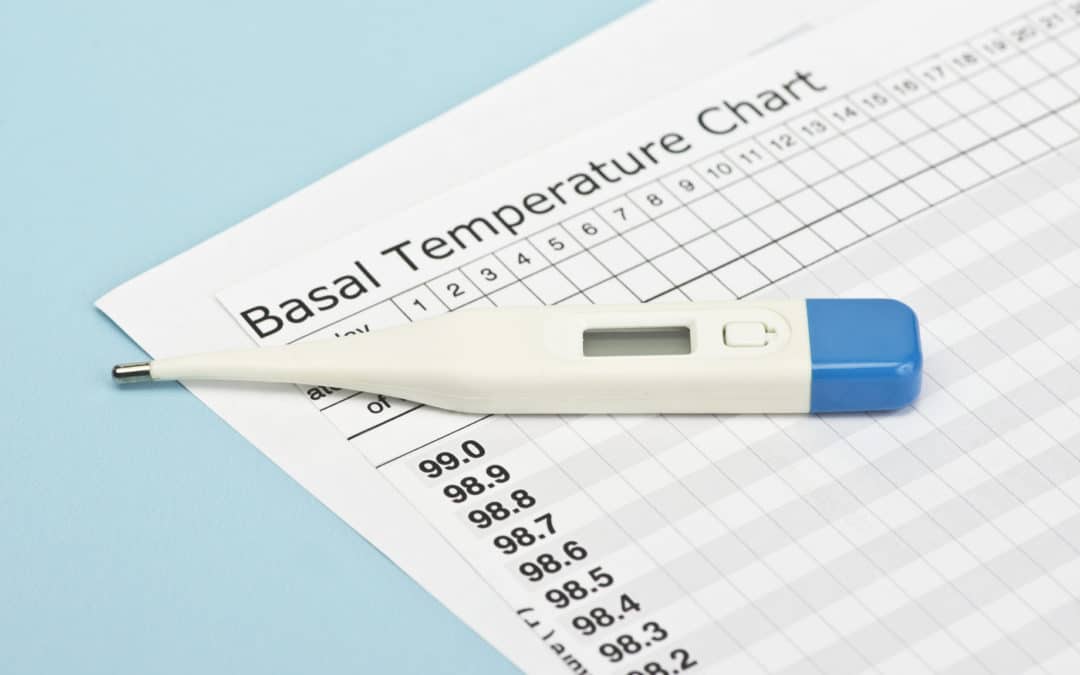
So that you can take your BBT accurately, you will need to purchase a special glass fertility thermometer which has each degree marked in tenths. You can also use an unbreakable electronic digital thermometer. This is a easier to use than a glass thermometer because it makes a beeping sound when a stable temperature is reached. It also store the information until you are ready to read or record it. If you are using a glass fertility thermometer remember to shake it down well before using.
| A basal body thermometer (BBT) is an ultrasensitive thermometer that tracks your body’s exact temperature. A digital thermometer is your best bet. These are fairly cheap and can be purchased at any pharmacy. Each thermometer kit comes with a blank graph. These graphs may have space for you to record PMS symptoms. |
You can record you temperature from the mouth, vagina, or rectum but be consistent: your BBT will be slightly different depending on which route you choose. If you use a glass thermometer leave it in place for five minutes before reading the temperature. If the mercury falls between two numbers record the lowest temperature every time. A digital thermometer will need about a minute to “beep” with a temperature reading.
BBT and Ovulation Prediction
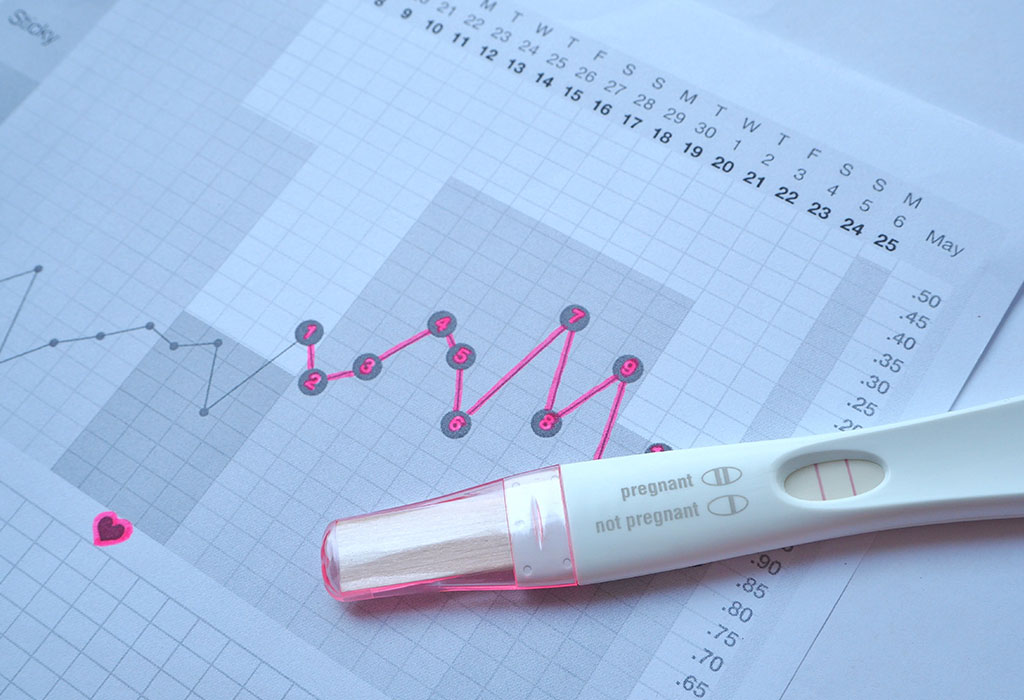
Starting on day one of your menstrual cycle – the first day of your period – begin recording your BBT temperature using a calendar or notebook and graph paper. Each morning, record your temperature. Plot each day’s BBT on the graph. Your temperature rise may be sudden, gradual, or in steps. The pattern may vary from cycle to cycle. By charting the differences – in one-tenth degree increments – you can determine when ovulation has taken place. Typically a rise of at least 0.4 to 0.6 degrees will take place at ovulation, though for different women the temperature increases may be sudden or gradual.
Guidelines for an Accurate BBT Chart
- The first day of your menstrual flow is day 1 of your BBT chart. Do NOT include spotting prior to your period as day 1. Your temperature should drop when your menstrual flow starts. Record your temperature throughout your period. This information is important.
- Make sure you note the actual day of the month in the space provided on your chart.
- Use an oral, digital, basal body thermometer only. A regular thermometer won’t do!
- Take your temperature each morning before you get out of bed. Place the thermometer under your tongue for at least 2-3 minutes.
- Don’t eat, drink, or smoke before you take your temperature (this includes ingesting sperm!).
- Record your temperature by using a dot, not an X or a checkmark.
- Use a down-pointing arrow to indicate the days you had intercourse.
- Record any premenstrual symptoms if there is space on the chart. Otherwise, use your symptom chart to help link a certain temperature to a symptom.
- Note any special considerations like true illness or fever.
- Change charts when you get your period again.
Finally, on one of your charts, record what you’re eating, how much you’re exercising, and whether you’re under any unusual stress. Coffee, alcohol, dieting and exercise, and emotional stress all affect your menstrual cycle. By cutting out certain foods or vices, you can see if your menstrual cycle changes.
How long should a woman chart before seeing a doctor if one suspects infertility?
If your cycles are irregular, you shouldn’t waste time on BBTs alone – see a doctor and find out what may be causing the irregularity. If you do have normal-length cycles and decide to start charting, you only need to wait about 3 months to establish a problem and seek help. For example, if you have a 28-day cycle, but ovulate on day 18, and that happens 2-3 months in a row, you should see your doctor. Otherwise it depends on your age and urgency. It’s not a bad idea for everyone to get preconception advice and bloodwork — test for immunities to rubella, chicken box, fifth disease, also test for anemia and thyroid function at a minimum.
Disclaimer
The Content is not intended to be a substitute for professional medical advice, diagnosis, or treatment. Always seek the advice of your physician or other qualified health provider with any questions you may have regarding a medical condition.