The most dangerous fat lies around the organs, deep within the belly. The fat in the abdominal area functions differently than fat elsewhere in the body. It has a greater blood supply as well as more receptors for cortisol, a stress hormone. Cortisol levels rise and fall throughout the day, but when you’re under constant stress, the amount of the hormone you produce remains elevated. With high stress and, consequently, high cortisol levels, more fat is deposited in the abdominal area since there are more cortisol receptors there.
If stress levels are high, Abdominal fat will increase
These exercises can help postmenopausal women to get rid of that intra-abdominal fat and in the process reduce their risk for some chronic illnesses.
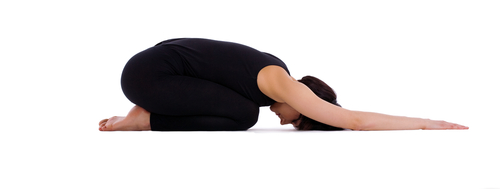
Pavan-Muktasan
Time: 1/2 minutes each leg.
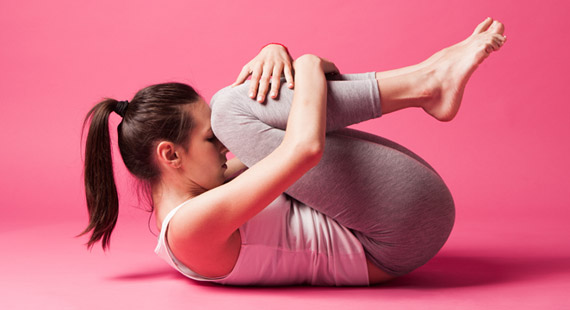
Method: Lie down on your back. Breath in. Then fold the left leg from the knees. Hold the fingers together and bring the folded leg to touch the stomach. Lift the head and touch the nose to the knee. The other leg remains straight. Hold the breath. Come to original position and leave the breath. Follow the same for the other leg.
NOTE: This asana can also be done with both the knees folded.
Benefits: Removes gas from the abdomen and reduces abdominal fat. Increases the flexibility of the knees and hips.
Bhujangasan
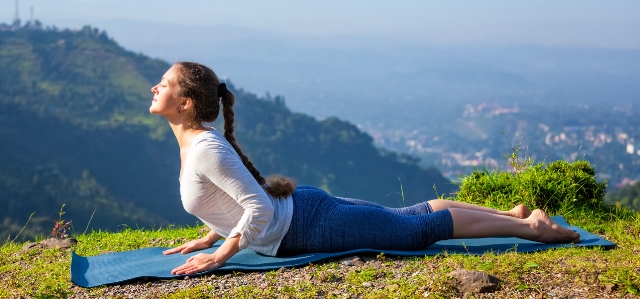
Time: 1/2 minutes.
Method: Lie on your stomach, forehead on the ground, hands under shoulders. Raise your upper body by the strength of the back muscles, head up. Don’t take help of the hands, they may remain on the ground or held on the back over the hips.
Benefits: Helps in keeping the dorsal spine elastic and strong. Backache due to overstrain can be thus relieved. Helps considerably in reducing abdominal fat.
Dhanurasan- the bow
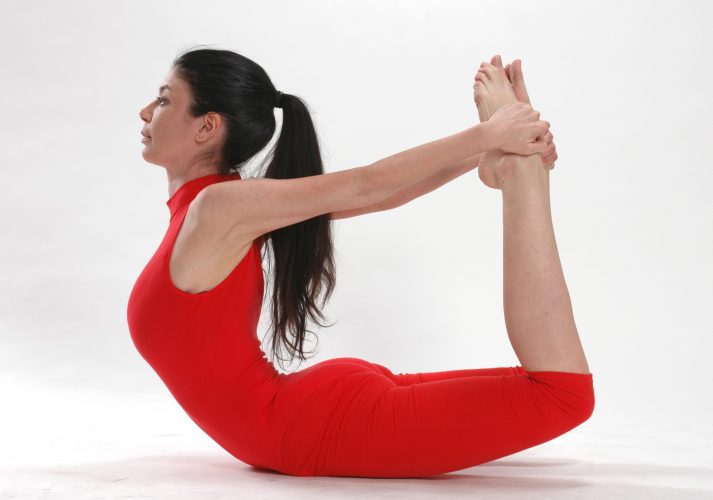
Time: 1/2 minute
Method: Lie on your stomach. Bend knees, hold the ankles. Pull your hands and push with your legs, knees together, till the trunk forms an arch with only the stomach on the ground. Look up. After releasing the posture lie for a while in Shavasan.
Benefits: Reduces abdominal fat. The compressing of the spinal column, pressing the nerves with thescapulae minimizes blood circulation while in the asana. But when the pose is released a greater supply of blood is endured to those very regions increasing spinal flexibility and definitely raising the vitality.
Paad-Pashchimottanasan
Time: 2 minutes
Method: Lie on your back, legs straight, arms overhead, hands together, palms facing up. Sit up, take hands overhead, back straight, then bend forward to hold the big toes, head between arms and touching the knees.
Benefits: Reduces abdominal fat. Removes wind from the intestines and increases appetite.
The Stomach Lift, Abdominal Lift (Uddyiana Bandha)
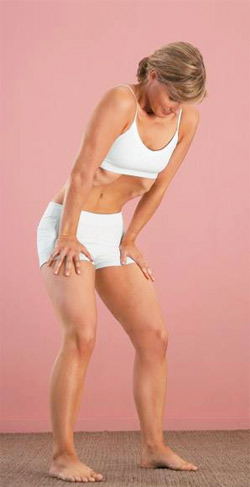
Method: The stomach lift really consists of two separate exercises.First exercise. While standing with your feet about a foot apart and your knees slightly bent, lean forwards a little from the waist and place your hands just above your knees. Inhale deeply by pushing your abdomen forwards, and then exhale by pushing your stomach in. Don’t take another breath; instead, push in your stomach even more, so that it becomes hollow, and hold your breath for about ten seconds.
Second exercise: Do the same as above but, instead of holding your Stomach in after exhaling, rapidly push your stomach in and out ten times without taking another breath. Stand up straight and resume normal breathing.
Benefits:
- This asana massages and tones up the internal organs in the abdominal area.
- It also massages the heart, making it a stronger, more effective pump. Your circulation will improve and you will have less chance of having a heart attack.
- It relieves constipation, gas, indigestion and liver trouble.
- It tones up the nerves in the solar plexus region.
- It reduces abdominal fat and strengthens the abdominal muscles.
- It helps the correct functioning of the adrenal glands and sex glands.
- It develops spiritual force.
Dandayamana-Dhanurasana- Standing Bow Pulling Pose
Method:
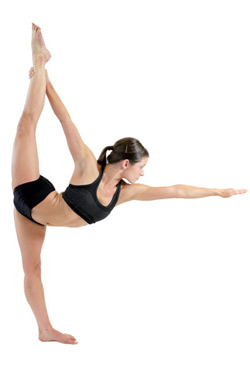 Begin in Tadasana, Mountain Pose
- Inhale the right arm up keeping it rooted in the shoulder socket but extending through the finger tips.
- Bend the left arm so the elbow is close in to the body and the finger tips are away from the body, palm faces the sky.
- Engage the muscles of your right leg as you bend the left leg behind you and catch the inside of your foot with your left hand.
- Draw both knees together while keeping the tailbone tucked.
- Exhale, press your left foot into your hand extending from the left top thigh. As the leg raises begin to hinge at your hips bringing your upper body parallel to the ground.
- Allow the heart to melt as the left hip bone and shoulder softens and surrenders.
- Reach through the ball mounds of your left foot as your upper body reaches forward.
- Find the arch in the spine to be equal through out by extending though the heart and rooting the tailbone down, away from the body.
- To release: Exhale, come back through standing and repeat on the other side.
Benefits: Strengthens thighs, buttocks, hips, abdomen, and arms, reduces abdominal fat, Helps manage anorexia. Good for posture and natal care. Helps in healing tennis elbow and frozen shoulder.
Try Practicing suryanamaskar, in the early morning, as the morning and evening sun radiate more ultraviolet rays. Even in the west, doctors are using the rays of the sun as a powerful therapeutic agent in the treatment of diseases. They call it helio-therapy. Suryanamaskar is combined process of yoga asana and breathing. It reduces abdominal fat, gives flexibility to the spine and limbs and increases the breathing capacity. There are twelve spinal positions, each stretching various ligaments and giving different movements to the verbal column, which is bent forward and backward alternatively with deep breathing.
The tradition of yoga associates the belly with the first three of seven chakras arising along the body’s core. These chakras are muladhara at the base of the spine, linked with the sacral nerve plexus; swadhisthana, associated with the reproductive organs and linked with the parastatic nerve plexus; and manipura at the navel, linked with the solar plexus.
The most important thing you need to do is to program yourself mentally. Don’t use a scale to measure your progress. Follow a healthy low fat diet.
Disclaimer
The Content is not intended to be a substitute for professional medical advice, diagnosis, or treatment. Always seek the advice of your physician or other qualified health provider with any questions you may have regarding a medical condition.