Headaches can be caused by eyestrain, indigestion,allergies, sinusitis, exhaustion or poor posture. Types of headaches vary according to the cause and so do the remedies. Migraines and cluster headaches can be helped with yoga, but you must have the supervision and approval of your doctor.

Salute the sun every morning to prevent headaches. |
Practice the following postures:
Downward Facing Dog (Adho Mukha Svanasana)
Push butt up toward ceiling…fiercely. Push hands and heels of feet into floor and let head hang downward. Pull belly button up into spine. And breathe deeply. Avoid pinching shoulders. Push shoulders away from ears.
Cobra (Bhujangasana)
Start in a crawl position kneeling on the floor . Rest hands on floor in vertical alignment with shoulders. Sit butt back into heels of feet… inhale deeply. Now exhale and push head and torso forward into cobra. Do not push up with arms. Use chest and middle back muscles. The cobra is a backbend … careful not to push in on lower back.
Seated Forward Bend (Paad-Paschimottanasana)
Sit on floor and extend legs forward. Lift arms up overhead, bringing hands into direct vertical alignment with ears, shoulders and hips. Spine is now erect. Exhale and reach torso forward … without hunching or rounding middle spine. Push chest forward toward thighs. Attach hands to calves, ankles or feet. Put a pillow over legs and rest forehead on pillow to relax mind. Breathe deeply. Keep neck long … shoulders pressing away from ears.
Knee Press
Bend knees. Pull feet into groin. Inhale chest and rib cage upward. Exhale and press down through inner thighs until knees touch floor. Continue to pull feet in towards groin. directing the chin down into your lower body. Stretch head upward to lengthen neck and back muscles. Lower chin down into chest and stretch open the back of neck. Breath deeply.
Reclining Pose
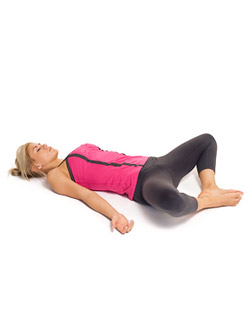 Gently roll torso back to floor… close eyes and breathe deeply. Avoid exercise if headache is acute or severe. Practice eye movements. Close eyes tightly…open widely. Roll eyes up and down and to the right and left. Circle eyes clock-wise and counter clock-wise. Palm eyes and forehead. Rub heels of palms together until warm, then place gently over eyes and feel the tension melt away as you visualize your happiest moments.
Alternate nostril breathing and shitali also help to cool the head. For alternate nostril breathing check out whether your left or right nostril exhales more forcibly. Close the stronger nostril and breathe through the opposite nostril until the headache subsides.
Shitali
Shitali literally means cooling and hence the name. It can safely be practiced anywhere and at any time, as and when needed.
- Sit in sukhasana or any other comfortable posture.
- Stick your tongue out about an inch from your mouth, rolled up at the side like the tube of a funnel.
- Suck in air through this channel (to the count of 5)
- Inhale in such a way that the air flows all over your tongue, from the tip to the very base. See how cool it feels.
- After a full inhalation, close your mouth and exhale slowly through the nose.
- This comprises one round. Increase the frequency gradually, as required, up to 5 or 10 rounds.
Shitali is known to cool the body, mind and nervous system. Subsequently, it has a pacifying and relieving effect on the mind and body. It also has shown positive effects on blood circulation and body temperature, while activating the spleen, liver and flow of bile. It is also known to improve digestion and relieve thirst, mouth ulcers and hyperacidity. Shitali pranayama is also highly recommended as an immediate remedy for nervousness and panic attacks.
Related Links
- Yoga to Balance Eyestrain
- Pranayam: a universal self-healing technique
- Top 10 Lifestyle Modifications to combat migraine
Disclaimer
The Content is not intended to be a substitute for professional medical advice, diagnosis, or treatment. Always seek the advice of your physician or other qualified health provider with any questions you may have regarding a medical condition.