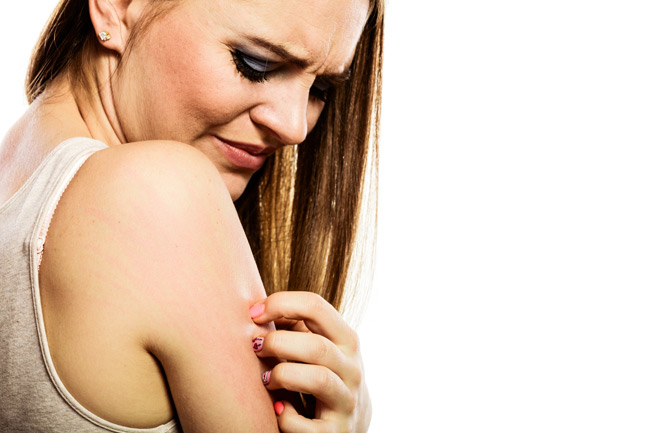
Dermatitis is a broad term that refers to any inflammation of the skin. Poison ivy and similar rashes are known as contact dermatitis, caused by touching something that irritates a patch of skin. Reactions to internal medication can cause red, scaly skin and sometimes even hair loss. The broadest category is known as atopic dermatitis, or eczema. It’s a chronic condition that can be triggered by allergic reactions to foods, pollen, dry air or any number of other factors. The problem can flare up any time, without notice, and the causes can be hard to pinpoint,
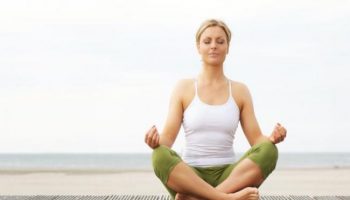
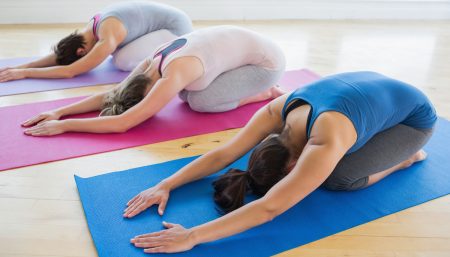
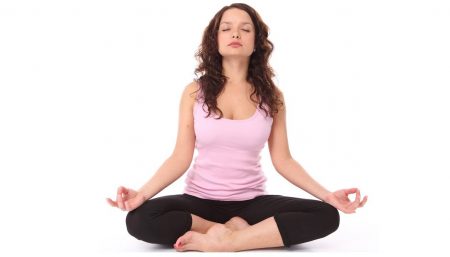
Eczema can flare up when you’re under stress. Do the complete breath exercise (Pranayam) whenever you’re feeling stress, whether it’s at the office, in the car or at home. You should include at least one relaxation pose, such as the corpse , knee squeeze or baby, in your daily yoga routine.
Uttanasana (Standing Forward Bend)
This yogasana calms the brain and helps relieve stress and mild depression
- Stand in Tadasana, hands on hips. Exhale and bend forward from the hip joints, not from the waist. As you descend draw the front torso out of the groins and open the space between the pubis and top sternum. As in all the forward bends, the emphasis is on lengthening the front torso as you move more fully into the position.
- If possible, with your knees straight, bring your palms or finger tips to the floor slightly in front of or beside your feet, or bring your palms to the backs of your ankles. If this isn’t possible, cross your forearms and hold your elbows. Press the heels firmly into the floor and lift the sitting bones toward the ceiling. Turn the top thighs slightly inward.
- With each inhalation in the pose, lift and lengthen the front torso just slightly; with each exhalation release a little more fully into the forward bend. In this way the torso oscillates almost imperceptibly with the breath. Let your head hang from the root of the neck, which is deep in the upper back, between the shoulder blades. asana can be used as a resting position between the standing poses. Stay in the pose for 30 seconds to 1 minute. It can also be practiced as a pose in itself.
- Don’t roll the spine to come up. Instead bring your hands back onto your hips and reaffirm the length of the front torso. Then press your tailbone down and into the pelvis and come up on an inhalation with a long front torso.
Modifications & Props
To increase the stretch on the backs of the legs, stand in the forward bend with the balls of your feet elevated an inch or more off the floor on a sand bag or thick book.
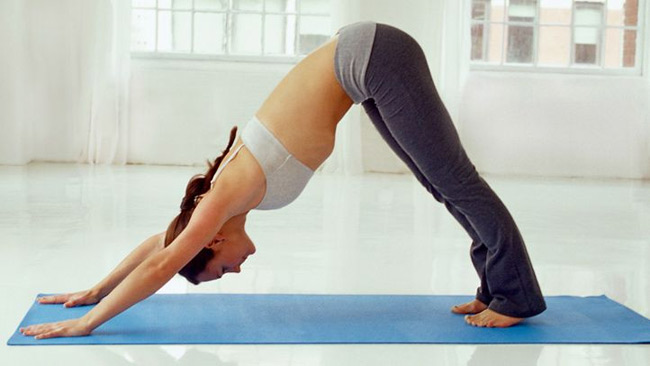
Adho Mukha Svanasana
Calms the mind and induces a state of calm
- Keep your legs shoulder width apart.
- Slowly, bend down, until your palms touch the floor ahead of you. .
- Exhale while bending.
- Do not lift your heels off the floor.
- Don’t bend your knees, but at the same time, don’t lock them.
- Spread your fingers wide apart.
- Now, push your head between your arms, towards your knees. Feel the stretch in your legs.
- You could also do this the other way around by first getting down on your knees, and then slowly lifting yourself up. Exhale while lifting yourself up. This is, in fact, the right way of performing this asana, but you may find it difficult to place your heels on the floor initially.
- A good rule of thumb to remember is to exhale when performing any stretch that scrunches the stomach muscles, and inhale when returning to position, or when performing a stretch that expands the stomach muscles. Thus, when bending down, or bending sideways, exhale. But while bending backwards, inhale.
Janu Sirsasana (Head-to-Knee Forward Bend)
Seated head to knee stretches the back and deeply stretches the back of the legs. This posture calms the mind and emotions, stimulates the nervous, reproductive, endocrine and urinary systems.
- Sit on the floor with your buttocks lifted on a folded blanket and your legs straight in front of you. Inhale, bend your right knee, and draw the heel back toward your perineum. Rest your right foot sole lightly against your inner left thigh, and lay the outer right leg on the floor, with the shin at a right angle to the left leg (if your right knee doesn’t rest comfortably on the floor, support it with a folded blanket).
- Press your right hand against the inner right groin, where the thigh joins the pelvis, and your left hand on the floor beside the hip. Exhale and turn the torso slightly to the left, lifting the torso as you push down on and ground the inner right thigh. Line up your navel with the middle of the left thigh. You can just stay here, using a strap to help you lengthen the spine evenly, grounding through the sitting bones.
- Or, when you are ready, you can drop the strap and reach out with your right hand to take the inner left foot, thumb on the sole. Inhale and lift the front torso, pressing the top of the left thigh into the floor and extending actively through the left heel. Use the pressure of the left hand on the floor to increase the twist to the left. Then reach your left hand to the outside of the foot. With the arms fully extended, lengthen the front torso from the pubis to the top of the sternum.
- Exhale and extend forward from the groins, not the hips. Be sure not to pull yourself forcefully into the forward bend, hunching the back and shortening the front torso. As you descend, bend your elbows out to the sides and lift them away from the floor.
- Lengthen forward into a comfortable stretch. The lower belly should touch the thighs first, the head last. Stay in the pose anywhere from 1 to 3 minutes. Come up with an inhalation and repeat the instructions with the legs reversed for the same length of time.
According to Swami Shivananda, a skin diseases practitioner should do shat kriyas (cleansing practices) – especially dhouti (swollow the cloth), kunjal kriya (drinking salt water and womiting) and shank prakshalana (you drink a lot of salt water and go toilet). Its very effective!
Prevention and management strategies
Reducing inflammations requires establishing a regular skin care routine and the development of a treatment strategy by a dermatologist. Here are tips a dermatologist may typically provide to patients:
- Wear cotton or natural fabrics to avoid common fiber irritants.
- Avoid scratching or rubbing affected skin.
- Take brief, lukewarm baths and showers using mild soap or non-soap cleansers (avoiding extremely hot temperatures). Gently pat the skin dry with a soft towel (avoid rubbing dry skin).
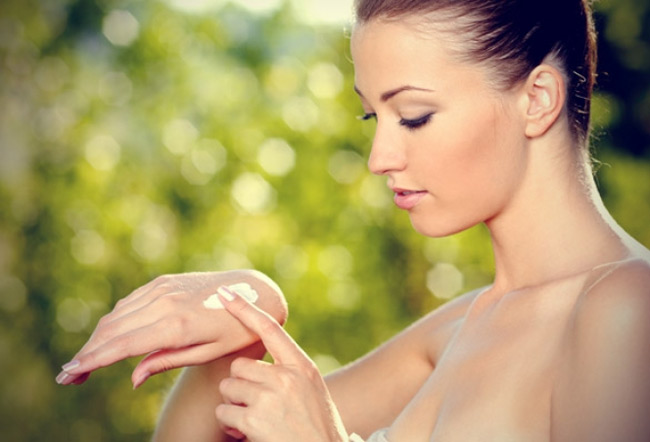
- Apply lubricants (creams or ointments, as suggested by the physician), immediately after bathing.
- Recognize and avoid early signs of skin infection, such as tiny pustules, oozing sores, or crusty, yellow blisters.
Disclaimer
The Content is not intended to be a substitute for professional medical advice, diagnosis, or treatment. Always seek the advice of your physician or other qualified health provider with any questions you may have regarding a medical condition.