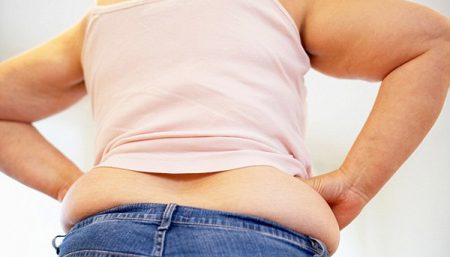
It has been proved now and again that being overweight puts you at greater risk for many serious health problems such as high blood pressure (hypertension), heart disease, diabetes and gall bladder disease. In fact, losing weight is part of the initial treatment for some of these conditions.
However, having a few extra pounds later in life is not as risky and may actually protect you. So, if you are not obese and you are past age 50, and have a few extra pounds, you should weigh your options carefully before starting to diet.
Gaining weight with age
Aging, leads to decrease in muscle mass as a result of a fall in activity levels and thus your energy requirements are less. In addition, many of your daily activities change: you don’t run to catch that bus anymore, you now play half court basketball instead of full court, and you may have exchanged the salsa for the tango.
With aging, it’s also more difficult to take off those additional pounds around your waist or hips. It is easy to take off the pounds at age 25 but at 50, it takes real work to get that zipper closed again.
Besides, the lessened energy needs with aging are not matched by a parallel decline in food consumption and, as a result, your body fat increases. If you saw an MRI of how the average thigh changes with aging, you would be shocked. The size of your thigh bone, the femur, doesn’t change much. In the young thigh, the muscles comprise most of the cross-section of the thigh. But, if you don’t stay in shape, by the time you reach old age, you will have a hard time finding the muscle mass that has shrunken to a small fraction of its young size.
Studies conducted over age weight and height of individuals at death (compiled over the years by insurance companies researching life insurance rates) clearly indicate that the longest lived group are those in the middle weight categories and that those who were at the two extremes, the very underweight and the very overweight, had the shortest time on this planet.
If you have a BMI below 25, there is little to be concerned as you are considered O.K. If you are overweight with a BMI of 25 or 26 and you don’t have diabetes, high blood pressure, gall bladder disease, sleep apnea or severe arthritis, don’t start worrying. Having a few extra pounds in later life will probably not decrease your longevity, particularly if you don’t have any additional risk factors such as being a smoker, having a high cholesterol or a family history of heart disease. If your BMI is 25 or 26, and you don’t have these diseases or risk factors, you probably will do just fine, particularly if you have been a little overweight most of your life.
In fact, a few extra pounds might even protect you. In the Swedish Hip Fracture Study, those women who gained weight during adult life had a significantly decreased risk of fracturing their hips. By contrast, studies have shown that women who lose weight have a substantially increased risk of this serious life-threatening condition. The best explanation as to why additional weight protects you from a hip fracture is that a little extra cushioning around your hip helps to absorb some of the shock of the fall and thus prevents a devastating hip fracture.
Later in life, having a few extra pounds may even improve your health and longevity. In a study of individuals in their seventies, those with the best chances of survival had BMI’s that were 25-27 kg/m (women). One of the interesting discoveries in aging research is that pounds that are added to your hips are not as detrimental to your health and longevity as pounds added to your waistline. All the evidence shows that it’s better to resemble a pear than an apple. The pear-shaped figures of the women probably did not cause them any serious health problems. However, the massive beer bellies carry with them a significant health risk.
The same National Institutes of Health guidelines that give the new definitions of overweight by using your BMI recognize the importance of where the extra pounds go, and urge physicians to measure your waist in addition to your height and weight. For women a waist of more than 35 inches places them at increased risk.
Disclaimer
The Content is not intended to be a substitute for professional medical advice, diagnosis, or treatment. Always seek the advice of your physician or other qualified health provider with any questions you may have regarding a medical condition.