
As we grow, our bone’s soft collagen framework rapidly stores calcium. Bones lengthen at special structures near the end called growth plates. The growth plates allow your bones to grow longer, while the rest of the bone remain strong to handle the forces generated as an active youngster. When you have reached your maximum height and linear growth stops, the growth plates close permanently.
Some bones fuse together during growth, resulting in the 206 bones of the adult skeleton.
By the time you reach your twenties, you have achieved your peak bone mass. That is, your bones are as dense as they are ever going to be. Then, for your bones (as for many things), it is pretty much all downhill from there. But you can change the slope of that decline by the choices you make about diet and exercise.
Having strong, dense bones in your twenties is critical for preventing osteoporosis later in life.
Prevention with Exercise and Calcium
The two factors over which you have the most control are your calcium intake and the amount of bone-loading exercise you get. Your peak bone mass is like your retirement fund, the nest egg that you will be living off later in life. (More accurately, the shell of the nest egg, as that is where eggs have all their calcium.) As an adult, your job is to preserve the nest egg.
To build up their accounts, growing adolescents need approximately 1500 mg of calcium each day plus regular weight-bearing exercise.
Exercise to Treat Osteoporosis :
Exercise is an important part of your care if you have osteoporosis. You can benefit from:
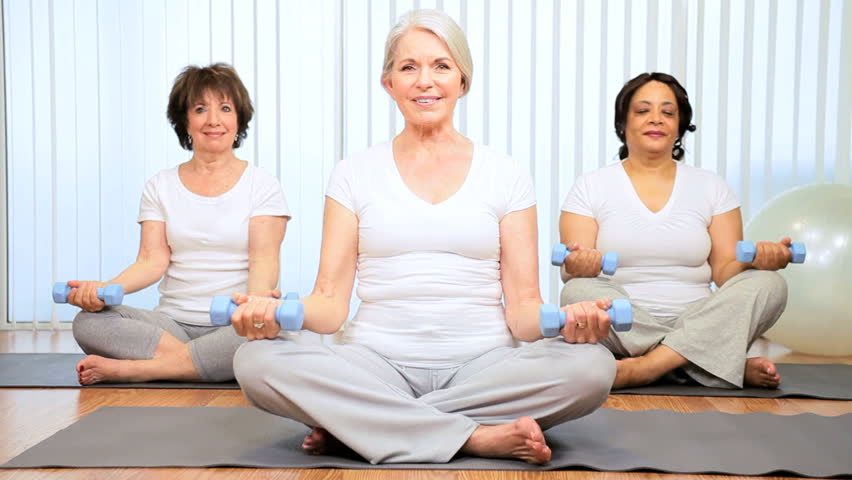
- Endurance and strength-training exercises- In the first category, your goal is to use physical activity to strengthen your bones. Remember that weight-bearing endurance activities and strength – training exercises strengthen your bones best. Good choices for endurance activities are walking, stationary cycling, and water aerobics. For those with weakened bones, these activities avoid the excessive spinal loading of higher impact activities such as jogging or step aerobics. Endurance activities strengthen your leg muscles, and additional weight-training exercises can be gradually added to your workouts. Because of the potential for injury, begin weight lifting only after getting the advice of your health care provider. To make sure your technique and the lifts are appropriate, weight or strength training should be initiated with a physical therapist’s supervision.
- Learning posture and body movements that reduce your risk of injuring a bone–
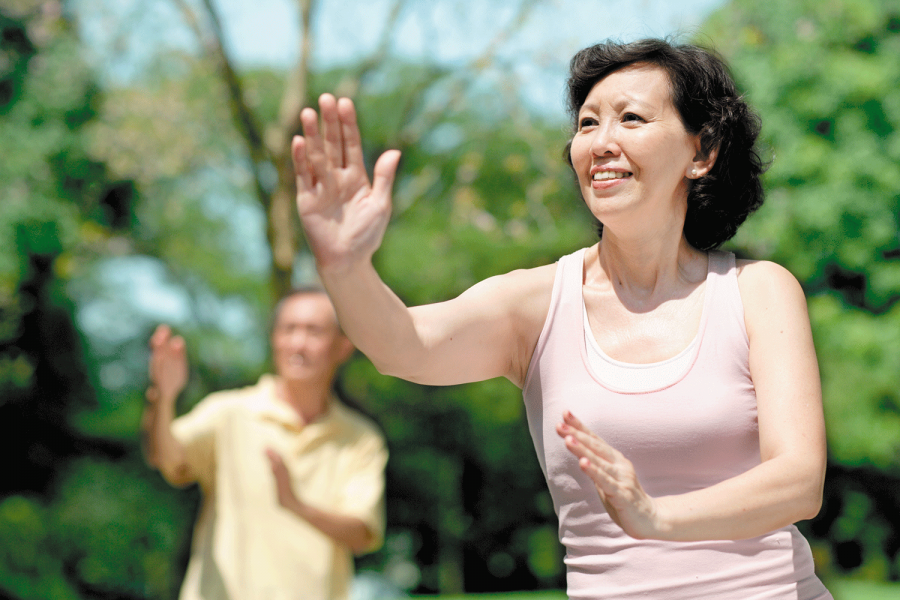
Exercises that help maintain your posture and increase your stability while moving will reduce stress on your spine and decrease your chance of falling. Those activities include stretching your calf and strengthening your thigh muscles. Your quadriceps muscles (the front of your thigh) is strengthened by extending your leg while sitting. Moving your leg backward while standing strengthens muscles on the back of your thigh. As you become stronger, an elastic band can be used to increase the resistance to your movements.Having a rounded back puts more stress on your vertebral bodies, increasing the risk of a compression fracture. Maintaining the normal lordosis, or forward sway, in your lumbar spine reduces the compression forces of your vertebral bodies. - Activities to prevent falls – If you fall, your risk of breaking a bone goes up as your bone density decreases. Besides strengthening your leg muscles, you can reduce your risk of falling by engaging in physical activities that improve your balance. The exercise Tai Chi has proven especially beneficial for improving balance. Tai Chi is a Chinese exercise that originated in the sixth century B.C. It is based on a set of 81 maneuvers, each done slowly, with one movement flowing gracefully into the next. In studies among the elderly, Tai Chi can increase fitness, coordination, balance, and body control. When studied, Tai Chi has been more effective than other physical activities for preventing falls. The exercises can be learned from videotapes and books on Tai Chi. However, it is best learned in a class, where an instructor can coach you on the movements.
Your Simple Calculated Osteoporosis Risk Estimate (SCORE) | |
| Add the points: | Your Score |
| ———- |
| ———- |
| ———- |
| ———- |
(for example, 74 years old = 7*3 = add 21) | ———- |
| ———- |
| ———- |
| Your total score is If your total score is more than 5, you are at high risk for osteoporosis. | |