
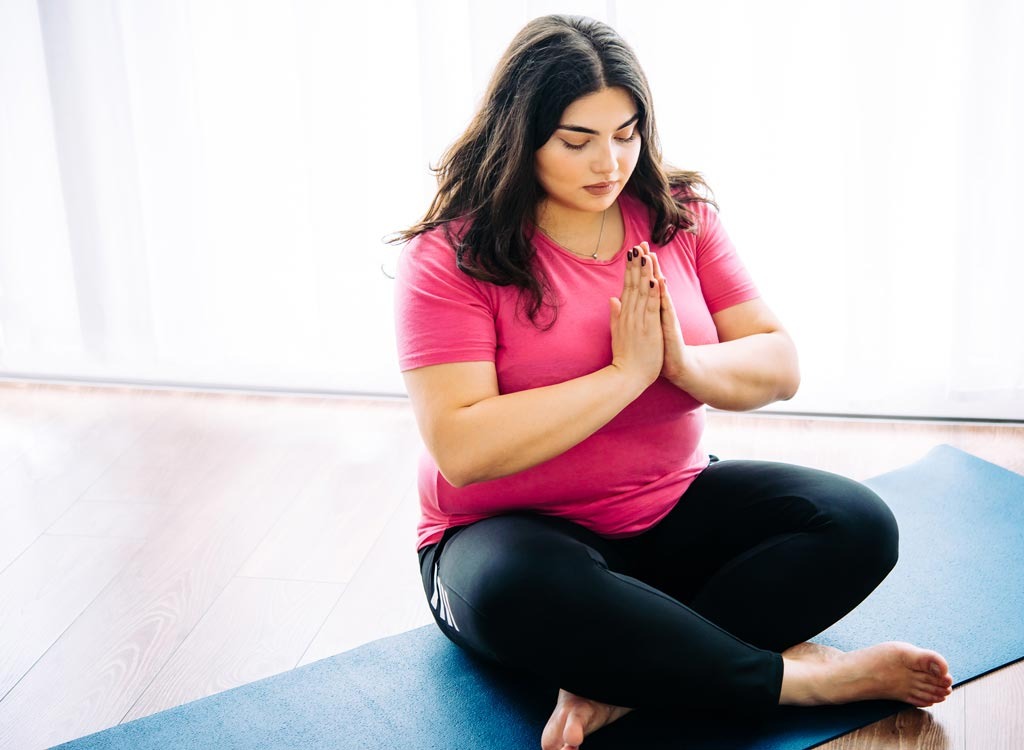
The combination of relaxed stretching and deep, slow breathing is a quick and effective way to settle the “body and mind” in preparation for meditation.
You can practice the following stretches and breathing techniques at any time of the day – preferably several times during each day. The resulting reduction in your stress levels will be gradual but cumulative. The practice leads to acalmer mind, clearer thinking, a more comfortable, relaxed body and a more open hearted acceptance of the way things are including the inadequacies of other people and of yourself.
Active preparation
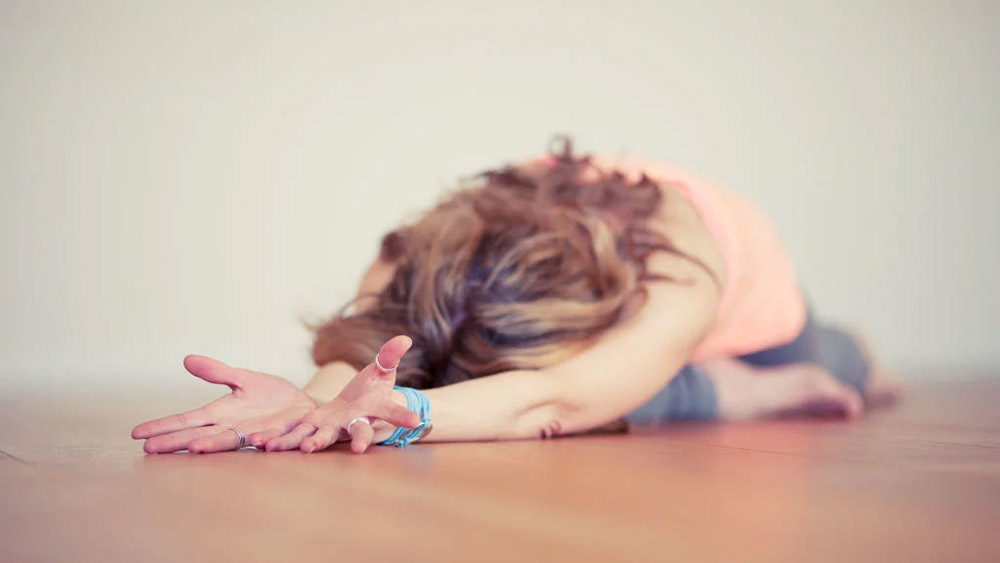
Of the eight limbs in Patanjali’s system of raja yoga, the yoga of meditation, five are bahir (outer) or active limbs. All five physical aspects are to be practiced together, and all are necessary to remove tensions from the body, emotions and mind, in order to experience the meditative state.
If we are angry with someone, or discontented with ourselves, or unable to sit still, or struggling with unhealthy breathing patterns and high stress levels, or if our minds are distracted by outer sensory stimuli and constant inner chatter, it is impossible to give our full attention to meditation practice. Patanjali’s first two limbs reinforce an attitude of respect and care for others through social restraint (yama) and for ourselves through purification (niyama). These are followed by a firm, comfortable seated position (asana) for meditation practice, breathing exercises (pranayama) to balance and increase energy, and finally relaxation and “switching off” (pratyahara). Only then are we ready to practice the three antar (inner) limbs that make up samyama (these are concentration, meditation and absorption/ecstasy).
Skiing
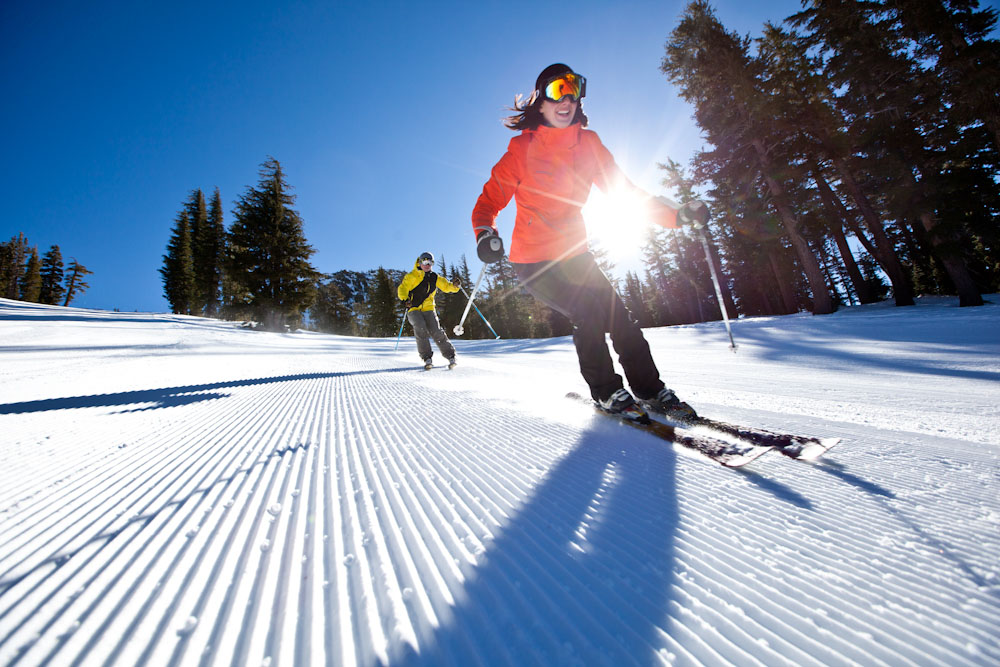
This exercise stretches and flexes all the muscles that hold the spine, releasing tension and tightness that may be restricting blood flow, nerve communications and energy flow. It also opens the front of the chest and makes the breastbone more flexible, for better breathing.
- Stand with your feet comfortably apart and parallel. Bend your knees and squat right down, stretching your arms out in front if you for balance. Lift your arms, opening your chest, as you breathe in. Imagine you are holding two ski poles and plant them firmly in the snow ahead of you.
- Breathing out, sweep your arms down and back, reaching as high behind you as you can to wave your imaginary ski poles in the air after they have propelled you forward. Repeat this movement several times. The visualization of the movement should make you feel flushed with exertion and enjoyment.
- When you feel you have done enough skiing, squat down with your arms and trunk between your knees and rest. Breathe naturally and feel the weight of your body stretching your lower back and legs.
Easing the spine and neck
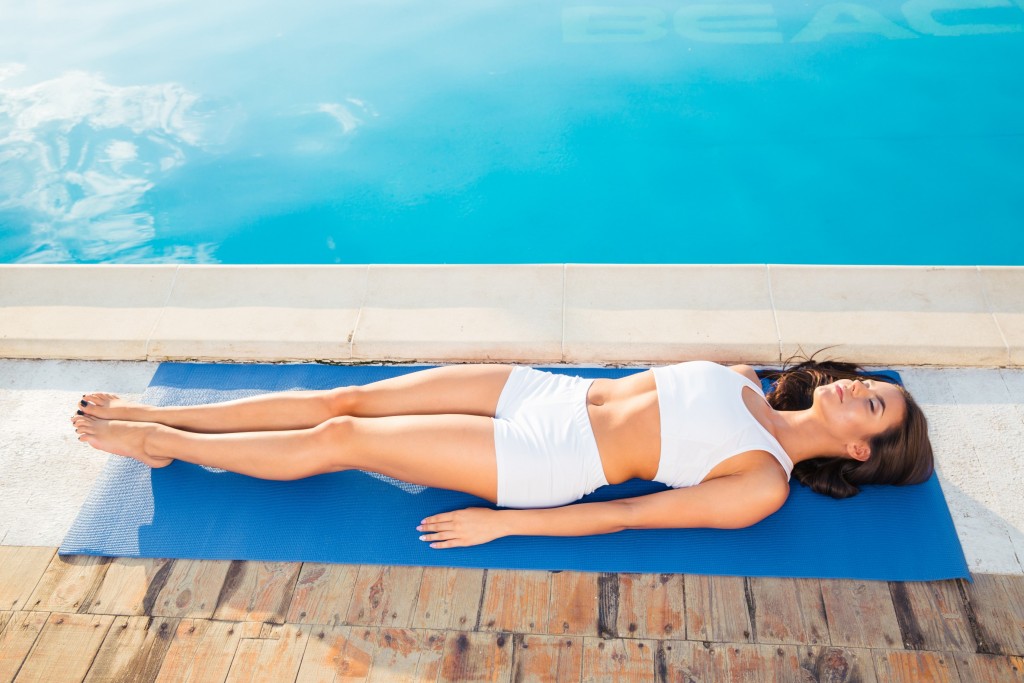
When you exercise lying down, gravity supports and cradles you, so these exercise are very soothing – especially if you feel stiff or have painful twinges in your lower back, hips or neck. You may feel more comfortable lying on your back if you place a small cushion under your head (not your neck) to lengthen your neck and bring your chin down toward your chest. Keep your neck area free, so that it can stretch.
- Bend your knees on to your chest and clasp your hands around your shins (or the backs of your thighs). Breathing out, curl up your spine to bring your nose or forehead (not your chin, as this constricts your neck) to touch your knees. Breathe in to replace your head on the cushion, with your chin tucked in. Breathe out to begin the sequence again and repeat several times.
- To ease your lower back and hips, lie with your bent knees comfortably apart and one hand on each knee, with your elbows resting on the floor if possible. This is an open and relaxed pose that can ease pain from trapped nerves (such as sciatica). Breathing deeply and naturally, use your hands to circle your knees in toward each other then out to the sides in slow circles, really relaxing all your back and leg muscles.
- Keeping your spine relaxed and knees wide and supported by your hands, with elbows resting on the floor, take your full attention to your neck. Breathing out slowly, turn your head to one side and turn your eyes to look at the floor.
- Breathe in to raise your head and eyes to the centre and out to turn them to the other side. Repeat several times, focusing on awareness and relaxation of all your neck muscles. Keep your spine, legs, arms and jaw completely relaxed throughout.
- Bring your arms overhead, clasping your hands loosely if you can, or simply bringing your bent arms as high as possible – your elbows should be relaxed on the floor. This position stretches the front of your body. Place your feet together on the floor close to your buttocks, and relax your upper body, neck and jaw. You will move only from the waist down. Breathe in and, as you breathe out, drop your knees (keeping them pressed together) to the floor on your right side. Breathe in to raise your knees and out to lower them to the left.
- For extra strengthening of the upper inner thighs – essential for good posture – press a sheet of paper between your knees and hold it there as you move your knees from side to side.
What happens when you stretch?
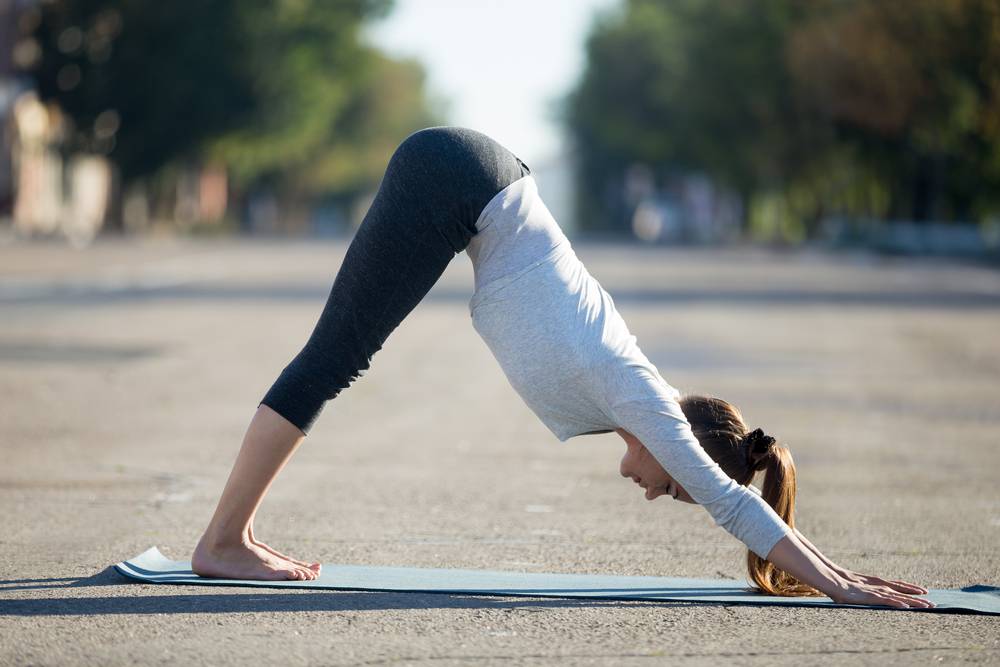
As in case of muscles which receive their nutrients directly via the vascular system through rapid exchange rhythm, there is no such active supply system for cartilage tissues covering the ends of bones in joints. Cartilage instead is fed by the migration of particles from the joint fluid surrounding it ,know as the synovial fluid. To be able to absorb the synovial fluid optimally, the cartilage has recourse to an alteration of pressure and suction forces.
It is precisely this regular rhythmic exchange optimizing the supply to the cartilage that is achieved with the flexibility exercises. Indulging in regular stretching exercises leads to enhanced cartilage nutrition and loosening up of all the connective tissues. While performing stretching exercises both outward and inward concentration is necessary.