Knee injuries are very common, especially for people who play a lot of sports. Injury can affect any of the ligaments, bursae, or tendons surrounding the knee joint. Injury can also affect the ligaments, cartilage, menisci (plural for meniscus), and bones forming the joint. The complexity of the design of the knee joint and the fact that it is an active weight-bearing joint are factors in making the knee one of the most commonly injured joints.
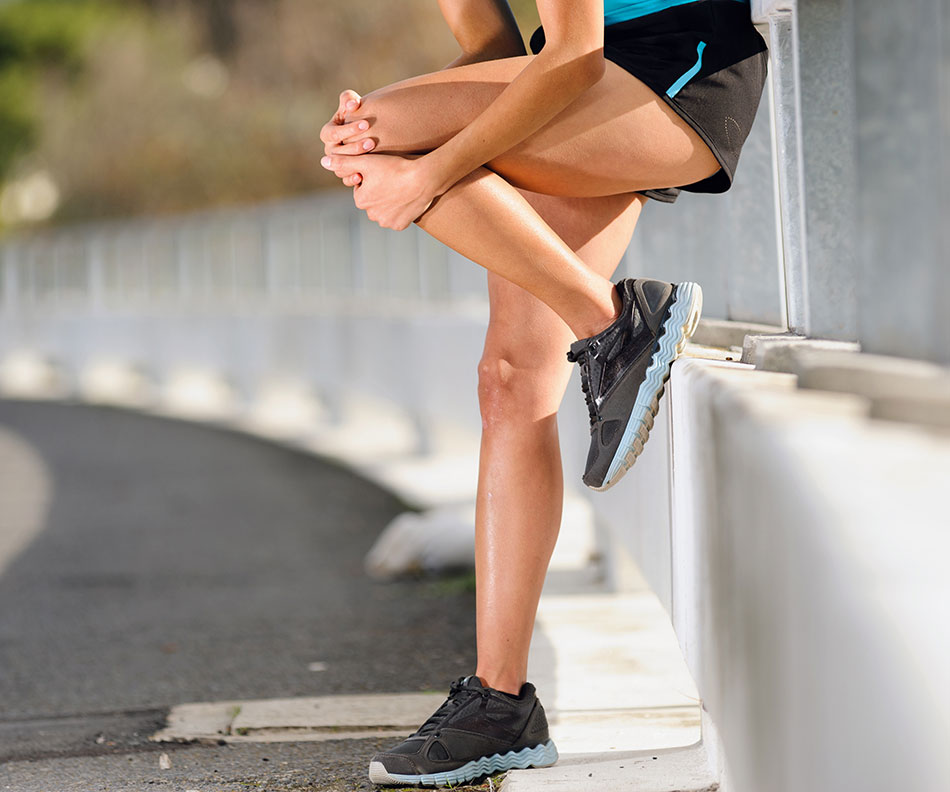
Women are two to eight times more likely than men to have certain kinds of knee problems like ACL (anterior cruciate ligament) tears. The ACL is the ligament (strong, elastic bands of tissue that connect bone to bone) that stabilizes the knee. It prevents the knee from moving side to side and forward and backward.
There are many things that can influence whether you get a knee injury or not, but there are steps you can take to minimize the risk. Here are my ten best bets for keeping the surgeon away:
1. Make sure that your knees are aligned with your feet. By that I mean that during asquat, your knees should be traveling forward in the same direction as the toes. If your toes are pointing out to the sides, but your knees seem to be going straight forward, you know you’re asking for trouble! Imagine an invisible line to which your feet are aligned. All you have to is keep your knees strictly in the same line.
2. Use good form. Don’t stand on your toes during the last two sets, and whatever you do – no squirming around!
3. Don’t wrap your knees all the time. By always babying your knees you will build muscular strength, but you’re not preparing your knee joint and supporting muscles to handle an un-wrapped squat. Over time, your muscles will get more powerful, while your knees stays the same or may even get weaker. At some point, this will come back to haunt you in a big way, be it at the gym, a company softball game or wherever.
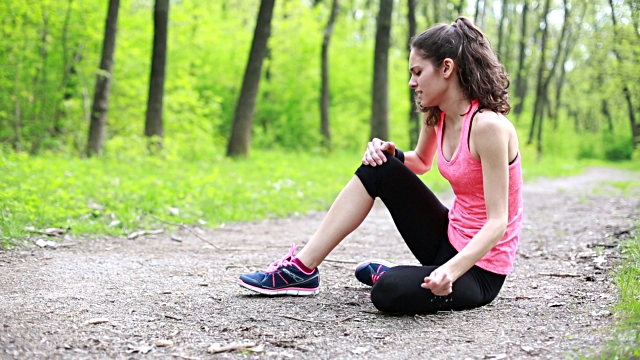
4. Get good shoes. Inch-thick, gel-filled or gas-pumped soles are great for basketball, as they help absorb the impact from all the jumping. You don’t see much jumping in the gym, however, so what’s a good shoe on the court is not necessarily a good shoe everywhere. With a couple of hundred pounds on your shoulders, you want to be sure that you’re stable. Pick shoes with thin soles and very little “bounciness”. Try to get a feeling of having solid contact with the floor.
5. Check the ego at the door. Use a sensible weight that you can do at least 6-8 strict reps with, keeping the focus on safety and control at all times. That will bring you the fastest results and the least risk of injury
6. Develop the deep postural muscles of the pelvis and leg, such as the inner thighs and hip rotators, giving equal attention to both the internal and external hip rotators. Lift the kneecap to straighten the leg instead of pushing the knee backward into hyperextension.
7. Improve your balance and pelvic-side muscle coordination by standing on one leg in parallel for twenty seconds with arms crossed and eyes closed. And never forget that hamstring strength is as important as stretch. The kneecap rides in a specific groove of the thighbone, and if the muscles are unbalanced, pain can begin from the kneecap grinding on the groove the wrong way. In a worst-case scenario this tightness can pull the entire kneecap off of the groove. If the muscle imbalance is due to lack of bony hip rotation, the big, tendinous side strap of the thigh, the ilio-tibial band, tries to do the work of the hip joint in rotating the leg, which then pulls the kneecap sideways. Keep your kneecap in line with the second toe.
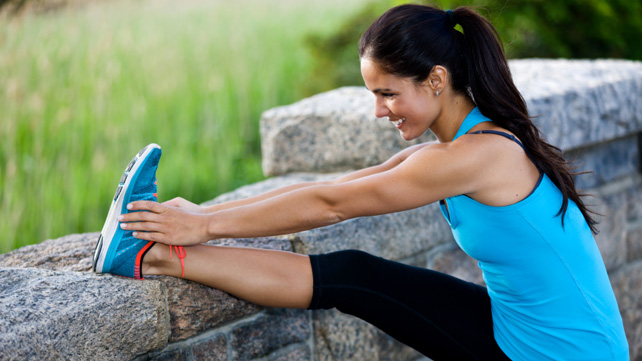
8. Maintain a healthy weight to reduce stress on your knees. Staying slim reduces the forces placed on the knee during both athletics and everyday walking and may, according to some medical research, reduce osteoarthritis. Keeping your weight down may also reduce the number of ligament and tendon injuries for similar reasons.
9. “Warm up” (stretch) your leg muscles before and after you exercise. Stretching keeps your knee from being too tight and aids in preventing both patellofemoral
syndrome and iliotibial band syndrome.
10. Take it slow when starting a new exercise program. If you have chronic knee pain, consider swimming or water exercises.
Whatever you do, respect and listen to your body. If it hurts, change what you are doing. When driving, knee protection may include wearing a seatbelt to avoid the knee-versus-dashboard injuries as well as injuries to other parts of your body.
Related Links
- Exercise for Building Better Bones
- Stretching for fitness
- Top 10 to Conditioned buttocks – to prevent knee and back injuries
- Top 10 Wall Stretches to get your body moving
- Coping with Chondromalacia
- Reduce the Osteoporosis risk by Weight bearing exercises
Disclaimer
The Content is not intended to be a substitute for professional medical advice, diagnosis, or treatment. Always seek the advice of your physician or other qualified health provider with any questions you may have regarding a medical condition.