|
|
Ways to increase Female Libido

Female sexual arousal disorder (FSAD) occurs when a woman experiences
distress due to the inability to attain or maintain adequate vaginal
lubrication. Many treatments are still under investigation, and at this time,
there are no FDA-approved medications available for the treatment of FSAD.
Treatment options include "off-label" medications, vaginal estrogen, compounded
preparations, and over-the-counter products.
As sexual medicine has entered everyday discussion in America, the concept of
sex therapy continues to be misperceived and misunderstood by many health care
providers and patients.
Sex Therapy
Sex therapy is a form of talk therapy comprised of a combination of counseling,
cognitive-behavioral interventions, and treatment of concomitant psychiatric
conditions such as depression and anxiety disorders It certainly does not
involve patients having sex in front of the therapist or the therapist acting as
a sexual surrogate.
According to the American Association of Sexuality Educators, Counselors and
Therapists (AASECT), certified sex therapists �are mental health professionals,
trained to provide in-depth psychotherapy, who have specialized training in
treating clients with sexual issues and concerns.� They handle both �simple
sexual concerns� and �are prepared to provide comprehensive and extensive
psychotherapy over an extended period of time in more complex cases.�
Individual or couple psychotherapy may be offered, and clients meet with the sex
therapist in an office setting. A history is taken, one or more diagnoses is
established, and a treatment plan is developed.
Sex therapists frequently treat clients with desire, arousal, performance, and
satisfaction issues. They also counsel patients who have experienced sexual
trauma or abuse, or who are struggling with gender identity or sexual
orientation issues, fetishes, sexual pain, or sexual compulsions/addiction.
When and How of Referring a Patient for Sex Therapy
Most front-line providers will be comfortable treating a sexual issue�up to a
point. They can certainly give the patient permission to discuss the problem,
validate her concern as legitimate, and provide limited information and
suggestions, as suggested by the PLISSIT Model of Intervention for Sexual
Problems. For intensive therapy and any situation where a sexual issue exceeds
their level of comfort or expertise, clinicians will want to refer a patient to
qualified specialists, such as a sex therapist.
It is important for primary care providers to become familiar with sex
therapists in their area (see box on sex therapy resources) so they can readily
and confidently refer patients and their partners as needed. The patient should
be referred with the assurance that you are adding a team member to address her
problem, and not just passing her off to another clinician. It is important to
emphasize that you will continue to be involved with her ongoing care.
Comprehensive and optimal sexual care often may require both a physical and
mental health approach.
Sex Therapy Interventions
Sex therapists can offer a variety of interventions that may help a patient
reconnect emotionally and sexually with her partner. Common strategies include:
Helping a patient develop realistic and appropriate goals. Patients may need
help understanding female and male sexual response and what is arousing for them
as individuals. They may not have explored their sexual responses, they may
pretending to have orgasms, they may be anxious or inhibited about their
sexuality, or they may engage in a set pattern of sexual activity that is not
arousing or satisfying to them. Exploration of wants, needs sexual turn ons or
turn offs may also be used. Education about a sexual problem is often the first
step in the treatment process and helps the patient better define her needs,
goals, and expectations.
Exploration of sexual fantasies
Fantasizing about sex is often a good step in recharging desire. Basson has
suggested that many women (particularly those in long-term relationships) are
not having spontaneous sexual thoughts or fantasies, but may be receptive to sex
if mentally or physically stimulated. Sex therapists may recommend bibliotherapy
or the use of erotic books or videos to spur fantasies. In addition, the sharing
of fantasies with a partner can improve relationship communication about what a
woman finds arousing and may help a couple revive an otherwise boring sexual
script or repertoire.
Identifying contextual catalysts for sexual activity.

Review of the context in which sexual activity typically occurs in a woman�s
life�i.e. the sexual script�including the time of day, the interval between
sexual encounters, and the way a partner indicates his/her desire for intimacy
can be used by the sex therapist to make recommendations about how to increase a
woman�s desire for sex, arousal, and satisfaction.
Cueing exercises.
These exercises are designed to help a patient remember instances in her life
when she felt sexy and had a good and satisfactory level of sexual desire. The
patient is instructed to recall her physical appearance, the setting, the smells
in the air, the music she was hearing, and the foods she was eating at that time
and use these as �cues� for feeling sexual now.
Assigning sensate focus exercises.
These behavioral exercises involve a couple taking turns pleasuring one another
so each person has a heightened awareness of what types of strokes and caresses
are most arousing and can convey that information to his/her partner. Sensate
focusing can be both genital and non-genital in nature. It often begins with
limited sensual massage of the face, hands and neck and progresses over time to
include sexual intercourse. In fact, to reduce �performance anxiety� and help
the couple establish emotional intimacy, the exercises are not goal-oriented
(i.e., tied to intercourse) and intercourse is initially discouraged.
Teaching the practice of mindfulness.
Most people have become multitaskers in an effort to keep up with everyday life.
They may take this approach to their sexual life, and rush unfocused through
intercourse as well, leaving little room for sufficient arousal, enjoyment, or
satisfaction. Women with desire and arousal disorders are particularly
vulnerable to being distracted by stressors during sexual encounters. The
practice of mindfulness teaches the patient to focus on the here and now and on
all of her sensations�sight, smell, hearing, touch, and taste�and to push
distracting thoughts away. The technique can be particularly helpful in
educating a woman about the way her body responds to sexual stimuli.
Exploring alternate forms of sexual expression.
This can include education on sensual massage; fondling and caressing; mutual
masturbation; manual, oral, and anal stimulation techniques; use of sexual
enhancing toys (vibrators) and trying alternative sexual positions (other than
the missionary position) for sexual intercourse.
Addressing sexual boredom.
A couple who has been together for many years often falls into a sexual routine
that is unimaginative and boring, often called a sexual rut, that can dampen
desire. A sex therapist can offer a number of suggestions for reviving this type
of a sexual life, such as changing the venue for sex (moving it out of the
bedroom, for instance, and into the back seat of the car or to a hotel room), as
well as sex education books and videos to cull for new techniques.
Discussing dilators or the EROS device.

Sex therapists have a number of tools at their disposal to help patients. For a
woman suffering from vaginismus, they can suggest vaginal dilators along with a
functionalized program that can help reduce patient anxiety and help facilitate
stretching of the vagina. Successful treatment hinges on the patient being
taught how to insert and use dilators appropriately�e.g., using them three times
a week to once daily for 10 to 15 minutes and progressing slowly through
larger-sized dilators. For a woman with arousal and/or orgasm disorders, sex
therapists may recommend the EROS Clitoral Stimulator, a prescription-only
device that utilizes suction to draw blood to the clitoral region and has shown
in limited clinical data to improve arousal in selected cases.
If chemistry sparks love at first sight, could a little lab-made magic help keep
the fires burning in bed? A flagging libido is the most common sexual complaint
women have.
But for those of us looking to spice up our lust life, a variety of
libido-boosting, arousal-enhancing gels, patches and pills are poised to hit the
market. While they�re not a fix for problems rooted in relationship
difficulties�which may benefit from counselling�they offer some highly
anticipated treatment options. Best Health spoke with experts across Canada for
an update on the latest.
Female-oriented arousal aids
Specialty personal lubricants make up the majority of remedies available to
boost female arousal and enhance orgasm. Current over-the-counter products
include Vibrel, a vitamin B3-based formula that bolsters blood flow below the
belt, and Zestra, which reportedly enhances �sensory nerve conduction� with
botanical oils. Both arrived in Canada last year.
With these experimental natural products, a strong placebo effect may partly
account for their effectiveness, explains Lori Brotto, director of the Sexual
Health Laboratory at the University of British Columbia. Still, she encourages
patients to try them. �If the patient benefits because she�s expecting to,
great�go for it.�
So far, there is only one Health Canada-approved product for women with arousal
disorder (the inability to attain or maintain excitement and lubrication during
sex): Eros Therapy. This hand-held device goes on the clitoris and uses a gentle
mini vacuum to heighten blood flow and sensation. It can be applied during
foreplay or without intercourse to condition sexual responses. �It�s a different
kind of vibrator, really,� says Irv Binik, a psychology professor at McGill
University and director of the Royal Victoria Hospital�s Sex and Couple Therapy
Service. �Some women like it; some don�t.�
What�s up next? Several companies are developing arousal enhancers based on
topical alprostadil (prostaglandin E1, a substance found naturally in the body),
which also enhances blood flow. The ingredient is used to treat erectile
dysfunction, and researchers are hopeful it will work for women.
Testosterone therapy for women

Testosterone appears to play a direct role in sexual desire for both men and
women, and products containing the hormone are already being prescribed
�off-label��that is, prescribed for a use not approved by Health Canada�for
women with low libido. �What�s interesting is that, for women with low
testosterone, it seems to increase desire but also arousal, or lubrication, and
sense of orgasm, so it can have an impact across the sexual response spectrum,�
points out Dr. Stephen Holzapfel, director of the Sexual Medicine Counselling
Unit at Women�s College Hospital in Toronto. In the U.K., Procter & Gamble�s
testosterone-based Intrinsa patch has been prescribed to surgically menopausal
women since last year, but it has yet to land in North America.
LibiGel may become the first drug approved by the U.S. Food and Drug
Administration (FDA) for female sexual dysfunction. It�s a testosterone gel
applied daily to the upper arm and could launch in the U.S. as early as 2011. In
a small but notable trial with surgically menopausal women, those who used it
for three months reported an increase in �satisfying sexual events� by 238
percent compared to baseline levels. But like HRT, testosterone products are
controversial because the safety of their long-term use�especially by
premenopausal women�is unknown, and there are fears of adverse effects in
pregnancy, breast cancer and heart disease.
Increasing libido by focusing on the brain
Going beyond blood flow and hormones, some scientists are focusing on the brain.
New Jersey-based Palatin Technologies is investigating a new class of drugs that
could spur desire in men and women by acting on the zones of the brain linked
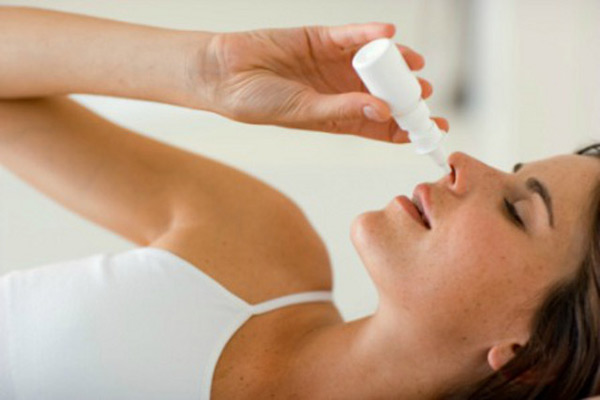
with arousal. While research on the company�s headline-grabbing �aphrodisiac,� a
nasal spray called bremelanotide, was shelved last year over FDA concerns about
side effects (namely, increased blood pressure for short periods), a similar
product is now being tested on women.
Animal studies are promising: The drug led the females to solicit sex more
often, says Jim Pfaus, a Concordia University professor of psychology who has
researched both the old and new compounds. The substance �amplifies the action
of the excitatory system� in the brain, he explains.
Another promising drug is flibanserin, now undergoing extensive phase III trials
(results are expected in late 2008 or early 2009). The oral treatment balances
out �too much inhibition��the other main force in the brain that guides libido,
explains Pfaus. The drug �doesn�t mean everybody�s going to wear lampshades and
have sex in the street,� he says. It just �normalizes� hyper-inhibitory systems.
Depending on the trial findings, we may see this drug in Canada in the near
future. With its broad potential to help many revive their sex drive, including
premenopausal patients, this may be the breakthrough women are waiting for.
Female sexual dysfunction has been reported in up to 40% of women, and described
as causing actual distress in approximately 12% of women. Female sexual
dysfunction is often multifactorial and complex; it is affected by such factors
as depression and anxiety disorders, life stressors, interpersonal conflict
between the couple, medication side effects, age, religious concerns, personal
health, privacy issues, personal body image, substance and alcohol abuse, and
hormonal influences.
Dated 13 November 2015
|
|
|
|
|





