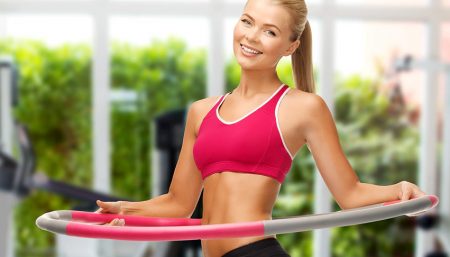
Hooping is back and it isn’t just for kids anymore. The new hi – tech hoops are larger and weighted which allows the hoop to move and maneuver around an adult body with ease. This new movement art is known as ‘hooping’ or ‘hoop dancing’, and is a perfect warm up activity for all kinds of group fitness classes.
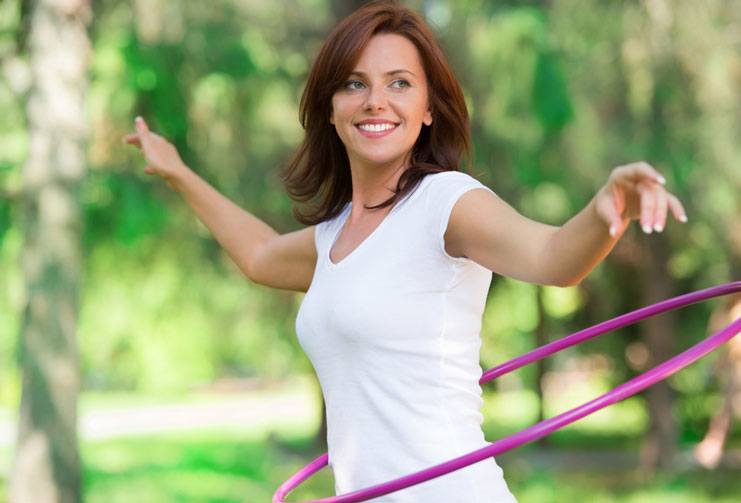
Hula hooping will warm up your core, abs, back and you can try spinning the hoop around your arms and legs for a full body warm up and pulse raiser.
You’ll learn cardio moves and how to dance with your Hoop As a result, class participants gain both a cardio and strength workout. In fact, ten minutes of vigorous Hula Hooping can burn as many calories as running an eight-minute mile or high impact aerobic class. In addition, Hula Hooping promotes correct body alignment from the circular motions and proper posture in the upper body routines. Not to mention it’s a lot of fun.
Selecting a Hula Hoop
Let us first look at how to select a suitable hula hoop to use in your workout. Size does matter, choose the correct sized hoop. Fitness hoops need to be 38 – 42″ and be slightly weighted to help them stay up around the body.
As a general guide, with the hoop placed upright on the floor in front of you, the top of the hoop should reach your chest. Of course the size of your waist has to be taken into account. So the bigger you are, the bigger the hoop has to be. The speed of rotation is inversely proportionate to the size of the hoop. Bigger hoops will rotate slower and smaller hoops faster. Bigger hoops that rotate slower will make it easier for you to learn hooping initially. Faster rotating smaller hoops are great for doing tricks with and harder to master, but are excellent of exercise.
Try to strike a balance on the rotation speed and difficulty level of the hoop that you pick. Try them out in the store, get a feel of the rotation speed and how hard it is to use. You wouldn’t want to get something that rotates slow and doesn’t provide a good enough workout or something so fast that you ended up giving up hooping because it is too hard.
To get you started on your very first hoop workout, try this:
- Stand with one foot in front of the other
- Hold the hoop against your back, slightly above yourwaist
- Push the hoop around your waist
- Shift your weight back and forth on your feet
Try to find the momentum of the hoop’s rotation in relation to your body movements. You might find yourself trying to move your hips in a circle to follow the hoop, it is easier if you shift your weight back and forth. As for which way to rotate the hoop, try out both ways, you will instinctively find out which way is more comfortable for you.
Things to remember
Start with power
Wind up your hoop fully to one side and give it a firm, fast push on an even plane, then immediately start moving. If you start off with a weak or wobbly push, you will not gain enough momentum to keep the hoop going.
Move in the right direction
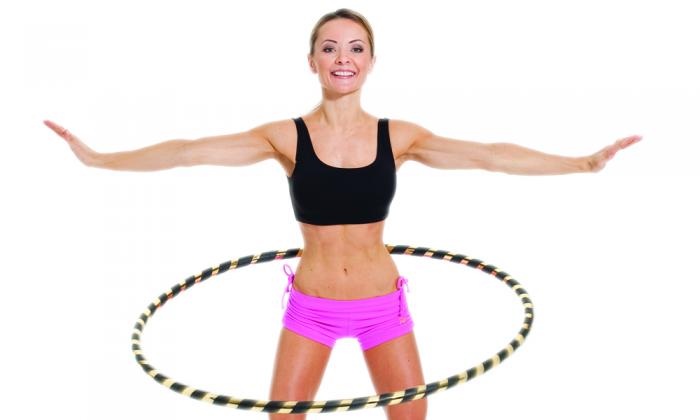
Push hips back and forth and avoid circular gyration. Build core stability and strength by pushing your belly forwards when the hoop lands on it, and pulling away with your lower back when you feel it land there.
Be instinctive
Try not to think too much about your movements. It’s more about sensation – be aware of where the hoop lands and move in response. Use your hands, arms, shoulders, legs and feet. Avoid looking down and holding limbs rigid. Instead, open your chest, extend and dance.
Save the hoop at all costs
Recover the falling hoop by pumping your hips faster to pop it back up. You can also squat and shimmy to lift it on to your waist. Try different movements to keep the hoop moving – your creativity can build even more dexterity.
Balance
Distribute the weight evenly on each part of each foot. Try not to rock, though; instead, press the ball and heel of each foot down firmly to activate your leg muscles, which will propel your hips.
Breathe
Remember to breathe deeply so that your muscles – including those in your face – will relax, and your shoulders will drop down. It’s impossible to hula hoop well when your body is stiff and tense.
Stand tall
Keep your spine elongated and your head high. And don’t slouch. The hoop will reflect your posture, so if it slopes to one side, you can right it by leaning in the opposite direction. Remember to look ahead.
Recruit friends
Hula hooping is a sociable activity. Get friends to come along to a class so that you have more encouragement to stick with the new exercise
Benefits
Lifts the spirits
A study in a psychiatry journal found that people with depression who regularly went to aerobics experienced significant improvements in their well-being compared with those on medication.
Improves posture
Hooping helps to improve body alignment and promotes good posture in the upper body.
Eats up calories
One minute of hooping burns as many calories as running an eight-minute mile or doing a high-impact aerobics class.
Helps to trim the waist
Hooping is one of the few activities that targets your midriff. With circular trunk movements, it focuses on the abdominal muscles, hips and waistline.
Firms the thighs
A variety of leg exercises in hooping improves muscle tone. And a combination of low- and high-intensity resistance exercises gives optimum strength in the quadriceps and hamstrings.
Well, that is basically what you need to get started. Once you have mastered these simple steps there are many more advanced and fun techniques that you can try.
Disclaimer
The Content is not intended to be a substitute for professional medical advice, diagnosis, or treatment. Always seek the advice of your physician or other qualified health provider with any questions you may have regarding a medical condition.