Human Growth Hormone (HGH) is referred to in medical science as the master hormone. It is very plentiful when we are young, but near the age of 21, our bodies begin to produce less of it. By the time we are 40 nearly everyone is deficient in HGH, and at 80 our production has normally diminished at least 90-95%.
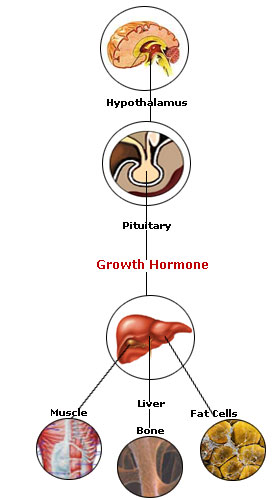
Being the master hormone, HGH affects virtually all areas of the body influencing the growth of cells, bones, muscles and organs. When deficient in growth hormone our symptoms include loss of muscle,decreased energy, an increase in fat, diminished sexual drive, a greater risk of cardiovascular disease and a lower life expectancy. In other words, the symptoms we call aging.
Keeping in line with its role, a dose of growth hormone could be just what obese people need to help them shed pounds and become smaller. A new study shows that obese people have lower-than-normal levels of growth hormone in their body, which may make it harder for them to lose weight. Researchers found that low doses of growth hormone helped women lose fat while keeping muscle. It also helped them keep it off for up to nine months.
Growth Hormone Prompts Weight Loss
Researchers say the goal of weight loss is to lose the fat but keep the muscle, but so far no drugs have been able to help people achieve that feat.
The study, published in the recent issue of The Journal of Clinical Endocrinology and Metabolism, looked at the effects of giving obese people low doses of growth hormone in an attempt to help them selectively lose fat while retaining lean muscle tissue.
Researchers say previous studies on growth hormone and weight loss have used relatively high doses, which resulted in unwanted side effects, such as swelling, hypertension, joint pains, and glucose intolerance (a risk factor for diabetes).
The study consisted of 59 obese men and women, whose average BMI was 37 (BMI is a measure of weight for height). The participants gave themselves nighttime injections containing 200 µg of growth hormone or a placebo for one month. For the next five months, the dosage of growth hormone was increased to 400 µg per day in men and 600 µg in women. Researchers say the increase was necessary because prior studies show resistance to the drug can develop over time, especially among women. Both groups were prescribed a diet and were instructed on lifestyle modification and exercise.
Among the 39 people who completed the 6-month treatment and follow up, the study showed that those who used growth hormone lost an average of about 5 pounds and kept it off for up to nine months. Researchers say the weight loss was entirely caused by a loss of body fat.
The study also showed that growth hormone improved cholesterol profiles — increasing the level of “good” HDL cholesterol by 19%. There was no significant change in fasting glucose levels or insulin resistance, which indicates diabetes risk.
Obese women may suffer from an abnormally low level of growth hormone in the body that may make it harder for them to lose fat and attain a healthy cholesterol level.
Warning: Do not take any hormone without prior consultation with a doctor.
Related Links
- Top 10 tips to beat the biological clock
- Being Active at all Sizes
- Amount of exercise- a key in cutting cholesterol
Disclaimer
The Content is not intended to be a substitute for professional medical advice, diagnosis, or treatment. Always seek the advice of your physician or other qualified health provider with any questions you may have regarding a medical condition.