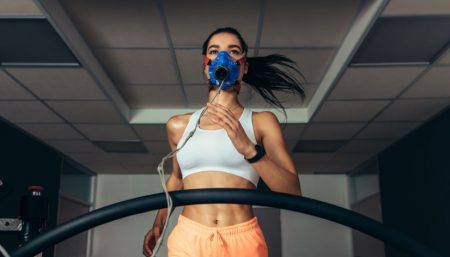
Breathing is so automatic that you don’t even have to think about it, right ? Wrong –especially while you are working out. In addition to food and water, your body needs to process oxygen, transferring it from the lungs through the bloodstream to the muscles. There is a growing belief that the effectiveness of any exercise program at any level is impacted by breathing efficiency and technique.
In fact, the role of breathing in various body functions is nothing new. Breathing is an integral part of such Eastern disciplines as yoga and tai chi. Weightlifters and bodybuilders exhale so forcefully while they are lifting that they grunt as they lift. Even ordinary people on weight-training programs are routinely instructed to “breathe on the exertion” when they lift. Lamaze and other childbirth preparation programs use controlled breathing as a way to relax.
During the course of an ordinary day, a women take an average or 28,000 breaths, most of which are shallow inhalations in which air does not reach deep into the lungs. Such shallow breathings tightens neck, muscle, which in turn can cause stiffness and pain in the return, therefore try to at least becomes aware of, proper breathing.

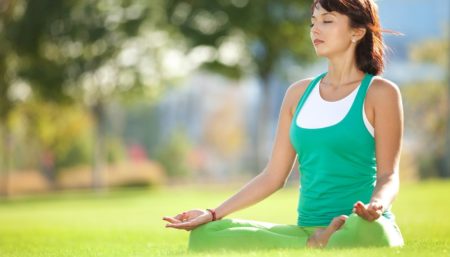
Use the diaphragm to breathe deeply and rhythmically, expanding the rib cage and pulling air down to the bottom of the lungs and deep into the belly. Poses derived from yoga and exercises can be practiced to enhance awareness of what part of the lungs is filling.
You can begin to enhance your awareness of your own breathing with a simple exercise. Sit with your hands on your diaphragm. Begin breathing slowly, deeply, and rhythmically inhaling, through the nose and exhaling through the mouth. Feel your chest and midsection rise and well each breath. Move your hands down to your abdomen and try to expand the belly as you inhale.
This exercise is useful when you need to relax, when you need to change up, or when you need to focus on your body.
Inhale deeply several times as part of your warm -up This primes your air pump, which is what your lungs are. During aerobics, breathe through your nose as long as you can, because the nose helps humidify the dry air of the gym. When you are breathing hard and your nose can’t pull in enough air, use your mouth to fill your lungs.
Exhale on the exertion when you are contracting your muscle ( as in lifting a weight ) ; inhale as you return to your starting position ( as in releasing the weight ) Be sure not to hold your breath. For many women, this is a natural reaction to muscular exertion. During the cool-down your heart rate and breathing will return to normal. Finally, while you are stretching, breathe naturally and evenly, inhaling deeply at the farthest extension of a stretch to lengthen the muscles a bit more.
Breathing properly is relaxing and stress-reducing, and it is less taxing on your neck muscles. And, yes, it will improve your performance as well by giving a push to your body’s metabolism.
Disclaimer
The Content is not intended to be a substitute for professional medical advice, diagnosis, or treatment. Always seek the advice of your physician or other qualified health provider with any questions you may have regarding a medical condition.