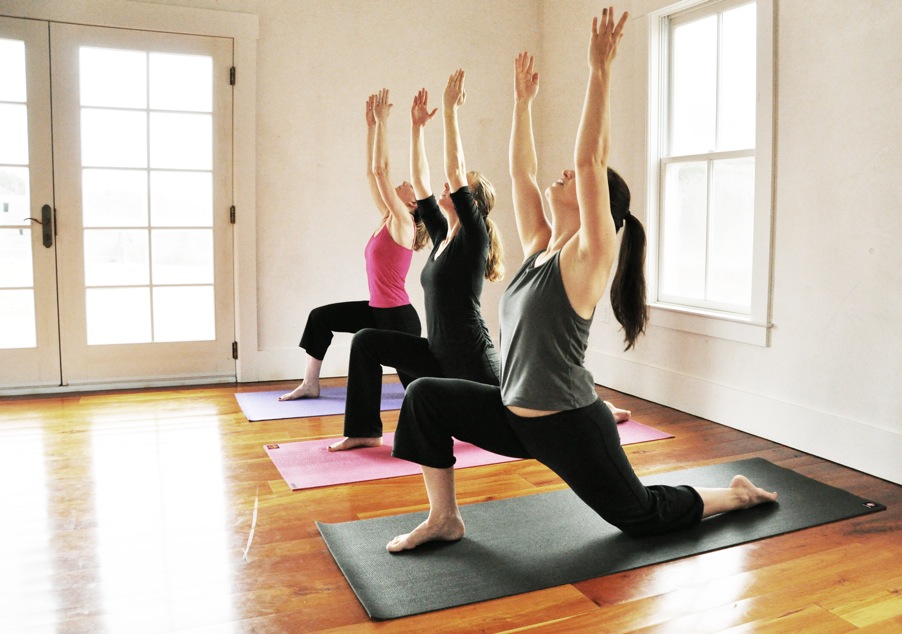
Dynamic yoga is a creative style of Hatha yoga, principles of Astanga and lyengar. Dynamic yoga is not only meditative but also physically challenging. Correct breath control is essential to creating a seamless flow of postures. Dynamic yoga draws on the bandhas (inner energy locks) to help extend the breath. This form of yoga is very safe as long as you listen to your body. This in itself may take some practice. Learn to know when your body is out of balance or when you are pushing it too far – and always modify your postures whenever necessary.
Breath Control
An intrinsic part of the practice of dynamic yoga is the synchronization of the movement of your body with the rhythm of your breathing to energize your body, focus the mind, and avoid muscle strain. Let the sound of your own breath be the music to your dance. Never more unless you are breathing, and synchronize the beginning and end of each breath with the beginning and end of specific movement. The rhythm of your breath should remain steady and smooth throughout the steps of each posture, which means that you must concentrate on the flow of your breath and take conscious control of your inhalations and exhalations. This is known as pranayama, or breath control. The quality of your breath is an indication of the quality of your practice. If you are holding your breath or it is shallow and strained, you may have gone beyond your limit and should draw back.
In order to stretch your body in the practice of the asanas, you must learn how to stretch, or lengthen, your inhalations and exhalations. Ujjayi pranayama is a unique breathing technique that enables you to increase the airflow. It means “victorious extended breath”. It involves slightly constricting the glottis (the opening through the vocal chords) as you would if whispering. The friction of the air passing through the constricted glottis has the effect of creating a sound similar to wind moving through a tunnel. The easiest way to begin to cultivate this sound is to lie on your back with the knees bent and feet flat on the floor: Close your eyes, soften your face, and slightly constrict the glottis, keeping your lips together in a hint of a smile. Take deep, long extended breaths without raising and lowering the lower abdomen. Concentrate on moving the breath up, expanding your entire rib cage and the area supporting the kidneys. You should feel your entire back expanding on the floor as you inhale.
The sound can be created by imaging you are saying “haaaaaaa” on the exhale and “saaaaaa” on the inhale but keeping the lips together. This sound becomes a tool you can use during your asna practice for concentrating your attention. Think of it as your mantra. When your mind begins to wander, bring your attention back to the sound and rhythm of your breath.
 Alignment
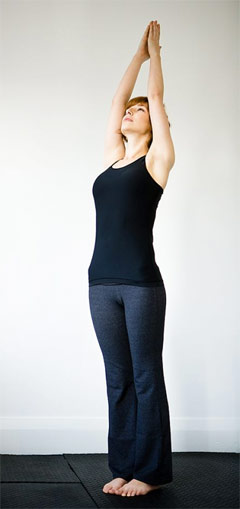
Correct alignment of the body is crucial when practicing the dynamic yoga postures. The weight of your body must be distributed evenly and grounded in the floor. Checks and balances must be applied so that the whole body is held in balance for each posture. It is important to sit and stand up straight at the beginning of each posture. By extending the spine, you create more space between the vertebrae, allowing freedom of movement. To support the spine fully, you must engage all the muscles in your body, which you must teach to work in harmony with each other.
Bandhas
Bandha is a Sanskrit word that means “lock”. By engaging a bandha during an asana, your are able to regulate the flow of prana, the life-force energy that moves through the body. There are three bandhas in the dynamic series of poses: mula bandha and uddiyana bandha.
Mula means “root” in Sanskrit, and you engage mula bandha by concentrating the perineum, which is located in front of the anus and behind the genitals. The contraction is established toward the end of an exhalation and should be maintained throughout the inhale. To start with, you may notice that you are engaging the entire area, including the anus, but with practice you will be able to refine the action and lift only the perineum.
The second bandha is called uddiyana, which means “flying upward”. This lock is engaged by drawing in the abdominal wall (just a few inches below the navel and above the public bone).
It is a very subtle drawing of the back of the navel to the spine, which allows your lower abdomen to remain soft and still. This lift is connected with the drawing up of the perineum and will also be most apparent at the end of an exhalation. You can practice both of these energy locks in the Downward Dog (Adho mukha svanasana) position in the Sun Salutation sequences. Notice that both mula bandha and uddiyana bandha connect with the breath. Have patience: the engagement of the bandhas takes years to master fully and you will learn to engage them only with practice.
How To Practice
 Do not practice dynamic yoga on a full stomach. It is best to wait two to three hours after eating before beginning a programme.
- Choose a time in the day when you will not be interrupted or distracted: you need to be able to give your full attention to practicing the asans.
- It is important to be comfortable, and the clothing you wear when doing dynamic yoga must be flexible able to breath.
The fabrics that work best are cotton blend. - Practice in a quiet, clean, warm environment. A wooden floor is ideal, and the perfect floor is one that allows you to practice without a “sticky mat”.
However, if the surface of your floor is slippery, you must use a mat.
Note: Avoid vigorous practice while menstruating, as this can disrupt the flow of menses.
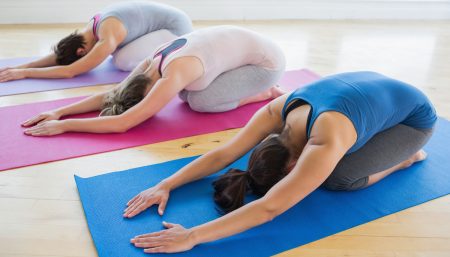
Instead, I suggest practicing Utthita trikonasana , Baddha konasana, and Balasana, all of which are soothing and can help relieve cramping.
It is very important at this time to avoid all inverted poses (upside-down poses).
Ideally, you should ask a dynamic yoga teacher to advise on the specific practice you can do while menstruating.
Modifications
It is important not to push your body beyond its limits when practicing dynamic yoga. If you find that a particular posture creates strain or tension in a part of your body, withdraw from it.
A pose done with force can be very injurious, and usually results in undue pressure being applied to another area of the body to compensate.
For example, if you cannot reach the floor with your left arm in parivrtta parsvakonasana, then bend your arms into the prayer position (as shown in the alternative.)
In addition to modifying the position of your body to avoid straining, you can also use equipment to help you in positions that cause difficult.
For example, blocks can be very useful in helping you to balance in standing poses if you cannot reach the floor with your hand. Equally, if your hips are tight and restrict you as you fold forwards, a rolled towel or blanket placed under the sitting bones will help, and will also mean that you do not harm the lower back. If you cannot reach your toes with your hands, try using a strap to enable you to deepen the stretch.
Special Circumstances
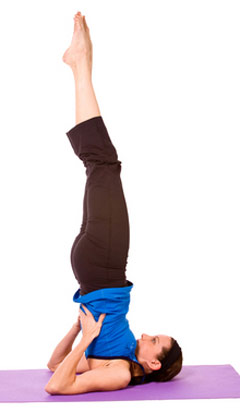 If you have a specific injury or known weakness, then you must be very careful not to place any strain on that area of the body when practicing yoga. For example, if you have a neck injury, avoid postures that require you to roll onto it, such as sarvangasana, without the guidance of a qualified teacher. It is equally important to be careful if you have a back injury or stain.
It is best to practice with a teacher until you understand the appropriate alternatives for your particular injury.
Something as common as tight hips can be helped by using a towel or modifying your position.
For tight hamstrings, bend the legs when you cannot straighten them, and pay particular attention to the symmetry and alignment of your legs in each posture.
If you are pregnant, it is best not to practice dynamic yoga.
There are yoga classes tailored especially for pregnant women; try one of these for this period. You can come back to dynamic yoga after the birth and when your doctor gives you clearance.
Resting
It is very important to rest when necessary and not to push yourself to a state of exhaustion. If you need to rest between postures, rest in Balasana. At the end of each programme rest in Savasana , using this pose to further your ability to meditate.
Disclaimer
The Content is not intended to be a substitute for professional medical advice, diagnosis, or treatment. Always seek the advice of your physician or other qualified health provider with any questions you may have regarding a medical condition.