Are you bored with your aerobics class? and are looking for a high-intensity workout that will increase your strength and flexibility while burning fat? Then cardio-kickboxing may be for you, if you are reasonably fit. It is a high-impact cardiovascular workout that blends elements of boxing, martial arts and traditional aerobics into a 30-to 60-minute exercise routine.

Most aerobic kickboxing classes begin with light stretches and a cardio warm up. Typical routines include a series of repetitive punches, hands strikes, kicks and other self-defense moves, interspersed with a bouncing ‘base’ move, to potent music. Even though one is thrusting through the air rather than working against resistance it qualifies as a total body workout because it use several muscle groups and is intensely aerobic. Classes end with a cool down period.
According to a study by the American Council on Exercise (ACE), cardio-kickboxing burns an average of 350 to 450 calories per hour.
The ACE cautions that “there are other important factors to consider before taking that first kick”. Aerobic kickboxing can be effective and fun – if you ‘re careful.
Here are some tips for anyone embarking on this type of exercise program, but beginning exercise need to be the most conservation of all:-
- Consider your current level of fitness. Don’t make an aggressive martial arts -based program your first foray into exercise. If you have arthritis, tight hamstrings, an inflexible back or other physical limitations, you might not be a good candidate for aerobic kickboxing.
- Even if you are in good shape and participate in cross training programs, take it easy until your body adapts to a new type of move. Drink plenty of water before, during and after your workout.
- When your start look, for a beginner class, an introductory technique class, or a progressive class in which you learn the basic moves and do them until you are comfortable doing them at a moderate pace before putting them into fast combinations. If these classes are not available at least find a class led by an instructor who includes beginner tips for all the moves and combinations.
- Among the basic moves are proper stance and how to punch and kick to avoid injury.
- If you use a tape to work out at home, start modestly and pay special attention to the instructions regarding proper fun. Working out in a room with a mirror can help you see whether you are doing the moves correctly.
- Beginners especially should avoid high kicks until they get used to the routine and become more flexible.
- Do not lock your joints when throwing kicks or punches.
- Do not overextend kicks. Kicks only as high as you can raise your leg while maintaining proper body alignment. Wear aerobic shoes or other lightweight athletic shoes designed for pivots and lateral movements. You could risk a sprained ankle if you wear running or walking shoes on carpet, IDEA warns.
- Do no do too many repetitions of a single high-impact movement. Many experts consider eight one- foot hops to be the limit for most people.
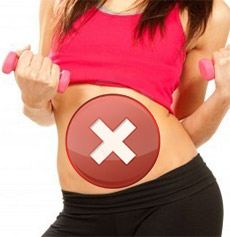 Do not wear weights or hold dumbbells when throwing punches, it jeopardizes your joints.
- Proper techniques for each move is the key to injury prevention. “Any time that you strike the air with kicks or punches you are working on speed and form. In order to develop the larger muscles you have to have resistance. Hitting a heavy (punching) bag is similar to weight training because it provides resistance.” Keith Vitall former world karate champion.
- Do not feel that you have to work out for the entire duration of a class . An hour is a long workout at such intensity.
- Do not give in to group peer pressure and exercise beyond fatigue.
Front Kick
- Stand with left foot forward and fists by face in fighting stance, then shift your weight to right foot.
- Bring left knee up to the chest, foot flexed, heel close to the glutes.
- Keep fists up and kick straight out from the hip as if you were punching with your heel; retract immediately and return to fighting stance. Visualize slamming a door open with your foot.
Jab
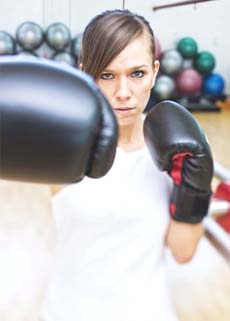
A straight punch
- Stand with right foot forward in fighting stance.
- Rotate right hip forward, extending right arm.
- Twist forearm so the fist is parallel to the floor at full extension, arm in line with shoulder.
- Recoil immediately. Strike as quickly as possible with control.
Uppercut
Punch in an upward thrust.
- Stand with your left foot forward in fighting stance.
- Drop your right hand slightly and bend both knees, then twist your hips to the left as you thrust your right fist straight up and slightly forward with knuckles facing the ceiling and palm facing body.
- Keep your left fist by your face.
- Recoil immediately and return to fighting stance.
Side Kick
- Stand with your left foot forward in fighting stance.
- Turn hips to the right, and pivot right toes out slightly.
- Lift your left knee toward the chest, keeping your foot flexed.
- Forcefully extend the left leg out to the left side, pushing through the heel while counter-balancing by leaning your entire upper body toward the right.
- Keep hands in fists near face. Retract the kick and immediately return to fighting stance.
Repeat these moves for 2-4 min and repeat one after another building up a workout of 10-15 min.
If you are looking for Boxing gloves for women you can visit bestboxinggloves dot org to find top collection.
NOTE: Before enrolling in a cardio-kickboxing class or any new exercise program for that matter, discuss your plan with your doctor and obtain medical clearance.
Disclaimer
The Content is not intended to be a substitute for professional medical advice, diagnosis, or treatment. Always seek the advice of your physician or other qualified health provider with any questions you may have regarding a medical condition.