Hair changes with age, like the skin. Changes in hair growth also occur with time, going grey, growing more hair than is wanted, and /orlosing hair. The intensity of the battle against unwanted hair is cultural, to a certain extent. For example, many women in Mediterranean regions are unconcerned with body hair, whereas middle eastern neighbors laboriously pluck all the hair from their body. In North America it is estimated that consumers spend 1 billion dollars an years on electrolysis alone.
Hair on the legs, arms and underarm area, as well as fine hair on the upper lip and around the hairline on the sides of face (the “sideburn” area) may be unwanted and undesirable, but it’s perfectly normal. Thick, bushy eyebrows also fall into this category. Excessive hair around the nipples, on the face (commonly around the chin or as an extension of the hairline), and thick body hair on the torso (often an extension of the pubic hair line) or back, or “male-patterned” hair elsewhere on the body is considered to be abnormal hair growth for women, although it is extremely common. Usually hair that grows in these areas has hormonal causes, and is known in clinical circles as “hirsutism.”
The first step in solving the dilemma of excess or unwanted hair is to determine its cause. Lasers are leading the way to new and move effective ways of eliminate unwanted hair. Other more traditional methods of hairs removal include electrolysis, waxing, shaving, plucking or chemical depilatories. A combination of the techniques may be the most ideal approach depending on the goals of the individuals. The alternative to removing unwanted hair is camouflage by bleaching.
“Temporary” Methods
- Cutting
- Threading
(also called fatlah or khite, in which a twisted thread catches hairs as it’s rolled across the skin)- Shaving or Trimming
(manually or with electric shavers)- chemical Depilatories
(creams or “shaving powders” which chemically dissolve hair)- Friction
(rough surfaces used to buff away hair)- Tweezing
(Epilation lasting several days to several weeks can be achieved by:Tweezing)- Waxing
(a hot or cold layer is applied and then removed with porous strips)- Rotary Epilators
(devices which rapidly grasp hairs and pull them out by the root)“Permanent” Methods
Cutting the individual hairs with scissors has no effect on the hair growth at all. it allows you to keep them short and out of sight for a while until you look into something permanent.
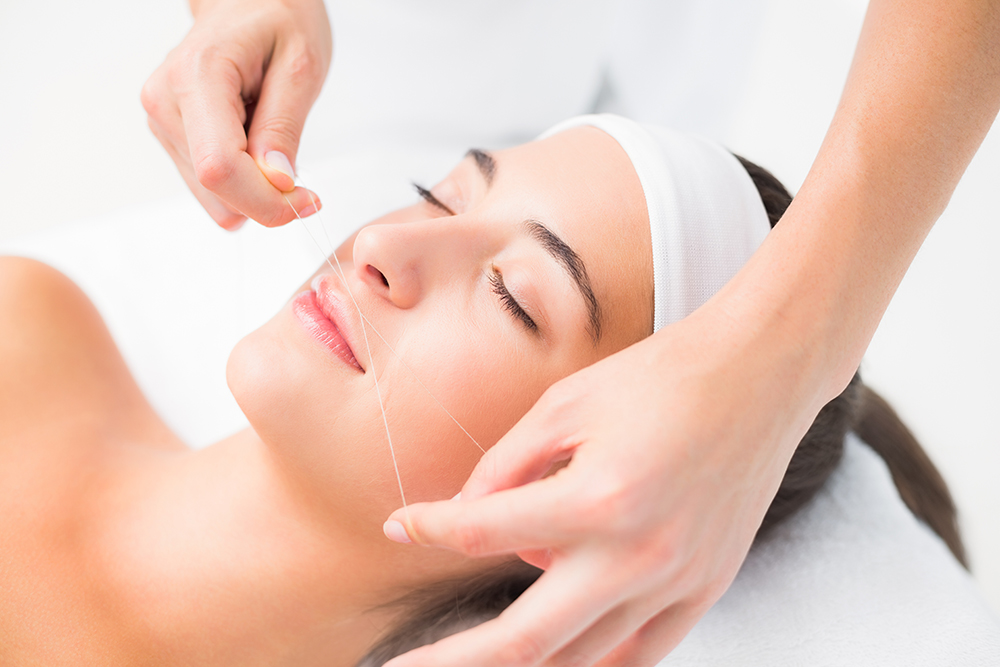
The practitioner holds one end of the cotton thread in his or her teeth and the other in the left hand. The middle is looped through the index and middle fingers of the right hand. The practitioner then uses the loop to trap a series of unwanted hairs and pull them from the skin. There are also devices made that can hold the thread during the procedure. Good for eyebrows and facial hair. Like plucking, results can last up to two to four weeks. Can be painful and cause itching afterwards. Side effects can include folliculitis, a bacterial infection in the hair follicles, skin reddening or puffiness, and changes in skin pigment.
SHAVING or TRIMMING
It is probably the most common way to remove unwanted hair. It is one of the quickest and cheapest methods and probably the least painful, providing it‘s done properly as shaving cuts can be very painful…so be very careful! Be sure to invest in some a razor designed for women as this will fit your curves and some shaving gel or foam as this will prevent the razor cutting your skin; these are available from most chemists and supermarkets. Work the gel/foam into a rich lather and using a clean razor, slowly and gently apply firm pressure and run the razor up the leg in the opposite direction of the hair growth.
A common misconception about shaving is that the more hair is shaved the thicker it becomes . A typical hair shaft is wider in the middle than as the ends and when it is cut off it will appears thicker and coarsen . The hair becomes coarser as the body ages . Therefore after shaving for a long time the hair is thicker not because of shaving but because of the aging process. Although women find shaving an acceptable method for getting off unwanted hair on some parts of the body such as the legs, it is not acceptable for other body parts particularly the face .
Shaving at night will reduce redness. Also, wait about 12 hours after shaving or waxing before diving into a pool, spa, or ocean.
chemical depilatories
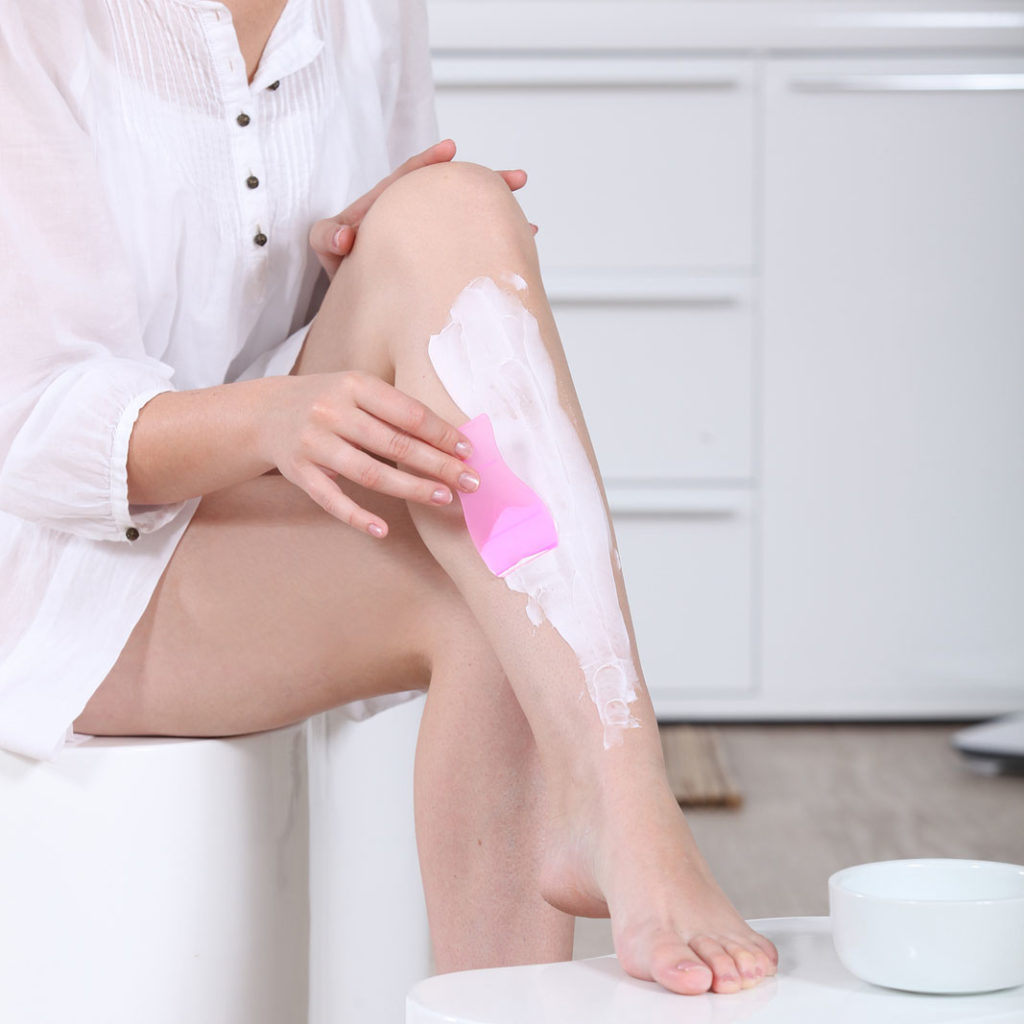
If the thought of having your hairs ripped out makes you wince and shaving every other day sounds like too much effort, then Depilatory Creams may be more your thing. They are easy to use: simply apply the cream and wash off immediately after about ten minutes.
Depilatory creams work by penetrating the hair shaft and dissolving the hair at the root. The hair grows back downy and soft as opposed to stubbly and needs redoing about once a week. It is worth doing a patch test on your skin first (24 hours in advance) just to check you are not allergic.
FRICTION
Mittens made of fine sandpaper (gloving) or Abrasives such as pumice stones (an ancient form of hair removal that probably preceded Threading) also remove some of the hair by abrasion as well as plucking. Irritation to the skin surface is a disadvantage to this method.
Tweezing
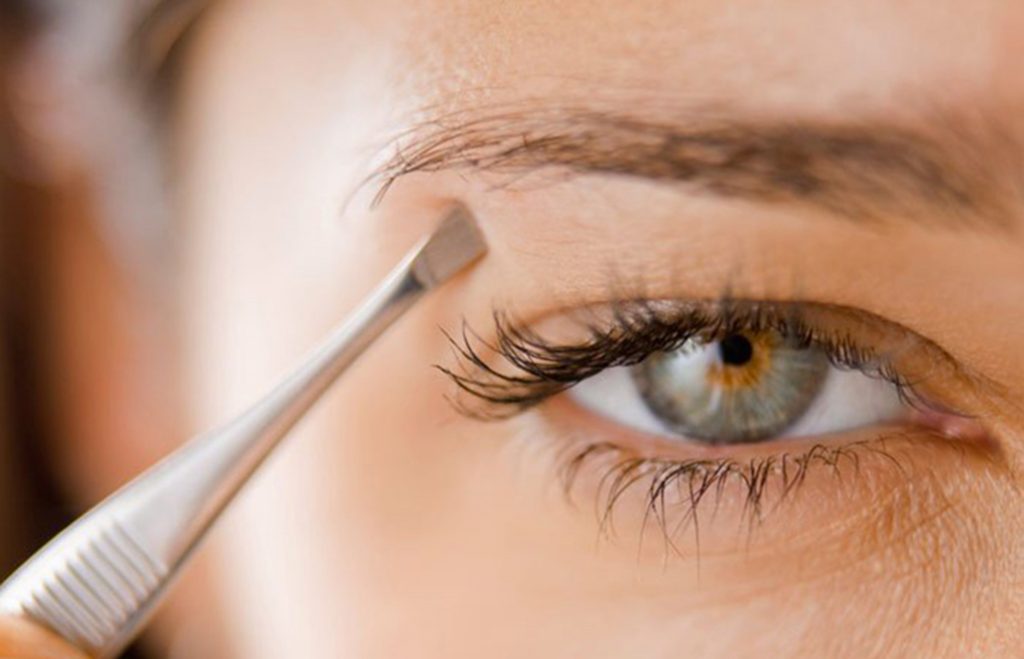
Tweezer or metal forceps are used to manually to pull hairs out by the root, one or a few at a time. It can be mildly painful and the effects are slightly more long lived than shaving because the hair is removed from below the skin. Method is good for shaping eyebrows or removing stray hairs.
WAXING
Waxing is really a way of plucking a lot of hairs at one time. Warm wax is applied to the area of hair to be removed . It cools and is pulled away from the skin taking the trapped hair with it. Irritations often accompanies this procedure and is due to either the actual plucking or to the warm wax. This subsides within a few hours to a couple of days leaving a smooth hairless surface for several weeks. Re-growth occurs within 5 to 9 weeks . Prior to a repeat-waxing the hair must grow in, above the skin surface for the wax to adhere to it .This temporary period of new hair growth might be socially uncomfortable.
Your hair should be at least 1/2 inch long the first time for the wax to be able to hold. Try one of the cold waxes on the market if you’re a beginner.
During the re-growth period ingrown hairs may be troublesome. If so run hot water over an hold toothbrush to soften the bristles then brush the skin twice a daily in those areas . This helps lift the curved irritating hairs tips out of the skin and minimizes the problems . Never tweeze or wax nose hairs. Use tiny manicure scissors made especially for the job. You can wax or tweeze your ear hairs, but if you want to cut them, ask someone to help you.
Regular waxing over a period of time weakness the hair follicle and gradually reduces the amount of hair growth in the area waxed .
ROTATING COIL APPLIANCES
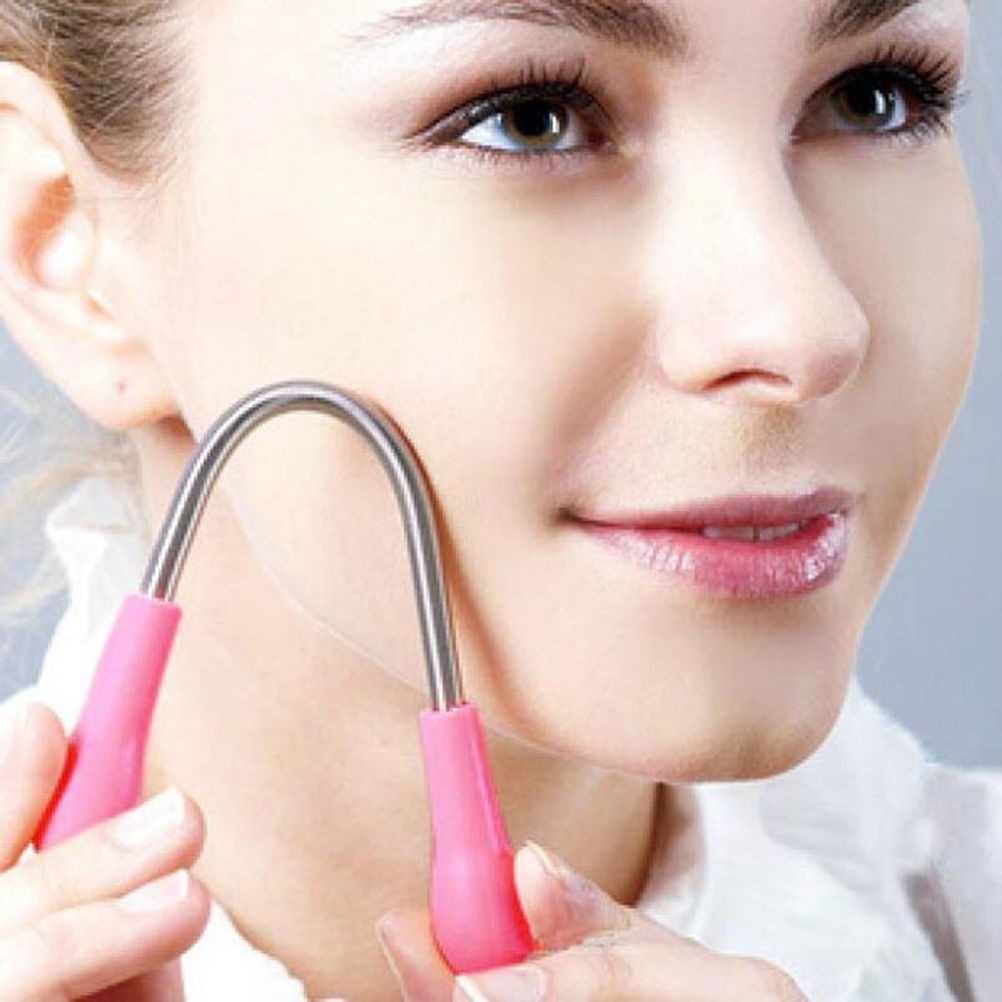
As with waxing this is another form of diffuse plucking . These devices are similar to electric razors, except instead of a cutting blade on a rotary head, they have rows of tweezers which can pull hairs out by the root.
The advantages of this devices are that there is complete control over how much or how little is plucked and the effects lasts longer than techniques like shaving . An example of this appliances is Epilady . Can be hard to use on backs of legs and harder to use on fine hairs. Skin must be pulled tight to avoid pinching.
Everyone has different circumstances for wanting hair removal, and different limitations, therefore choose any method depending on personal need.
Electrolysis
Electrolysis is a hair removal technique where an electrical current is passed into the hair follicle, rendering it inactive and causing the hair to fall out. A hair-thin metal probe is slid into a hair follicle though which electricity is delivered to the follicle.
Currently three methods of electrolysis are used galvanic current, electrocoagulation and radio wave. Each differs in the amount of time the procedure takes and the numbers of hairs that can be removed .The galvanic methods is the slowest . Claims have been made that radio wave electrolysis is less uncomfortable and causes fewer pigment problems, this however has not yet been adequately substantiated .
In Galvanic current electrolysis, the treatment is basically a chemical decomposition process. When a needle is introduced into a hair follicle and the current is applied, the body salts and the moisture in the tissue is converted into a lye solution (sodium hydroxide). This lye solution has a caustic effect on the tissue and hair follicle. It is highly successful in destroying the hair within the tiny hair follicle. The galvanic current is responsible for the good reputation electrolysis holds as a permanent hair removal method. The galvanic current appliances have been adapted for home use ( for example, permatweez ) and although it is a slow tedious process for many this is preferable, to going for regular and sometimes costly sessions at a salon . The galvanic method is basically a chemical process.
An electrolysis program is a long- term commitment, it is often uncomfortable . Topical anesthesia creams can help minimize the discomfort . Possible complications include scarring, irregular pigmentations, infections and flare ups of acne and herpes simplex (cold sores) in the area being treated .
For these reasons it it important to be treated by a properly trained and experienced beautician or doctor. It is important to request references before starting a course of treatment, with an unknown technician .
LASER

Light at a specified wavelength is delivered from a hand piece into the skin, where it targets dark material (usually the pigment in hair). Useful for large areas such as backs or legs. Can be expensive.
Lasers responding to carbon paste particles designed to enter follicles (to some degree) and lasers with wavelengths responsive to melanin with pulse widths tailored to penetrate to follicular depth, are now standing in line for FDA approval for “semi permanent” or “long term” hair removal use.
prescription cream
Vaniqa (pronounced “VAN-i-ka”) is a prescription cream applied to the skin for the reduction of unwanted facial hair in women ages 12 and older. For unknown reasons, Vaniqa does not work for everyone. The active ingredient in Vaniqa is eflornithine hydrochloride. It inhibits an enzyme that affects hair growth, called ornithine decarboxylase (ODC).
This medication is not a depilatory, but rather appears to retard hair growth to improve the condition and the appearance of some consumers. You will likely need to continue using a hair removal method (e.g., shaving, plucking) in conjunction with Vaniqa. It will usually take 2 months of treatment before you see if it works or not. If you stop taking Vaniqa, your hair may come back to previous levels within 2 months after stopping. For more on how it works, click here.
Disclaimer
The Content is not intended to be a substitute for professional medical advice, diagnosis, or treatment. Always seek the advice of your physician or other qualified health provider with any questions you may have regarding a medical condition.