
Myopia is the scientific term for nearsightedness. Nearsighted people typically see well up close, but have difficulty seeing far away. It is an inherited problem.
There are three components that determine the eyes‘ focusing behavior: the cornea, the lens and the length of the eye. The cornea, the clear part of the eye on the front surface, bends 70-80% of the incoming light into the eye. The lens, located inside the eye behind the cornea, is responsible for fine focusing and bends 20-30% of the incoming light. The eye length, from front to back, can also affect where the light focuses. If the eye is too long, the light focuses in front of the retina causing myopia.about:blank
The causes of myopia can vary from person to person, but below are some of the variables that may affect one’s near vision:
- Genetics – Increasing evidence now indicates that the tendency for myopia is inherited. Science News in its July 10, 2004 edition discusses a study of identical twins that found at least 89% of vision defects such as myopia and farsightedness (hyperopia) are directly due to genetic flaws.
- Age – Myopia affects those mostly between the ages of 10 and 40. Beyond 45 years of age myopia tends to decrease.
- Stress
about:blank - Excessive time spent at close-up work such as work on computers, sewing, accounting, jewelry work. – children who spend considerable time with close up activities such as reading also increase their chances of developing myopia. Prolonged, repeated periods such as reading or computer use, stretches the eye and causes nearsightedness.
- Personality type. There are emotional factors that effect how one’s vision develops.
- Diet
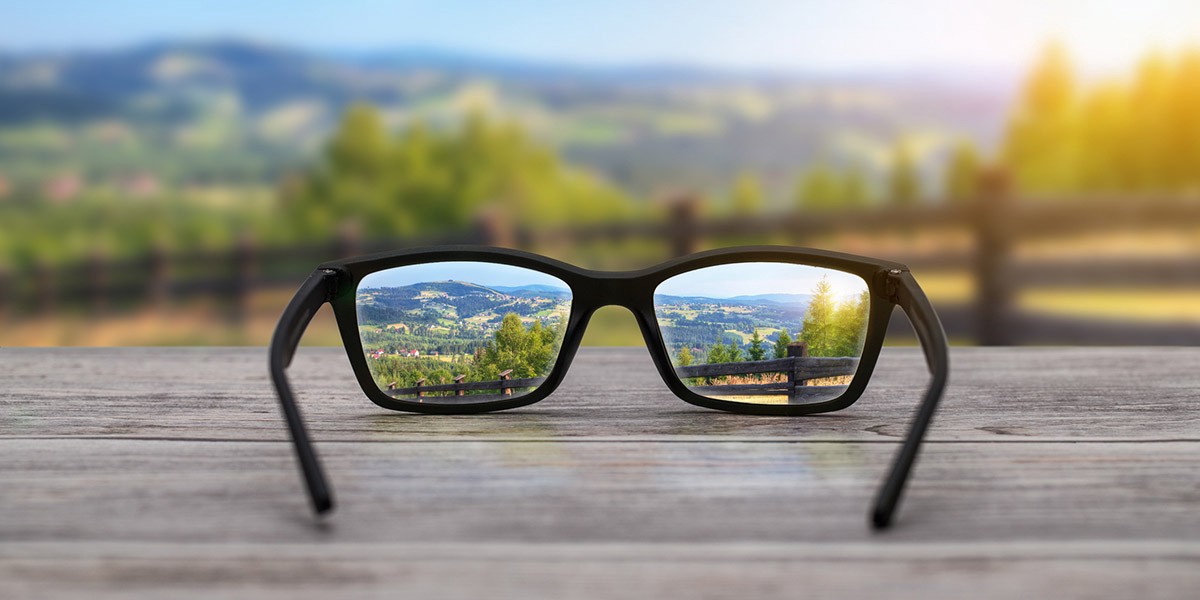
Difficulty seeing details in the distance clearly without the use of glasses.
Detection and Diagnosis:
Nearsightedness is detected with a vision test and refraction.
The refraction is a vision test that determines your best visual acuity with corrective lenses. It can be done with computerized equipment, but typically an instrument called a phoropter is used. The phoropter holds corrective lenses that are positioned in front of your eye. While looking at the eye chart through the phoropter, the technician or doctor will adjust the lenses until the chart appears the clearest possible.
Myopia is best treated with eyeglasses and contact lenses which compensate for the elongated shape of the eye allowing the light to focus properly on the retina. As children (and their eyes) grow through the teen years, the condition typically worsens and then levels off in adulthood. During this growing period, new eyeglasses may be needed as often as every six months to correct the problem.
There is no scientific evidence that contact lenses or eye exercises stop the progression of myopia.
- Vision correction surgery, also known as “Refractive Surgery” (since it strives to change how light is refracted into the eye), is a broad classification of eye surgery techniques. This surgery alters the shape of the cornea enabling you to see better without glasses or lenses. Refractive surgery does not delay or reverse the eventual need for reading glasses when the patient approach their 40’s and presbyopia sets in.
- Photorefractive keratectomy (PRK) is another technique that uses computer-guided laser to change the curvature of the surface of the cornea. After having PRK, the eye refracts light onto the retina and all but eliminates nearsightedness.
PRK has also opened the door to the use of LASIK, a procedure that combines surgery with the laser techniques on high myopia.
LASIK and PRK have been extremely successful. Ninety-eight percent of all patients who have PRK end up with better than 20/40 vision, which means they don’t need glasses to drive. Eighty percent have 20/20, or perfect vision.
Disclaimer
The Content is not intended to be a substitute for professional medical advice, diagnosis, or treatment. Always seek the advice of your physician or other qualified health provider with any questions you may have regarding a medical condition.
